

Cataracts
Clouding of the eye's natural lens causing blurry vision, glare, and difficulty seeing. Learn about types, symptoms, and treatment options including surgery.
A cataract is a clouding of the eye's natural lens, which sits behind the iris and pupil. Cataracts are the leading cause of vision loss worldwide but are highly treatable with surgery that often restores clearer vision when the cataract is the main cause of vision loss.
Key Takeaways
- Cataracts develop gradually as proteins in the lens break down and clump together
- Most cataracts are age-related, typically developing after age 60
- Symptoms include blurry vision, glare, halos, faded colors, and frequent prescription changes
- Surgery is often highly effective, especially when the cataract is the main cause of vision loss
- No medications can reverse cataracts-surgery is the only definitive treatment
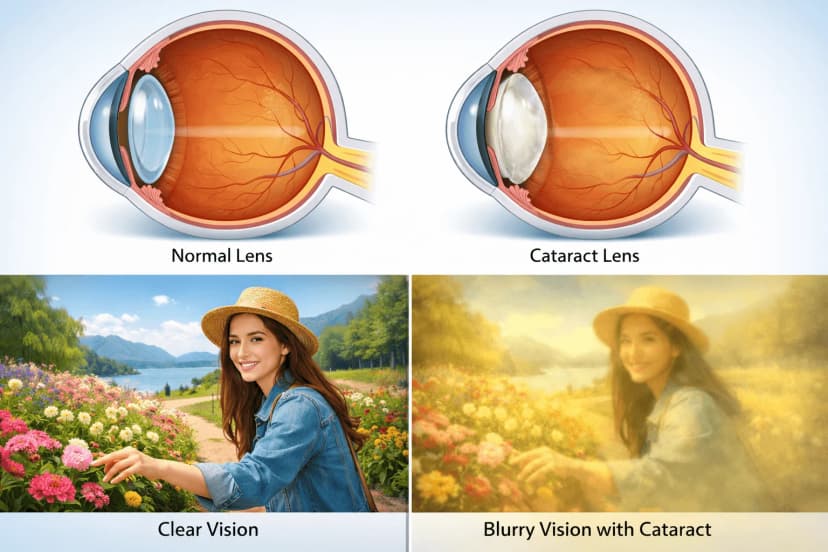
What Cataracts Feel Like
Common symptoms include:
- Blurry vision or hazy vision-like looking through a foggy window
- Increased sensitivity to light and glare
- Halos around lights, especially at night
- Difficulty with night driving
- Faded or yellowed colors
- Frequent eyeglass prescription changes
- Double vision in one eye (less common)
- Need for brighter light when reading
Types of Cataracts
Nuclear Cataracts
- Most common type
- Forms in the center (nucleus) of the lens
- Causes gradual yellowing and hardening
- May temporarily improve near vision ("second sight")
Cortical Cataracts
- Forms in the outer edge (cortex) of the lens
- Wedge-shaped opacities that extend inward
- Often causes glare and light sensitivity
Posterior Subcapsular Cataracts
- Forms at the back of the lens
- Develops more quickly than other types
- Particularly affects reading vision and causes glare
- More common with steroid use and diabetes
Congenital Cataracts
- Present at birth or develops in childhood
- May be inherited or due to infection during pregnancy
- Requires early treatment to prevent amblyopia
What Causes Cataracts
Age (Most Common)
- Natural aging process of the lens
- Proteins denature and aggregate over time
- Nearly universal by age 75-80
Risk Factors
- Diabetes-accelerates cataract formation
- Smoking-doubles or triples risk
- Excessive alcohol use
- Prolonged sun exposure without protection
- Previous eye injury or surgery
- Long-term corticosteroid use
- Radiation exposure
- Family history
When to Seek Care
See an eye doctor if you notice:
- Gradual vision changes affecting daily activities
- Difficulty driving, especially at night
- Problems reading or watching TV
- Colors appearing faded or yellowed
- Frequent eyeglass prescription changes
How Cataracts Are Diagnosed
Comprehensive Eye Exam
- Visual acuity test-reading letters on a chart
- Slit-lamp examination-magnified view of lens structures
- Dilated eye exam-detailed view of lens and retina
- Glare testing-measures vision under bright conditions
- Contrast sensitivity-ability to distinguish shades
Measurements for Surgery
If surgery is planned:
- Biometry-measures eye length and lens power
- Corneal topography-maps cornea shape
- OCT imaging-checks retinal health
Treatment Options
Watchful Waiting
For early cataracts:
- Update eyeglass prescription
- Use brighter lighting
- Anti-glare coatings on glasses
- Magnifying aids for reading
- Surgery when vision significantly impacts quality of life
Cataract Surgery
Indications:
- Vision problems interfering with daily activities
- Cannot achieve satisfactory vision with glasses
- Cataract prevents treatment of other eye conditions
The procedure:
- Outpatient surgery (20-30 minutes)
- Local anesthesia (no general anesthesia needed)
- Cloudy lens removed via small incision
- Clear artificial lens (IOL) implanted
- Usually no stitches required
Success rate:
- In a large Cataract National Dataset audit, about 95% of eyes without other eye disease reached 20/40 (6/12) or better after surgery
- Outcomes can be lower when macular, corneal, retinal, or optic nerve disease also limits vision
- One of the most commonly performed and successful surgeries
Recovery After Surgery
First Week
- Use prescribed eye drops
- Wear protective shield at night
- Avoid rubbing the eye
- No heavy lifting or strenuous activity
- Vision often noticeably clearer within days
First Month
- Gradual vision improvement
- Some fluctuation in vision is normal
- Most restrictions lifted after 2-4 weeks
- New glasses prescription after vision stabilizes
Prevention
While cataracts cannot be completely prevented:
- Wear sunglasses with UV protection
- Quit smoking
- Control diabetes and other health conditions
- Limit alcohol consumption
- Eat a healthy diet rich in antioxidants
- Regular eye exams for early detection
Frequently Asked Questions
Will my cataract come back after surgery?
The cataract itself cannot return because the natural lens is removed. However, some patients develop posterior capsule opacification ("secondary cataract") where the membrane behind the IOL becomes cloudy. This is usually treated with a brief outpatient YAG laser procedure.
How do I know when it's time for surgery?
Surgery is typically recommended when cataracts interfere with activities important to you-driving, reading, hobbies, or work. There's no benefit to waiting until cataracts are "ripe." If you're unsure whether your symptoms point to cataracts, our guide Am I Getting Cataracts? walks through the common signs.
Can I have both eyes done at the same time?
Usually, one eye is done at a time, with the second eye treated 1-4 weeks later. This allows the first eye to heal and helps maintain usable vision in at least one eye during recovery.
Will I still need glasses after surgery?
It depends on the type of intraocular lens (IOL) implanted. Standard IOLs typically require reading glasses. Premium IOLs (multifocal or accommodating) may reduce or eliminate the need for glasses.
Are there drops or medications to treat cataracts?
Currently, no eye drops or medications can reverse or cure cataracts. Some research is ongoing, but surgery remains the only effective treatment.
Can cataracts cause blindness?
Untreated cataracts can eventually cause severe vision loss, but cataract-related vision loss often improves substantially with surgery when the cataract is the main problem. Cataract-related blindness is a significant problem in developing countries with limited access to surgery.
References
Medical Disclaimer: This information is for educational purposes only and does not replace professional medical advice, diagnosis, or treatment. If you have concerns about cataracts or any vision changes, please consult a qualified healthcare provider.
Sources:
- American Academy of Ophthalmology. Cataracts.
- National Eye Institute. Cataracts.
- World Health Organization. Global data on visual impairments 2010.
- Jaycock P, et al. The Cataract National Dataset electronic multi-centre audit of 55,567 operations: updating benchmark standards of care in the United Kingdom and internationally. Eye. 2009;23(1):38-49.
- Liu YC, et al. Cataracts. Lancet. 2017;390(10094):600-612.