
Charles Bonnet Syndrome
Visual hallucinations in people with vision loss, not a psychiatric condition but a brain response to reduced input.
3 min read
Charles Bonnet syndrome (CBS) is a condition where people with significant vision loss experience vivid visual hallucinations. It's not a psychiatric disorder-it's the brain "filling in" visual information when input from the eyes is reduced.
Key Takeaways
- Visual hallucinations in people with vision loss
- Not a mental illness-normal brain response
- Patients know hallucinations aren't real
- Common but underreported due to fear of stigma
- No specific treatment but reassurance helps
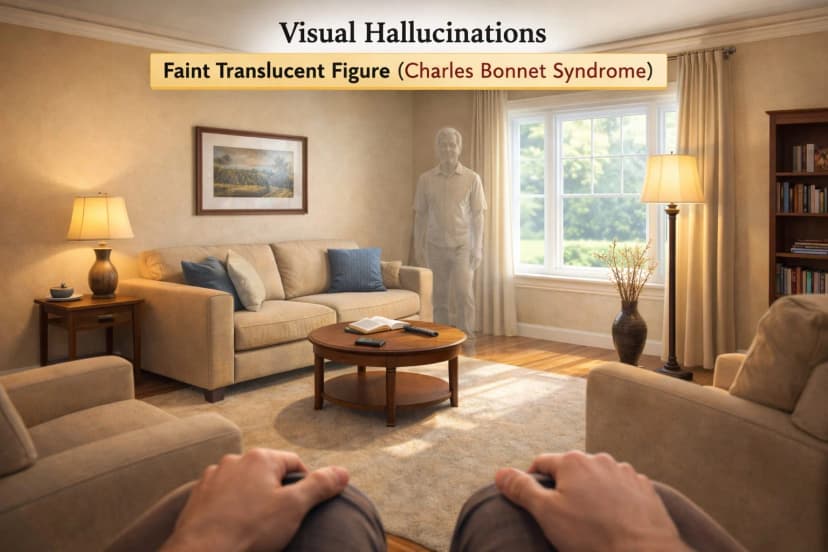
What People See
- Faces (often distorted or unfamiliar)
- People, animals
- Geometric patterns
- Buildings, landscapes
- Colors, lights
- Images may be detailed and vivid
- Can be pleasant, neutral, or disturbing
Characteristics
- Patient knows hallucinations aren't real (insight preserved)
- Only visual-no sounds, smells, etc.
- Can last seconds to hours
- May occur daily or occasionally
- Often worse in dim light or when tired
- No other psychiatric symptoms
Who Gets CBS
- People with significant vision loss
- Any cause of vision loss can trigger it
- More common in elderly
- Macular degeneration most common underlying cause
- 10-40% of visually impaired people affected
- Many don't report it, fearing psychiatric diagnosis
Why It Happens
- "Deafferentation" theory
- Brain visual areas continue to work but get less input
- Brain generates its own images to fill void
- Similar to phantom limb phenomenon
Diagnosis
- Clinical history
- Preserved insight (knows not real)
- Visual hallucinations only
- Confirmed vision loss
- No psychiatric disorder
- Normal mental status otherwise
Management
- Reassurance-most important, not a mental illness
- Explain the mechanism
- Improve lighting
- Increase visual stimulation
- Treat underlying vision loss if possible
- Medications rarely needed
Prognosis
May decrease over time as brain adapts. Some have persistent symptoms. Quality of life generally preserved with understanding.
Medical Disclaimer: This information is for educational purposes only and does not replace professional medical advice.
Sources:
- American Academy of Ophthalmology EyeWiki. Charles Bonnet Syndrome.
- Royal National Institute of Blind People. Charles Bonnet Syndrome.
Was this article helpful?