

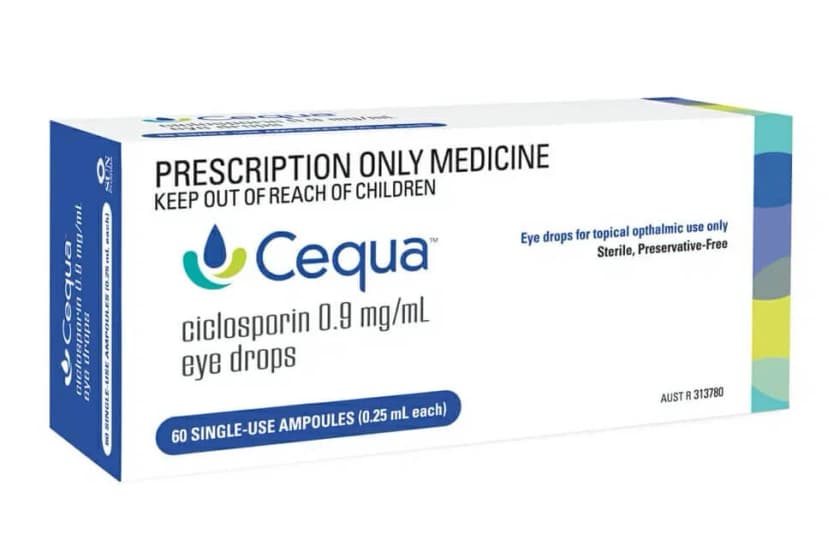
Cequa (Cyclosporine 0.09%)
Prescription eye drops for dry eye disease with higher concentration cyclosporine using nanomicellar technology.
Drug Class: Immunomodulators
Cequa (cyclosporine ophthalmic solution 0.09%) is a prescription eye drop for treating dry eye disease. It uses nanomicellar technology to deliver a higher concentration of cyclosporine than Restasis, potentially improving tear production in dry eye patients.
Official website: cequa.com
Key Takeaways
- Higher concentration cyclosporine (0.09% vs 0.05% in Restasis)
- Increases tear production by reducing inflammation
- Twice daily dosing-one drop in each eye every 12 hours
- Takes weeks to months to see full effect
- May cause temporary burning or stinging upon instillation
How It Works
Cyclosporine is an immunomodulator that:
- Reduces inflammation on the eye surface
- Allows the lacrimal glands to produce more tears
- Addresses the underlying inflammatory component of dry eye
Nanomicellar technology helps the medication penetrate the eye surface better than older formulations.
Common Uses
- Dry eye disease
- When artificial tears alone aren't sufficient
- Moderate to severe dry eye with inflammation
- May be used alongside other dry eye treatments
How to Use
- Dosing: One drop in each eye twice daily (approximately 12 hours apart)
- Instillation: Wash hands, tilt head back, pull down lower eyelid, apply drop
- After instillation: Close eyes gently, don't blink excessively
- Contact lenses: Remove before instillation; wait 15 minutes before reinserting
- Other eye drops: Wait at least 15 minutes between different eye drops
- Storage: Store at room temperature
What to Expect
Timeline
- First few weeks: May not notice significant improvement
- 4-8 weeks: Some improvement may begin
- 3-6 months: Full effect typically achieved
- Ongoing: Continued use needed to maintain benefits
During Treatment
- Continue using artificial tears as needed
- Temporary discomfort upon instillation is common
- Consistent twice-daily use is important
Side Effects
Common
- Burning or stinging upon instillation (most common)
- Redness
- Eye pain
- Itching
- Blurred vision (temporary)
Less Common
- Eye discharge
- Foreign body sensation
- Headache
Managing Side Effects
- Burning usually improves over time
- Refrigerating the drops may reduce stinging
- Preservative-free artificial tears can be used for comfort
Precautions
- Eye infections: Don't use during active eye infection
- Contact lenses: Remove before use; wait 15 minutes to reinsert
- Pregnancy/breastfeeding: Discuss with doctor
- Keep tip sterile: Don't touch dropper tip to eye or any surface
Cost and Coverage
- Brand-name medication; generic availability can change, so ask your pharmacist about current options
- Insurance coverage varies
- Manufacturer may offer savings programs
- Check with your pharmacy and insurance
For a full side-by-side comparison of all prescription dry eye medications, see comparing dry eye prescription drops.
Comparing Dry Eye Prescriptions
| Medication | Active Ingredient | Concentration | Dosing |
|---|---|---|---|
| Cequa | Cyclosporine | 0.09% | Twice daily |
| Restasis | Cyclosporine | 0.05% | Twice daily |
| Xiidra | Lifitegrast | 5% | Twice daily |
Frequently Asked Questions
How is Cequa different from Restasis?
Cequa contains a higher concentration of cyclosporine (0.09% vs 0.05%) and uses nanomicellar technology for better penetration. Some patients who don't respond to Restasis may respond to Cequa, though response varies.
How long until I notice improvement?
It typically takes 4-8 weeks to notice improvement, with maximum benefit at 3-6 months. Dry eye medications work by reducing inflammation gradually, not providing immediate relief.
Can I use artificial tears with Cequa?
Yes, you should continue using artificial tears for comfort. Just wait 15 minutes between different eye drops.
Why does it burn when I use it?
Burning upon instillation is common with cyclosporine drops. It usually improves with continued use. Refrigerating the drops or using artificial tears before Cequa may help reduce discomfort.
Can I stop using Cequa once my eyes feel better?
Cequa works by controlling ongoing inflammation. If you stop, dry eye symptoms typically return. Most patients need to continue long-term, though some can reduce frequency.
Medical Disclaimer: This information is for educational purposes only and does not replace professional medical advice. Follow your doctor's instructions regarding this medication.
References
For current U.S. drug labeling, contraindications, boxed warnings, pregnancy/lactation language, and formulation-specific dosing, check the official label databases and your prescriber's instructions.