

Doxycycline
An oral antibiotic with anti-inflammatory properties used for blepharitis, meibomian gland dysfunction, and ocular rosacea.
Drug Class: Antibiotics
Doxycycline is a broad-spectrum antibiotic in the tetracycline class. It is used for selected bacterial infections, including some respiratory tract, skin, eye, and sexually transmitted infections. In eye care, doxycycline is often prescribed for blepharitis, meibomian gland dysfunction (MGD), and ocular rosacea, where its anti-inflammatory effects are often as important as its antibiotic activity.
Key Takeaways
- Oral antibiotic with anti-inflammatory effects
- Used for blepharitis and MGD-often at lower "anti-inflammatory" doses
- Also used for selected eye infections when an oral antibiotic is needed
- Improves meibomian gland function and tear quality
- Common side effect: sun sensitivity
- Take with food, water, and upright posture to reduce stomach and esophagus irritation
Doxycycline: An Overview
Doxycycline is taken by mouth as a tablet, capsule, or liquid. Ophthalmologists most often use it for chronic eyelid and ocular-surface inflammation rather than routine pink eye. The typical goal in MGD, blepharitis, and ocular rosacea is to calm lid-margin inflammation, improve the quality of meibomian gland oil, and make the tear film more stable.
For an active infection, dosing and duration are different and should follow the prescribing clinician's instructions. Do not start, stop, or change doxycycline dosing without medical guidance.
How Doxycycline Works
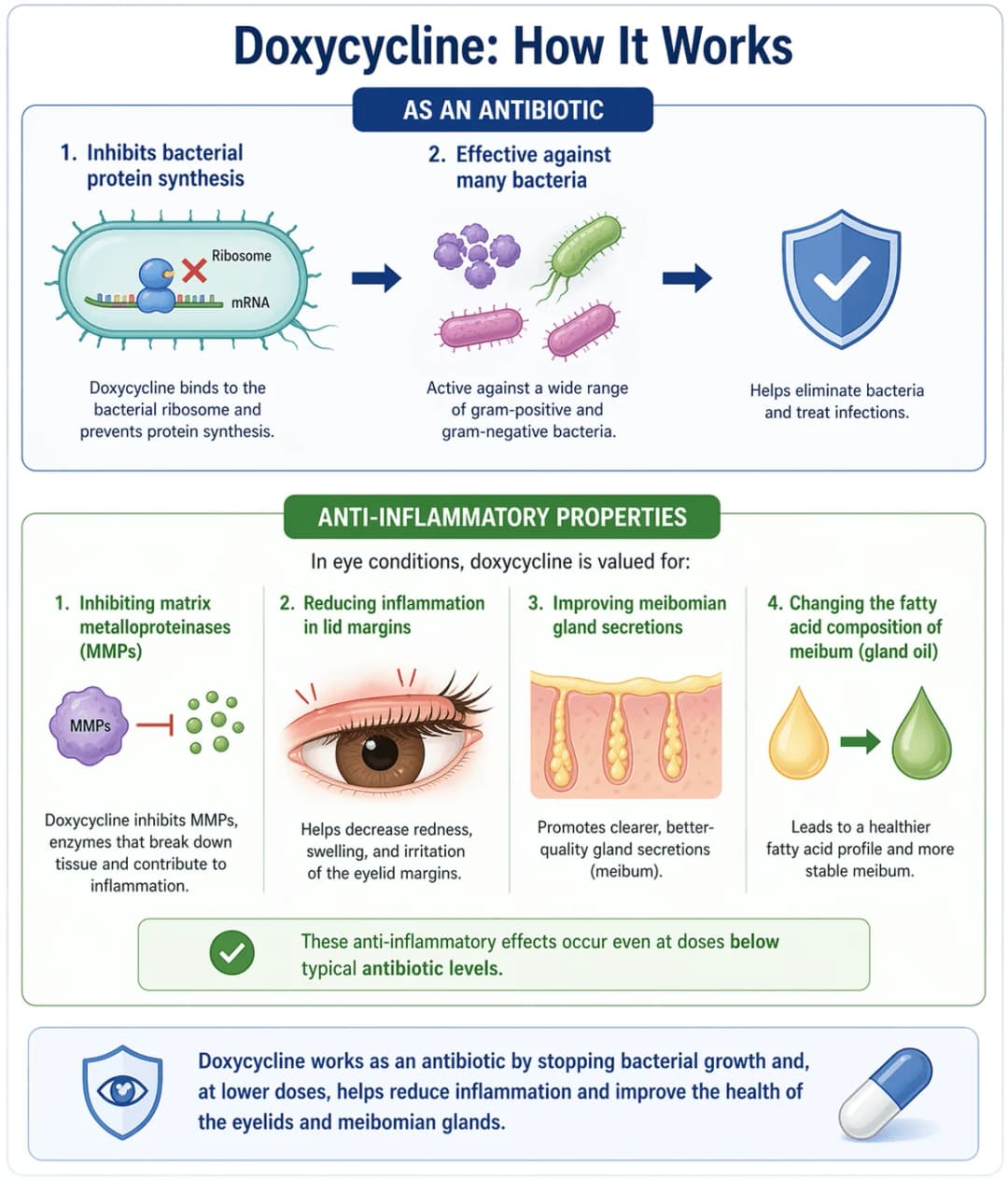
As an Antibiotic
- Binds the bacterial 30S ribosomal subunit
- Inhibits protein production that bacteria need to grow and multiply
- Helps the immune system clear susceptible bacteria
- Has activity against selected atypical organisms, which is why it may be used for infections such as chlamydial conjunctivitis
Anti-Inflammatory Properties
In eye conditions, doxycycline is valued for:
- Inhibiting matrix metalloproteinases (MMPs)
- Reducing inflammation in lid margins
- Improving meibomian gland secretions
- Changing the fatty acid composition of meibum (gland oil)
These effects occur even at doses below typical antibiotic levels.
Conditions Treated by Doxycycline
- Blepharitis-especially posterior blepharitis
- Meibomian gland dysfunction (MGD)-a common driver of evaporative dry eye
- Ocular rosacea-sometimes called acne rosacea when it affects the eyes and eyelids
- Dry eye disease related to MGD
- Recurrent chalazia (eyelid cysts)
- Selected eye infections that need oral therapy, including chlamydial conjunctivitis; routine bacterial conjunctivitis is usually treated with topical antibiotics when antibiotics are needed
In eye care, doxycycline is often prescribed for its anti-inflammatory properties, helping reduce eyelid swelling, redness, irritation, and thickened meibomian gland oil in chronic lid disease.
Dosage and Administration
Doxycycline dosing varies by condition, weight, age, pregnancy status, kidney/liver considerations, drug interactions, and whether the goal is anti-inflammatory treatment or infection treatment. Follow the exact prescription on your bottle and the instructions from your eye doctor or prescribing clinician.
Standard Anti-Inflammatory Dosing
- 20-50 mg twice daily or 40-100 mg once daily
- Duration: Often 6-12 weeks initially
- May be used longer term at low doses
Full Antibiotic Dosing
- 100 mg twice daily
- Used when infection is the primary concern
- Shorter courses typically
- If prescribed for infection, complete the course as directed even if symptoms improve early, unless your prescriber tells you to stop
Commonly Prescribed Forms
- Doxycycline 50 mg or 100 mg capsules/tablets
- Oracea (40 mg doxycycline modified-release)-designed for anti-inflammatory use
How to Take
- With food or milk to reduce stomach upset
- Full glass of water
- Stay upright for at least 30 minutes after taking (prevents esophageal irritation)
- Avoid lying down right after taking
- Take at same time daily for best results
- Separate from antacids, calcium, magnesium, aluminum, iron, and zinc unless your prescriber gives different instructions
What to Expect
Timeline
- Some improvement in weeks
- Full benefit may take 6-12 weeks
- Often used as initial treatment, then tapered or stopped
Effects
- Reduced lid margin inflammation
- Improved meibomian gland function
- Better tear film quality
- Reduced dry eye symptoms
Side Effects
Common
- Sun sensitivity (photosensitivity)-use sunscreen, avoid prolonged sun
- Nausea or stomach upset
- Diarrhea
- Yeast infections
Less Common
- Esophageal irritation (prevent by taking upright with water)
- Headache
- Dizziness
Rare But Serious
- Severe skin reactions
- Liver problems
- Increased intracranial pressure
Stop doxycycline and contact a healthcare professional urgently if you develop trouble swallowing, facial/lip/tongue swelling, severe rash, severe headache, new vision changes, yellowing of the skin or eyes, or other severe symptoms.
Precautions
Important precautions:
- Sun exposure: Increased photosensitivity-use sunscreen and protective clothing
- Pregnancy: Generally avoided unless benefits outweigh risks; use only with obstetric/prescriber guidance
- Children under 8: Generally avoided for routine or prolonged use because of tooth/bone concerns, but short courses are recommended for selected serious infections such as suspected rickettsial disease
- Breastfeeding: Discuss with the prescriber; short courses may be acceptable in some situations, while prolonged or repeated courses need closer review
- Antacids/calcium/iron: Take separately (reduce absorption)
- Esophageal irritation: Take with plenty of water, stay upright
Drug Interactions
- Antacids, calcium, iron-take 2-3 hours apart
- Warfarin-may increase bleeding risk
- Oral contraceptives-ask whether backup contraception is needed, especially if vomiting or diarrhea occurs
- Isotretinoin-avoid combination
Alternatives to Doxycycline
Alternatives depend on the diagnosis. For chronic eyelid inflammation and MGD, the foundation is usually warm compresses, lid hygiene, and treatment of rosacea or dry-eye inflammation. For bacterial eye infections, topical antibiotics such as erythromycin ointment may be used instead of an oral antibiotic when the infection is limited to the surface.
| Condition | Doxycycline Role | Alternatives |
|---|---|---|
| Blepharitis/MGD | First-line oral option for moderate or persistent inflammatory disease | Lid hygiene, warm compresses, azithromycin, in-office gland treatments |
| Ocular rosacea | Often first-line oral option when lid inflammation is significant | Azithromycin, topical skin treatments, IPL in selected patients |
| Dry eye related to MGD | Adjunct when gland inflammation is a major driver | Artificial tears, prescription anti-inflammatory drops, Miebo, punctal plugs when appropriate |
| Surface bacterial conjunctivitis | Not usually first-line for routine cases | Erythromycin ointment, polymyxin B/trimethoprim, or other topical antibiotics selected by the clinician |
When to Follow Up With an Eye Doctor
Contact your eye doctor if symptoms are worsening, vision changes, eye pain develops, light sensitivity is significant, discharge is heavy, eyelid swelling is spreading, or there is no improvement on the expected timeline. For chronic blepharitis, MGD, or ocular rosacea, follow-up is often used to decide whether to taper, stop, continue, or combine doxycycline with other treatments.
Long-Term Use
Safety
- Low-dose doxycycline is often tolerated for longer courses in selected nonpregnant adults under clinician supervision
- Used for months in rosacea and MGD when benefits outweigh risks
- Periodic review may be recommended for side effects, interactions, pregnancy status, and intracranial-pressure symptoms
When to Stop
- After adequate improvement (often 2-3 months)
- May relapse-can restart if needed
- Some patients need intermittent or maintenance therapy
Frequently Asked Questions
Why am I taking an antibiotic for dry eye/blepharitis?
At low doses, doxycycline works primarily as an anti-inflammatory, not an antibiotic. It improves meibomian gland function and reduces lid inflammation, which helps with dry eye caused by these problems.
How long will I need to take doxycycline?
Typically 6-12 weeks for initial treatment. Some patients can then stop, while others may need longer treatment or periodic courses. Your doctor will guide duration based on your response.
Why do I need to avoid the sun?
Doxycycline increases photosensitivity-your skin burns more easily. Use sunscreen SPF 30+ and wear protective clothing. Avoid prolonged sun exposure while taking it.
Can I take doxycycline with my calcium supplement?
Take them at least 2-3 hours apart. Calcium (and antacids, iron) binds to doxycycline and reduces absorption.
What if I get an upset stomach?
Take with food or milk (unlike some antibiotics, doxycycline can be taken with dairy). If stomach upset persists, discuss with your doctor.
Is doxycycline safe long-term?
Low-dose doxycycline for anti-inflammatory purposes is often tolerated for longer courses in selected nonpregnant adults under clinician supervision. Your doctor should periodically review side effects, interactions, pregnancy status, and symptoms that could suggest increased intracranial pressure.
Medical Disclaimer: This information is for educational purposes only and does not replace professional medical advice. Follow your doctor's instructions regarding this medication.
References
For current U.S. drug labeling, contraindications, boxed warnings, pregnancy/lactation language, and formulation-specific dosing, check the official label databases and your prescriber's instructions.