

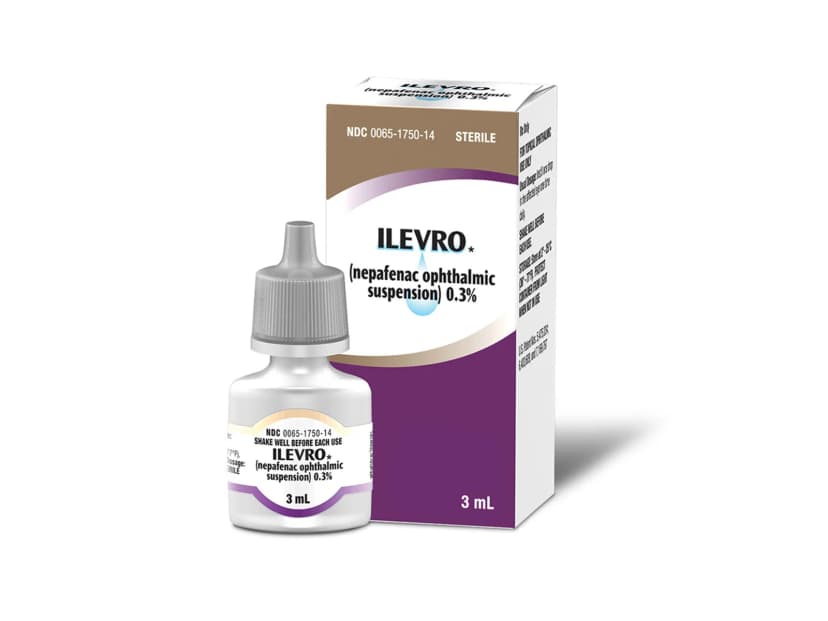
Ilevro (Nepafenac 0.3%)
A once-daily NSAID eye drop for treating inflammation and pain after cataract surgery.
Drug Class: NSAIDs
Ilevro (nepafenac ophthalmic suspension 0.3%) is a nonsteroidal anti-inflammatory drug (NSAID) eye drop used to treat pain and inflammation after cataract surgery. It's a prodrug that becomes active after penetrating the eye.
Official website: ilevrohcp.com
Key Takeaways
- NSAID eye drop for post-cataract surgery
- Once daily dosing-improved convenience
- Prodrug design activates inside the eye
- Shake well before each use
- Used with steroid drops for optimal post-op care
How It Works
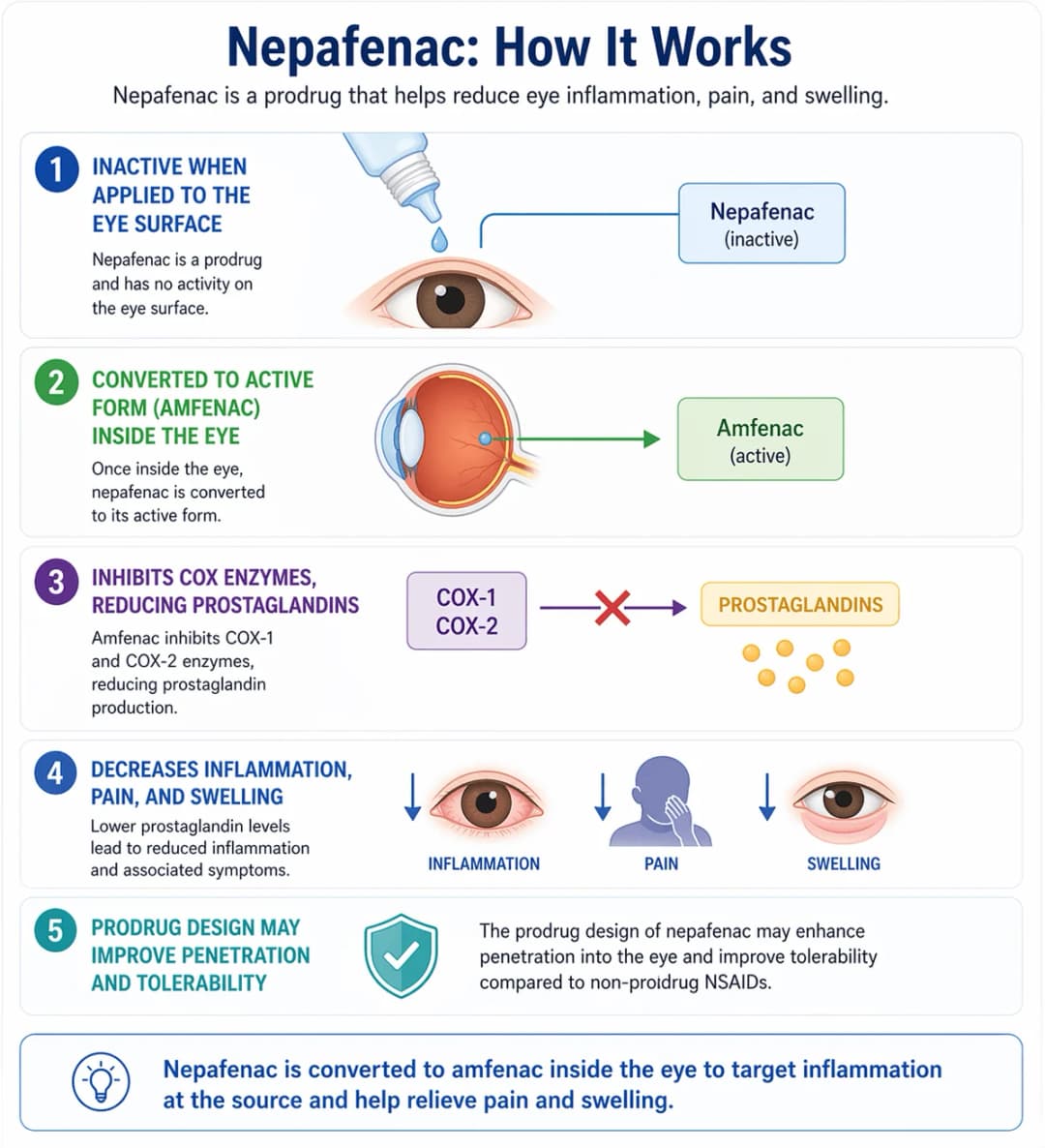
Nepafenac is a prodrug:
- Inactive when applied to the eye surface
- Converted to active form (amfenac) inside the eye
- Inhibits COX enzymes, reducing prostaglandins
- Decreases inflammation, pain, and swelling
The prodrug design may improve penetration and tolerability.
Common Uses
- Pain and inflammation after cataract surgery
- Prevention of cystoid macular edema (CME)
- Part of post-operative medication regimen
How to Use
- Dosing: One drop in the operative eye once daily
- Shake well before each use (it's a suspension)
- Timing: Start 1 day before surgery, day of surgery, and for 14 days after
- Contact lenses: Don't wear during treatment
- Multiple drops: Wait at least 5 minutes between different medications
Typical Post-Cataract Surgery Regimen
Usually includes:
- Antibiotic drop-prevent infection
- Steroid drop-control inflammation
- NSAID drop (Ilevro)-additional anti-inflammatory, prevent CME
What to Expect
- Helps manage post-surgical inflammation
- Contributes to comfortable recovery
- Complete full course as directed
Side Effects
Common
- Capsular opacity (posterior capsule opacification-can occur anyway after cataract surgery)
- Eye pain
- Increased intraocular pressure
- Headache
- Foreign body sensation
- Eye irritation
Less Common
- Blurred vision
- Eye redness
- Light sensitivity
- Corneal issues (with prolonged use)
Rare But Serious
- Corneal problems (erosion, perforation)-more likely with prolonged use or corneal disease
- Delayed wound healing
Precautions
Important precautions:
- Shake well before every use
- Aspirin/NSAID allergy: May be contraindicated
- Bleeding disorders: Inform your doctor
- Corneal problems: Use with caution
- Contact lenses: Don't wear during treatment
- Complicated surgery: May need closer monitoring
Corneal Considerations
NSAIDs can affect corneal healing. Use with caution in:
- Pre-existing corneal disease
- Repeated eye surgeries
- Complicated surgical cases
Ilevro vs. Other NSAID Eye Drops
| Medication | Active Drug | Dosing | Notes |
|---|---|---|---|
| Ilevro | Nepafenac 0.3% | Once daily | Prodrug, suspension |
| Prolensa | Bromfenac 0.07% | Once daily | Solution |
| Nevanac | Nepafenac 0.1% | Three times daily | Lower concentration |
| Ketorolac | Ketorolac 0.5% | Four times daily | Generic available |
Why NSAIDs After Eye Surgery?
Complementary to Steroids
- Different anti-inflammatory mechanism
- Enhanced inflammation control together
- May allow lower steroid doses
CME Prevention
- Cystoid macular edema (retinal swelling) can occur after surgery
- Can affect vision significantly
- NSAIDs help prevent this complication
Pain Management
- Reduces post-operative discomfort
- Targets inflammatory pain at source
Frequently Asked Questions
What's the difference between Ilevro and Nevanac?
Both contain nepafenac, but Ilevro (0.3%) is dosed once daily while Nevanac (0.1%) is dosed three times daily. Ilevro's higher concentration allows less frequent dosing.
Why do I need to shake Ilevro?
Ilevro is a suspension-the medication particles settle. Shaking ensures you get the correct dose with each drop.
Can I skip the NSAID if I'm using a steroid drop?
Your surgeon prescribed both for a reason. NSAIDs provide additional benefits, particularly in preventing macular swelling. Follow your surgeon's complete regimen.
How long do I use Ilevro?
Typically start 1 day before surgery and continue through 14 days after (total of about 16 days). Follow your surgeon's specific instructions.
What if I'm allergic to aspirin?
If you have aspirin-sensitive asthma or severe NSAID allergy, tell your surgeon. An alternative may be needed.
Can I use Ilevro for other eye conditions?
Ilevro is specifically approved for post-cataract surgery use. Other uses would be off-label and based on your doctor's clinical judgment.
Medical Disclaimer: This information is for educational purposes only and does not replace professional medical advice. Follow your surgeon's instructions regarding post-operative medications.
References
For current U.S. drug labeling, contraindications, boxed warnings, pregnancy/lactation language, and formulation-specific dosing, check the official label databases and your prescriber's instructions.