
Eye Strain and Fatigue
Tired, aching eyes from prolonged visual tasks are common but usually manageable. Learn about causes and how to reduce eye strain.
Eye strain, also called asthenopia, is discomfort and fatigue of the eyes typically caused by prolonged visual tasks like reading, computer work, or driving. While uncomfortable, eye strain doesn't usually indicate serious eye problems and can often be managed with simple measures.
Key Takeaways
- Eye strain is common especially with screen use—"digital eye strain" or "computer vision syndrome"
- It doesn't cause permanent damage but can significantly impact comfort and productivity
- The 20-20-20 rule helps: every 20 minutes, look at something 20 feet away for 20 seconds
- Uncorrected vision problems often worsen eye strain
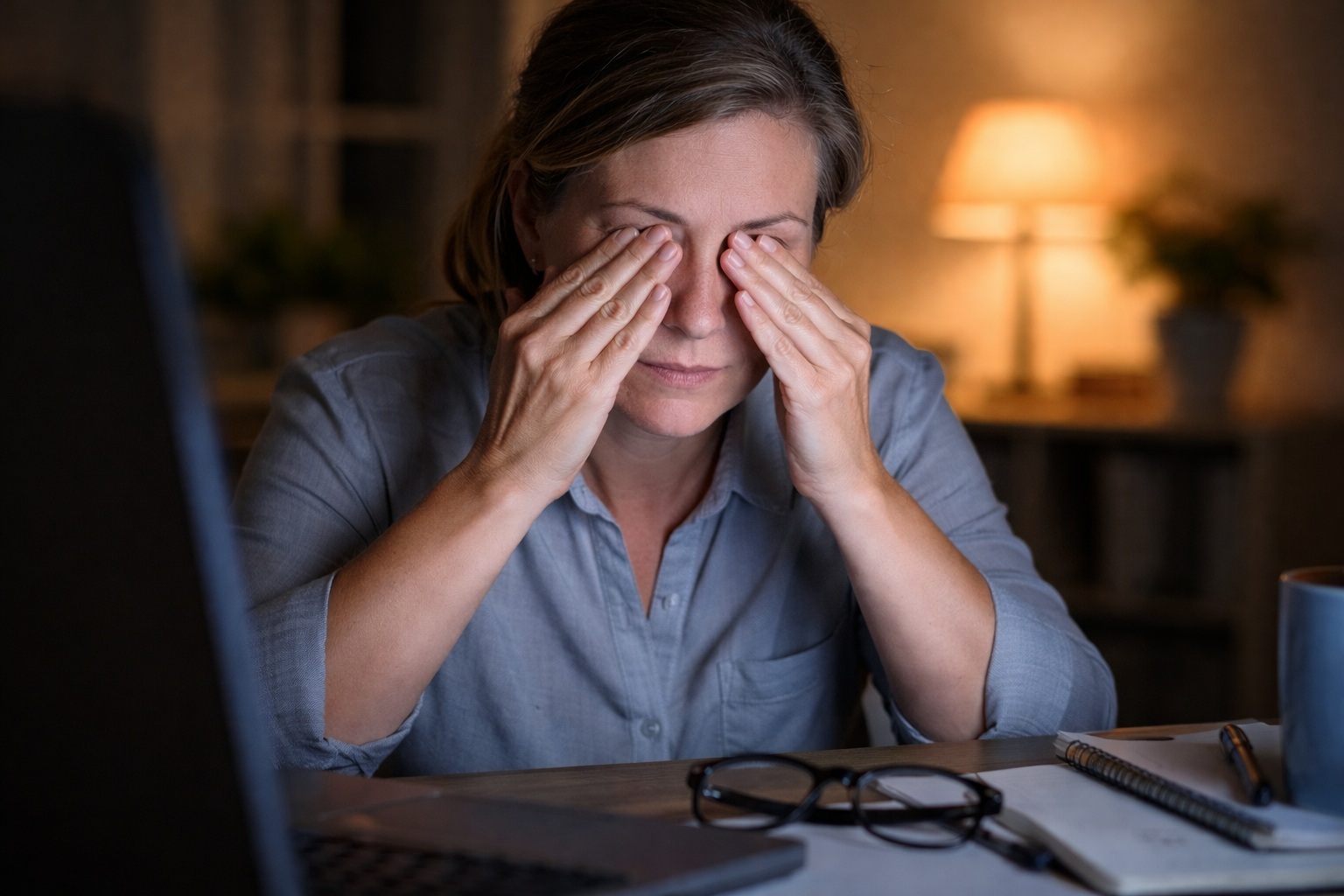
What Eye Strain Feels Like
Symptoms of eye strain include:
- Tired, heavy eyes
- Aching or soreness in or around eyes
- Difficulty focusing
- Dry, irritated eyes
- Watery eyes
- Blurred vision that comes and goes
- Headache (often frontal or around eyes)
- Neck and shoulder tension
- Difficulty keeping eyes open
- Light sensitivity
- Worse at end of day or after prolonged tasks
Common Causes
Digital Eye Strain (Computer Vision Syndrome)
The most common cause today — our guide to screen-related eye strain can help you determine if this is what you're experiencing:
- Reduced blinking—we blink less when staring at screens
- Screen distance and angle—often too close or awkward
- Glare—from screens or lighting
- Poor contrast—small text, low resolution
- Blue light—may contribute to eye fatigue
Uncorrected Vision Problems
- Need for glasses—or outdated prescription
- Presbyopia—age-related difficulty with near focus
- Astigmatism—irregular cornea causing strain
- Convergence insufficiency—difficulty coordinating eyes for near work
Environmental Factors
- Poor lighting—too dim or too bright
- Dry air—from heating, AC, or low humidity
- Air blowing toward face—from vents or fans
- Glare—from windows or lights
Other Factors
- Prolonged concentration—any sustained visual task
- Driving long distances—especially at night
- Contact lens wear—can contribute to dryness
- Lack of sleep—tired people have more eye strain
When to Seek Care
Eye strain is usually benign, but see a doctor if:
Schedule an eye exam if you experience:
- Eye strain that doesn't improve with rest and simple measures
- Persistent headaches
- Significant vision changes
- Double vision
- Eye pain rather than just tired eyes
- Symptoms that are getting progressively worse
Managing Eye Strain
The 20-20-20 Rule
Every 20 minutes, look at something 20 feet away for at least 20 seconds. This gives your focusing muscles a break.
Optimize Your Workspace
Screen position:
- 20-26 inches from eyes
- Top of screen at or slightly below eye level
- Tilt screen slightly back (15-20 degrees)
Lighting:
- Position screen to avoid glare from windows
- Use indirect lighting rather than overhead fluorescents
- Consider a desk lamp for papers
- Match screen brightness to surroundings
Chair and posture:
- Feet flat on floor
- Thighs horizontal
- Arms at comfortable angle for keyboard
- Back supported
Screen Settings
- Increase text size if squinting
- Adjust brightness to match environment
- Increase contrast
- Use dark mode if it helps
- Consider blue light filter (night shift mode)
Blink More
- Consciously remind yourself to blink
- Post a reminder note near your screen
- Take blink breaks
Address Dry Eye
- Use artificial tears (preservative-free for frequent use)
- Consider a humidifier
- Direct vents away from face
- Stay hydrated
Get the Right Glasses
- Have your vision checked regularly
- Consider computer glasses (optimized for screen distance)
- Ensure your prescription is current
- Anti-reflective coating can help
Take Breaks
- Step away from the computer regularly
- Do different tasks periodically
- Look out the window
- Walk around
Eye Strain vs. More Serious Conditions
| Eye Strain | May Be More Serious |
|---|---|
| Tired, aching eyes | Severe pain |
| Improves with rest | Persists or worsens |
| Related to visual tasks | Unrelated to tasks |
| No vision loss | Actual vision loss |
| Headache around eyes | Severe or unusual headache |
| Goes away with breaks | Constant |
Frequently Asked Questions
Can eye strain damage my eyes?
No. While eye strain is uncomfortable, it doesn't cause permanent damage to your eyes or vision. However, it can significantly affect your comfort and productivity.
Do blue light glasses help?
Evidence is mixed. Some people find them helpful, but scientific studies haven't conclusively proven they reduce eye strain. They're generally harmless to try if you want to see if they help you.
Is screen time bad for my eyes?
Screen time causes eye strain but not permanent damage. Children who spend more time indoors (on screens or otherwise) may have higher rates of nearsightedness development—outdoor time appears protective.
Why is my eye strain worse at the end of the day?
Your eye muscles and tear film fatigue over the day. Blinking decreases, eyes dry out more, and focusing muscles tire. This is why symptoms often peak in the afternoon or evening.
Should I limit my screen time?
Taking regular breaks is more important than arbitrary limits. Follow the 20-20-20 rule, optimize your environment, and ensure you're blinking enough. If eye strain persists despite these measures, discuss with your eye doctor.
Can eye exercises help?
For general eye strain, breaks and good habits are usually sufficient. However, if you have convergence insufficiency (difficulty coordinating eyes for near work), specific exercises prescribed by an eye doctor can help.
References
Medical Disclaimer: This information is for educational purposes only and does not replace professional medical advice, diagnosis, or treatment. If you have concerns about eye strain or any symptoms, please consult a qualified healthcare provider.
Sources:
- American Academy of Ophthalmology. Computers, Digital Devices and Eye Strain.
- American Optometric Association. Computer Vision Syndrome.
- National Eye Institute. Digital Eye Strain.