

Orbital Cellulitis
A serious infection of the tissues behind the eye that requires urgent treatment to prevent vision loss and life-threatening complications.
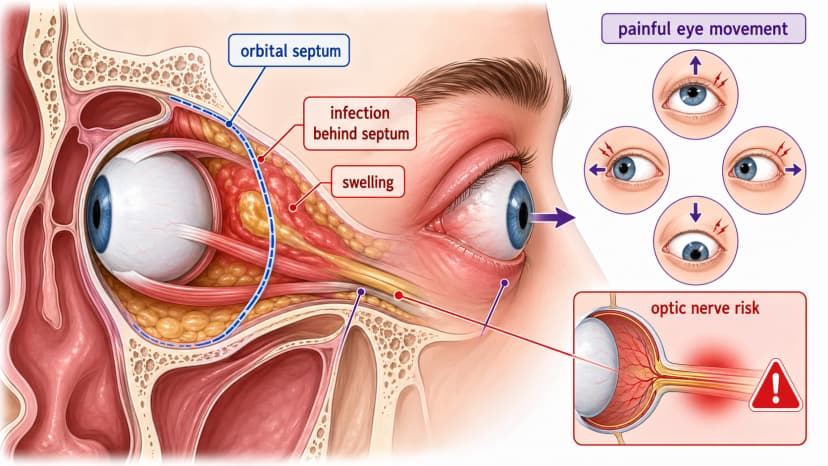
Orbital cellulitis is a serious infection of the fat and muscles behind the eye (in the orbit). It's a medical emergency that requires prompt treatment with IV antibiotics and sometimes surgery to prevent permanent vision loss and potentially life-threatening spread of infection.
Key Takeaways
- Medical emergency-requires urgent treatment
- Usually spreads from sinuses (especially in children)
- Causes painful, bulging eye with limited movement
- IV antibiotics are first-line treatment
- Surgery may be needed if abscess forms
Orbital vs. Preseptal Cellulitis
It's important to distinguish orbital cellulitis from the less serious preseptal (periorbital) cellulitis:
Preseptal Cellulitis
- Infection in front of the orbital septum
- Eyelid swelling and redness
- Eye movement normal
- Vision normal
- No proptosis
- Less urgent (but still needs treatment)
Orbital Cellulitis
- Infection behind the orbital septum
- Proptosis (bulging eye)
- Painful eye movement
- Limited eye movement
- May have vision changes
- Medical emergency
Causes
Most Common: Sinus Disease
- Spreads from adjacent sinusitis
- Ethmoid sinusitis most common in children
- Frontal sinusitis in older children/adults
Other Causes
- Spread from preseptal cellulitis
- Dental infections
- Trauma (including surgery)
- Foreign bodies
- Blood-borne spread (rare)
Common Organisms
- Streptococcus species
- Staphylococcus aureus
- Haemophilus influenzae (less common since vaccination)
- Anaerobes
- Polymicrobial infections common
Symptoms
- Eye pain-especially with movement
- Bulging eye (proptosis)
- Eyelid swelling and redness
- Limited eye movement (double vision)
- Fever
- Vision changes (serious sign)
- Headache
- Nasal congestion or discharge
Warning Signs
Seek emergency care immediately if you have:
- Painful, bulging eye
- Fever with eye swelling
- Decreased vision
- Severe eye pain with movement
- Inability to move the eye
Orbital cellulitis can spread to the brain, causing meningitis or brain abscess.
Diagnosis
Clinical Examination
- Complete eye exam including vision
- Assessment of eye movements
- Pupil examination
- Proptosis measurement
- Examination of sinuses
Imaging
- CT scan of orbits and sinuses
- Shows extent of infection
- Identifies abscess if present
- Evaluates sinus disease
- MRI if intracranial extension suspected
Laboratory Tests
- Complete blood count
- Blood cultures
- Cultures from any drainage
Treatment
Hospitalization
- Most patients require hospital admission
- Close monitoring of vision and eye movement
IV Antibiotics
- Broad-spectrum coverage initially
- Adjusted based on culture results
- Typical regimens include:
- Vancomycin + ceftriaxone/cefotaxime
- Or ampicillin-sulbactam
- Duration: typically 2-3 weeks total
Surgical Intervention
Surgery may be needed for:
- Orbital abscess (subperiosteal or orbital)
- No improvement on IV antibiotics (24-48 hours)
- Vision deterioration
- Large abscess on imaging
Surgical options:
- Abscess drainage
- Sinus surgery (to address source)
Supportive Care
- Pain management
- Nasal decongestants
- Elevation of head
Complications
Orbital Complications
- Vision loss (from optic nerve compression)
- Elevated eye pressure
- Corneal exposure
- Chronic motility problems
Intracranial Complications
- Cavernous sinus thrombosis
- Meningitis
- Brain abscess
- These are life-threatening
Prognosis
With prompt treatment:
- Most patients recover fully
- Vision loss is preventable if treated early
- Complications more common with:
- Delayed treatment
- Abscess formation
- Intracranial extension
Prevention
- Prompt treatment of sinus infections
- Good dental hygiene
- Appropriate wound care after facial trauma
- Vaccination (Haemophilus influenzae type b)
Frequently Asked Questions
How quickly does orbital cellulitis develop?
It can develop rapidly, over 24-48 hours. Preseptal cellulitis can progress to orbital cellulitis, and orbital cellulitis can develop serious complications within days if untreated.
Can adults get orbital cellulitis?
Yes, though it's more common in children. In adults, it's often associated with sinus disease, trauma, or dental infections.
How long is the recovery?
With appropriate treatment, improvement usually begins within 24-48 hours. Complete recovery may take several weeks. Some patients need 2-3 weeks of antibiotics.
Will I need surgery?
Not everyone needs surgery. About 25-30% of patients may require surgical drainage, particularly if an abscess has formed or there's no improvement with antibiotics alone.
Medical Disclaimer: This information is for educational purposes only and does not replace professional medical advice, diagnosis, or treatment.
Sources:
- American Academy of Ophthalmology EyeWiki. Orbital Cellulitis.
- MedlinePlus. Orbital Cellulitis.