

Acetazolamide (Diamox)
A carbonic anhydrase inhibitor used primarily to lower intracranial pressure in idiopathic intracranial hypertension.
Drug Class: Diuretics
Acetazolamide (brand name Diamox) is a medication that reduces the production of cerebrospinal fluid, making it particularly useful for treating idiopathic intracranial hypertension (IIH). It also has uses for glaucoma and altitude sickness.
Key Takeaways
- Reduces cerebrospinal fluid production
- Primary treatment for IIH
- Causes tingling sensations-common and often not dangerous, but report severe or worsening symptoms
- Makes carbonated drinks taste strange
- Tell your clinician about any sulfonamide or acetazolamide reaction
How It Works
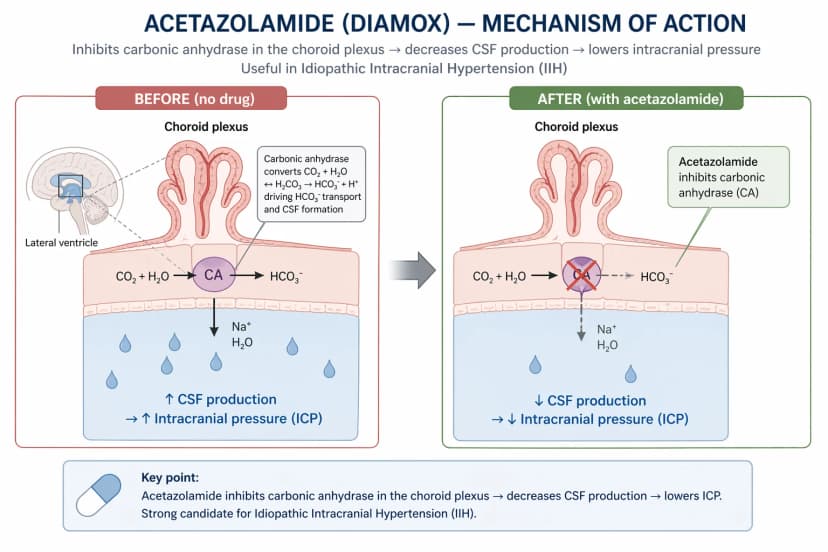
Acetazolamide inhibits carbonic anhydrase, an enzyme involved in fluid production. By blocking this enzyme in the brain's choroid plexus, it reduces cerebrospinal fluid production, lowering intracranial pressure.
Common Uses
- Idiopathic intracranial hypertension-first-line medical treatment
- Glaucoma (reduces eye pressure)
- Altitude sickness prevention
- Certain seizure disorders
Dosing
- Usually 500mg to 2000mg daily
- Often divided into 2-4 doses
- Start lower and increase gradually
- Sustained-release formulation available
Side Effects
Common (Usually Tolerable)
- Tingling in hands, feet, face-very common and often not dangerous, but report severe, worsening, or associated symptoms
- Altered taste-carbonated drinks taste flat or metallic
- Increased urination
- Fatigue initially
- Loss of appetite
Less Common
- Kidney stones
- Low potassium
- Metabolic acidosis
- Blood count changes (rare)
Monitoring
- Electrolytes (especially potassium, bicarbonate)
- Kidney function
- Blood count periodically
- Symptoms of kidney stones
- Visual fields, optic nerve exam, and often OCT when the reason for treatment is IIH with papilledema
Important Precautions
Sulfonamide allergy: Tell your clinician about any prior reaction to sulfonamide antibiotics, acetazolamide, other carbonic anhydrase inhibitors, or severe drug rashes. A sulfonamide-antibiotic allergy alone is not always a reason to avoid acetazolamide, because immunologic cross-reactivity with non-antibiotic sulfonamides appears uncommon. Severe prior reactions, acetazolamide-specific reactions, and label-listed contraindications still require individualized risk review.
Pregnancy and Breastfeeding
Tell your clinician before starting acetazolamide if you are pregnant, planning pregnancy, or breastfeeding. The drug label recommends acetazolamide in pregnancy only when the expected benefit justifies the fetal risk. During breastfeeding, labels are cautious, while LactMed reports low milk levels at maternal doses up to 1000 mg/day; your prescriber may coordinate with obstetrics or pediatrics, especially for newborns, premature infants, higher doses, or kidney disease.
Tips for Taking Acetazolamide
- Stay well hydrated (reduces kidney stone risk)
- Take with food to reduce stomach upset
- The tingling usually improves with time
- Potassium supplements may be needed
- Tell your care team about severe fatigue, confusion, persistent vomiting, flank pain, blood in the urine, rash, or breathing changes
Frequently Asked Questions
Is the tingling normal?
Yes, tingling (paresthesias) is a very common side effect and is often not dangerous. It often improves with continued use. If it is severe, worsening, or associated with weakness, confusion, vomiting, or breathing changes, contact your doctor because acetazolamide can affect electrolytes and acid-base balance.
Why do sodas taste weird?
Acetazolamide alters how you taste carbon dioxide. Carbonated beverages may taste flat or metallic. This taste change is not dangerous by itself, but it can be unpleasant.
How long do I need to take this?
Duration depends on your condition. For IIH, it may be needed for months to years, often alongside weight loss efforts. Some patients can eventually stop the medication.
Is acetazolamide enough if my vision is worsening?
Not always. If papilledema or visual fields worsen despite medication, urgent escalation may include higher-level medical management, optic nerve sheath fenestration, or CSF shunting.
Medical Disclaimer: This information is for educational purposes only and does not replace professional medical advice.
Sources:
- DailyMed. Acetazolamide tablets prescribing information.
- LactMed. Acetazolamide.
- American Academy of Allergy, Asthma & Immunology. Acetazolamide and sulfonamide allergy.
- Mollan SP, et al. Idiopathic intracranial hypertension: consensus guidelines on management. J Neurol Neurosurg Psychiatry. 2018;89(10):1088-1100.