

Idiopathic Intracranial Hypertension (Pseudotumor Cerebri)
Increased pressure in the skull without a tumor causing headaches and vision problems. Learn about diagnosis, treatment, and protecting your vision.
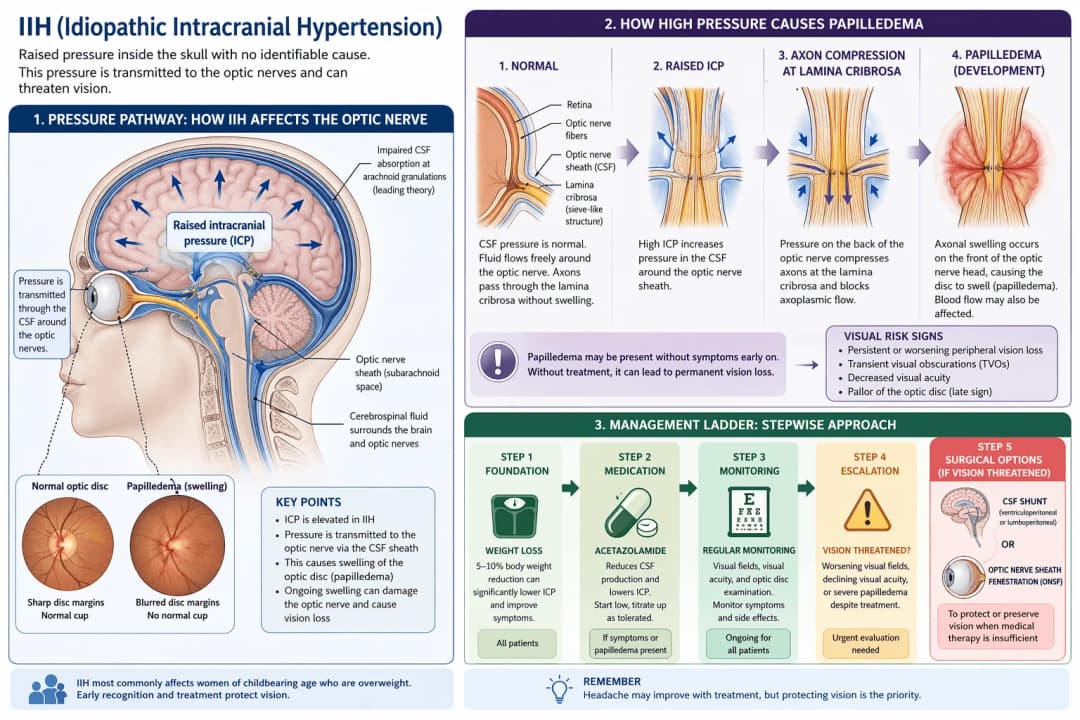
Idiopathic intracranial hypertension (IIH), formerly called pseudotumor cerebri, is a condition of elevated pressure inside the skull without an identifiable cause like a tumor or blood clot. The increased pressure can damage the optic nerves and cause vision loss if untreated.
Key Takeaways
- IIH causes elevated brain pressure without a tumor or other structural cause
- Most common in young, overweight women of childbearing age
- Symptoms: headaches, transient vision changes, pulsatile tinnitus, double vision
- Papilledema (optic disc swelling) is the key finding
- Treatment focuses on weight loss, medications, and protecting vision
- Vision can be permanently damaged if not monitored and treated
Your IIH Patient Journey
For comprehensive guidance on living with IIH-from diagnosis through long-term management, including medication tips, vision monitoring, and when surgery may be needed-see our complete patient guide: Your IIH Journey - Diagnosis to Long-Term Management.
Understanding IIH
IIH is thought to involve abnormal CSF pressure regulation, venous outflow, and metabolic or hormonal factors. The exact mechanism is not fully understood, but the result is elevated pressure that can affect the brain and particularly the optic nerves where they enter the skull.
The condition is called:
- Idiopathic-no identified cause
- Intracranial hypertension-high pressure inside the skull
- Pseudotumor cerebri-old name meaning "false brain tumor" (mimics tumor symptoms)
Symptoms
Headache
- Most common symptom
- Often daily, throbbing
- Worse in morning
- Worse with straining, coughing, bending
- May improve after vomiting
- May be triggered by lying down
Visual Symptoms
- Transient visual obscurations-brief (seconds) dimming or graying of vision
- Often triggered by position change or straining
- Visual field loss-may be gradual and unnoticed
- Blurred vision
- Double vision-from sixth nerve palsy
Other Symptoms
- Pulsatile tinnitus-whooshing sound in ears synchronized with heartbeat
- Neck and shoulder pain
- Nausea
- Cognitive difficulties ("brain fog")
Who Gets IIH?
Classic Demographic
- Women of childbearing age (15-44 years)
- Overweight or recent weight gain
- 20 times more common in obese women
- Can occur in men and children (less common)
Associated Factors
- Obesity (most important risk factor)
- Recent weight gain
- Certain medications (tetracyclines, vitamin A/retinoids, growth hormone)
- Venous sinus stenosis (narrowing)
- Sleep apnea
Diagnosis
Fundoscopic Examination
- Papilledema-swelling of the optic discs
- Key finding that raises suspicion for IIH
- Severity correlates with risk of vision loss
Visual Field Testing
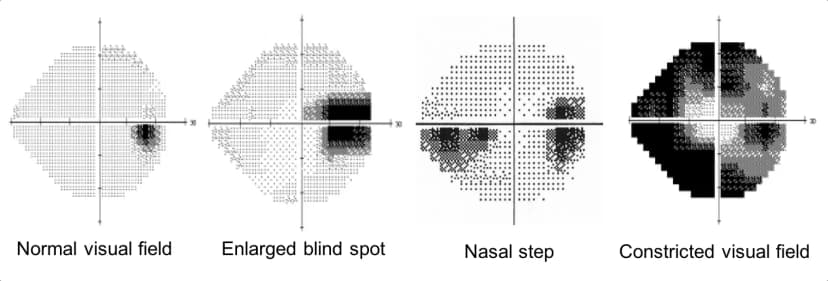
- Detects vision loss that patient may not notice
- Often shows enlarged blind spot
- May show peripheral constriction
- Essential for monitoring
Brain Imaging
- MRI brain with MRV-required to rule out other causes
- May show: empty sella, flattened back of eyeballs, enlarged optic nerve sheaths, venous sinus stenosis
- Rules out tumors, blood clots, other structural causes
Lumbar Puncture (Spinal Tap)
- Documents elevated opening pressure-typically >25 cm H2O (often higher)
- CSF composition is normal
- May provide temporary relief of symptoms
- Usually required for diagnosis unless a specialist determines a different approach is needed because of safety or clinical context
Optical Coherence Tomography (OCT)
- Measures optic nerve fiber layer thickness
- Tracks papilledema over time
- Detects early nerve damage
Diagnostic Criteria (Modified Dandy)
- Symptoms of elevated intracranial pressure (headache, vision symptoms)
- Papilledema present
- Normal neurological exam (except cranial nerve VI palsy)
- Normal brain imaging (MRI/MRV)
- Elevated CSF pressure on lumbar puncture
- Normal CSF composition
Treatment
Weight Loss
- A major long-term treatment
- 5-10% weight loss can significantly improve symptoms
- Can improve or sometimes resolve papilledema and symptoms, especially when sustained; ongoing monitoring is still needed
- Bariatric surgery may be considered for severe obesity
Medications
- First-line medication
- Reduces CSF production
- Start low, increase gradually
- Side effects: tingling, carbonated drinks taste flat, kidney stones
- Alternative or addition to acetazolamide
- May help with headache
- Can cause weight loss (advantage in IIH)
- Side effects: cognitive slowing, tingling
Furosemide
- Sometimes added to acetazolamide
- Monitor potassium
GLP-1 Receptor Agonists (Emerging Treatment)
GLP-1 medications (such as semaglutide, sold as Ozempic or Wegovy) are showing significant promise for IIH. Unlike traditional treatments that target only CSF production, GLP-1 agonists may work through two pathways:
- Weight loss - a major long-term treatment for IIH
- Possible CSF pressure effects - GLP-1 receptors on the choroid plexus (where CSF is made) may reduce fluid secretion independent of weight loss
The IIH Pressure Trial (Brain, 2023) found that exenatide lowered intracranial pressure within hours of the first dose. Headache days improved numerically more with exenatide than placebo, but the trial was small and not definitive for headache outcomes. A large retrospective study in JAMA Neurology (2025) identified more than 44,000 IIH patients and then compared matched cohorts; GLP-1 use was associated with lower rates of papilledema, headache, and visual disturbances, but observational data cannot prove causation.
GLP-1 medications are not yet standard of care for IIH, and more research is needed. For a detailed review of the evidence, see our guide on GLP-1 medications and eye health.
Procedures
Serial lumbar punctures
- Temporary relief of pressure
- Not a long-term solution
- May be used while medications take effect
Surgery (for severe or progressive cases)
Optic nerve sheath fenestration
- Creates window in optic nerve covering
- Protects vision
- May not help headache
Shunting procedures
- Ventriculoperitoneal (VP) shunt or lumboperitoneal shunt
- Drains excess CSF
- Helps both vision and headache
- May need revision over time
Venous sinus stenting
- For patients with venous sinus stenosis
- May reduce pressure
- Specialized centers
Monitoring
Regular follow-up is essential:
- Visual field testing-every few months or more often if unstable
- OCT-tracks nerve fiber layer
- Clinical exam-checking papilledema
- Symptom assessment
- Weight monitoring
Go to the emergency department the same day if vision is clearly worsening, transient blackouts are becoming frequent, new double vision appears, or papilledema has been described as severe. Call 911 immediately if vision symptoms occur with BE-FAST stroke symptoms, fainting, confusion, seizure, or sudden severe headache.
Prognosis
Good Outcomes
- Many patients do well with timely diagnosis, treatment, and close follow-up
- Symptoms often improve or resolve
- Weight loss can lead to long-term remission
Concerns
- Without treatment, progressive vision loss can occur
- Vision loss may be permanent
- May recur, especially with weight regain
- Requires ongoing monitoring
Frequently Asked Questions
Is IIH the same as a brain tumor?
No. The old name "pseudotumor cerebri" meant it mimics tumor symptoms, but there's no actual tumor. IIH is caused by elevated CSF pressure without a structural cause.
Will I go blind from IIH?
Without treatment, progressive vision loss can occur. However, with proper monitoring and treatment, most people maintain good vision. This is why regular visual field testing is so important.
Do I have to lose weight?
Weight loss is the most effective long-term treatment for IIH in overweight patients. Even modest weight loss (5-10%) can significantly improve the condition. Medications can help but work best combined with weight management.
Can IIH be cured?
Many people achieve remission, especially with significant weight loss. However, the condition can recur, particularly with weight regain. Some people need long-term medication or surgery.
Why do I have double vision?
The elevated pressure can stretch the sixth cranial nerve, which controls outward eye movement. This is usually temporary and improves as pressure is controlled.
How long do I need to take medication?
It varies. Some people can taper off after weight loss and stabilization. Others need long-term treatment. Your doctor will guide tapering based on your response.
What does an IIH headache feel like?
IIH headaches may be daily, positional, or migraine-like. They can be worse in the morning or when lying down and may worsen with straining, coughing, or bending. Associated visual symptoms, papilledema, and pressure findings help distinguish IIH from migraine and other headache disorders.
Can I exercise with IIH?
Yes, regular exercise is generally safe and encouraged because it supports weight loss-the most effective long-term treatment for IIH. Light to moderate aerobic exercise (walking, swimming, cycling) is ideal. However, avoid heavy Valsalva maneuvers such as straining during heavy weightlifting, as these can transiently raise intracranial pressure. Listen to your body and discuss an exercise plan with your doctor.
Does IIH cause brain fog or cognitive problems?
Yes. Many IIH patients report cognitive difficulties including problems with concentration, memory, and mental processing speed. Research has documented these cognitive effects, and they can significantly impact daily life and work. The good news is that cognitive symptoms often improve as intracranial pressure is brought under control with treatment and weight loss.
Is IIH a disability?
IIH can qualify as a disability depending on the severity of your symptoms and how they affect your ability to work. Studies suggest that IIH impacts work capacity in approximately 48% of patients. Vision loss, chronic headaches, and cognitive difficulties may all limit daily functioning. If your condition significantly affects your ability to work, you may be eligible for disability accommodations or benefits-discuss this with your healthcare provider and employer.
Can IIH come back after treatment?
Yes. Recurrence rates range from 23-38% in studies, and weight regain is the most common trigger. This is why maintaining a healthy weight after achieving remission is so important. Continued monitoring-including periodic visual field testing and eye exams-is recommended even after stopping medication, so any recurrence can be caught early before vision is affected.
What is pulsatile tinnitus and is it related to IIH?
Pulsatile tinnitus is a rhythmic whooshing or pulsing sound in one or both ears that synchronizes with your heartbeat. It is caused by turbulent blood flow near the ear, which becomes audible when intracranial pressure is elevated. Pulsatile tinnitus is one of the hallmark symptoms of IIH and often improves as pressure is lowered with treatment. If you develop pulsatile tinnitus, it should be evaluated by a doctor.
Are GLP-1 medications like Ozempic being used to treat IIH?
GLP-1 receptor agonists are emerging as a promising treatment for IIH, with early evidence that they may reduce intracranial pressure through weight loss and direct effects on CSF production. The IIH Pressure Trial showed rapid intracranial-pressure reduction with exenatide, while headache results were encouraging but underpowered. A large 2025 observational study found better outcomes in matched GLP-1 users, but it cannot prove causation. These medications are not yet standard of care for IIH. Learn more in our comprehensive guide to GLP-1 medications and eye health.
References
Medical Disclaimer: This information is for educational purposes only and does not replace professional medical advice, diagnosis, or treatment. If you have concerns about IIH or any symptoms, please consult a qualified healthcare provider.
Sources:
- Mollan SP, et al. Idiopathic intracranial hypertension: consensus guidelines on management. J Neurol Neurosurg Psychiatry. 2018;89(10):1088-1100.
- Friedman DI, et al. Diagnostic criteria for idiopathic intracranial hypertension. Neurology. 2013;81(13):1159-1165.
- Mitchell JL, et al. The effect of GLP-1 receptor agonist exenatide on intracranial pressure and headache in idiopathic intracranial hypertension. Brain. 2023;146(5):1821-1831.
- Sioutas GS, et al. GLP-1 receptor agonists in idiopathic intracranial hypertension. JAMA Neurol. 2025;82(9):887-894.
- North American Neuro-Ophthalmology Society. Idiopathic Intracranial Hypertension.
- MedlinePlus. Pseudotumor Cerebri.