

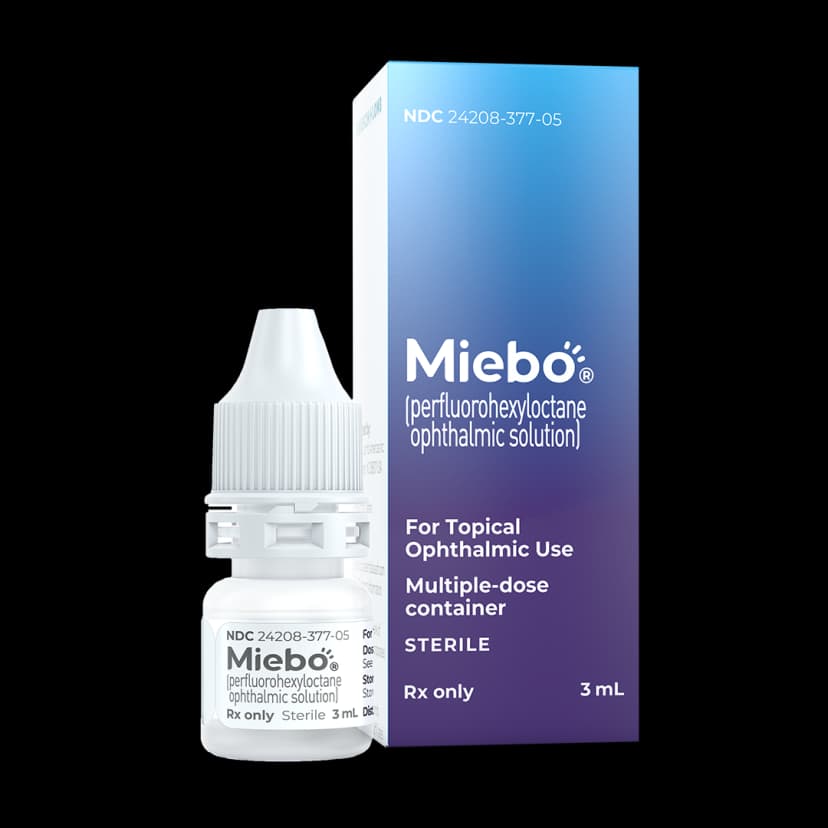
Miebo (Perfluorohexyloctane)
Prescription eye drops for dry eye disease that prevent tear evaporation by supplementing the lipid layer.
Drug Class: Tear Evaporation Inhibitors
Miebo (perfluorohexyloctane ophthalmic solution) is a prescription eye drop for treating signs and symptoms of dry eye disease. Unlike other dry eye medications, it works by directly preventing tear evaporation, making it particularly useful for evaporative dry eye.
Official website: miebo.com
Key Takeaways
- First drop specifically for evaporative dry eye-prevents tear evaporation
- Different approach than anti-inflammatory dry eye drops
- Four times daily dosing
- Works on the lipid layer of the tear film
- Contact lenses must be removed before each dose and kept out for at least 30 minutes
How It Works
Miebo takes a unique approach to dry eye:
- Creates a protective layer on the eye surface
- Prevents tears from evaporating
- Supplements or mimics the natural lipid (oil) layer
- Particularly helpful when meibomian glands aren't producing enough oil
Unlike cyclosporine or lifitegrast, it doesn't reduce inflammation-it physically prevents tear evaporation.
Common Uses
- Evaporative dry eye disease
- Meibomian gland dysfunction (MGD)
- Dry eye with good tear production but rapid evaporation
- May be used with or without anti-inflammatory drops
How to Use
- Dosing: One drop in each eye four times daily
- Contact lenses: Remove before each dose and wait at least 30 minutes before reinserting
- Instillation: Standard technique-clean hands, tilt head back, apply drop
- Multi-dose bottle: Can be used for up to 90 days after opening
- Storage: Room temperature
What to Expect
Timeline
- May notice improvement relatively quickly
- Full benefit with consistent use
- Continue as directed even when feeling better
Unique Features
- Contact lenses must be removed before use and kept out for at least 30 minutes
- Different mechanism allows combination with other dry eye treatments
- Not an anti-inflammatory-complementary approach
Side Effects
Common
- Blurred vision (temporary, especially right after instillation)
- Eye redness
- Eye pain or discomfort
- Eye irritation
- Foreign body sensation
Notes on Side Effects
- Blurred vision is usually brief
- Most side effects are mild and transient
- No systemic (body-wide) effects expected
Precautions
- Don't use if eye is infected
- Keep tip clean-don't touch to eye or other surfaces
- Pregnancy/breastfeeding: Discuss with doctor
- Multi-dose bottle: Good for 90 days after opening
For a full side-by-side comparison of all prescription dry eye medications, see comparing dry eye prescription drops.
How Miebo Differs from Other Dry Eye Treatments
| Treatment | How It Works | Best For |
|---|---|---|
| Miebo | Prevents evaporation | Evaporative dry eye, MGD |
| Restasis/Cequa | Reduces inflammation | Inflammatory dry eye |
| Xiidra | Reduces inflammation | Inflammatory dry eye |
| Artificial tears | Temporary lubrication | All types (symptom relief) |
Using Miebo with Other Treatments
Miebo can be used alongside:
- Anti-inflammatory drops (Restasis, Cequa, Xiidra)
- Artificial tears
- Warm compresses for MGD
- Omega-3 supplements
This combination approach addresses multiple aspects of dry eye.
Frequently Asked Questions
Can I use Miebo with my contact lenses?
No. Remove contact lenses before using Miebo and wait at least 30 minutes before reinserting them.
Is Miebo better than Restasis or Xiidra?
They work differently. Miebo prevents evaporation; Restasis, Cequa, and Xiidra reduce inflammation. Miebo may be better for purely evaporative dry eye, while inflammatory dry eye may need the other medications. Some patients benefit from combining approaches.
Why is Miebo dosed four times daily?
The protective layer it creates needs to be replenished regularly throughout the day for optimal effect.
Will my vision be blurry after using Miebo?
Some temporary blur right after instillation can occur. It typically clears quickly.
Can I use artificial tears with Miebo?
Yes, artificial tears can be used alongside Miebo. If using multiple drops, wait a few minutes between them.
How do I know if I have evaporative dry eye?
Your eye doctor can determine if your dry eye is primarily evaporative (often from meibomian gland dysfunction) or from reduced tear production. Signs include rapid tear break-up time and meibomian gland changes.
Medical Disclaimer: This information is for educational purposes only and does not replace professional medical advice. Follow your doctor's instructions regarding this medication.
References
For current U.S. drug labeling, contraindications, boxed warnings, pregnancy/lactation language, and formulation-specific dosing, check the official label databases and your prescriber's instructions.