

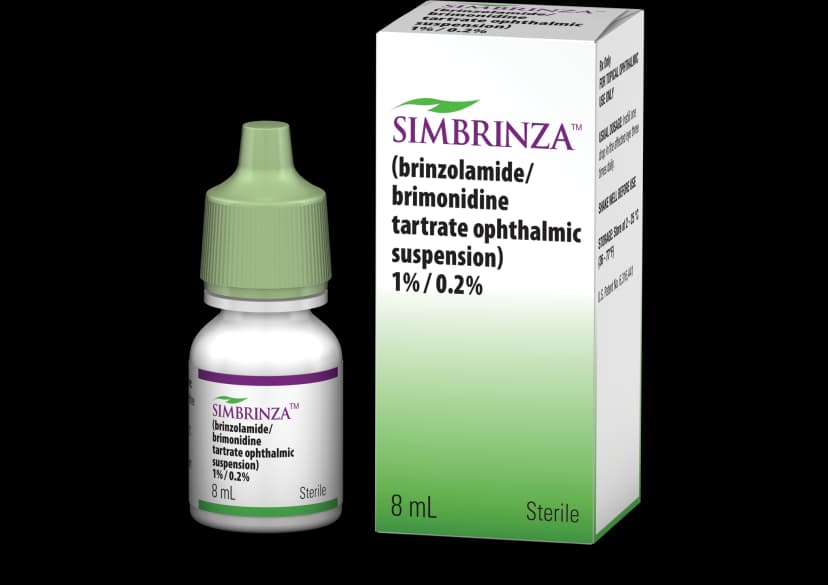
Simbrinza (Brinzolamide/Brimonidine)
Combination eye drops for glaucoma containing a carbonic anhydrase inhibitor and alpha agonist to lower eye pressure.
Drug Class: Glaucoma Combinations
Simbrinza is a prescription eye drop combining brinzolamide (a carbonic anhydrase inhibitor) and brimonidine (an alpha-2 agonist) for lowering intraocular pressure (IOP) in patients with glaucoma or ocular hypertension.
Official website: simbrinza.myalcon.com
Key Takeaways
- Combines two medications in one drop
- Prostaglandin-free option for those who can't use prostaglandins
- Typically three-times-daily dosing in the U.S.
- Can be added to prostaglandins for additional lowering
- No iris color change (unlike prostaglandin drops)
How It Works
Simbrinza combines two mechanisms:
Brinzolamide (carbonic anhydrase inhibitor):
- Reduces aqueous humor (eye fluid) production
- Same mechanism as dorzolamide
Brimonidine (alpha-2 agonist):
- Reduces fluid production
- Increases uveoscleral outflow
- May have neuroprotective properties
Together, these provide significant pressure reduction through complementary pathways.
Common Uses
- Open-angle glaucoma
- Ocular hypertension
- When prostaglandins are contraindicated or not tolerated
- As add-on therapy to prostaglandins
- When avoiding iris color changes is important
How to Use
- Dosing: One drop in the affected eye(s) three times daily in the U.S.; dosing may vary by country or clinician direction
- Shake well before each use
- Contact lenses: Contains preservative; remove contacts before use, wait 15 minutes
- Technique: Standard drop instillation
- Multiple drops: Wait at least 5 minutes between different medications
What to Expect
Pressure Reduction
- Typically lowers IOP by 6-8 mmHg
- Additive effect when used with prostaglandins
- Consistent effect with continued use
Initial Experience
- May notice blurred vision briefly after instillation
- Taste changes possible (bitter taste)
- Eye redness or discomfort possible
Side Effects
Common
- Blurred vision (temporary after instillation)
- Eye redness
- Bitter or unusual taste (from drainage into throat)
- Eye discomfort
- Dry mouth
- Fatigue/drowsiness
Less Common
- Allergic reaction (especially to brimonidine)
- Eye itching
- Headache
- Dizziness
Brimonidine Allergy
- Can develop even after months of use
- Signs: Increased redness, itching, swelling
- May need to discontinue if this occurs
Important Note on Drowsiness
Brimonidine can cause drowsiness, especially in children. Simbrinza is not recommended for children due to potential for significant sedation.
Precautions
- Children: Not recommended-risk of serious side effects
- Sulfa allergy: Brinzolamide is a sulfonamide (discuss with doctor if sulfa allergic)
- MAO inhibitors: Avoid concurrent use
- Cardiovascular conditions: Use with caution
- Raynaud's phenomenon: Use with caution
- Contact lenses: Remove before use
- Driving: May cause drowsiness
Cost and Insurance
- Brand-name medication
- Generic may become available
- Insurance coverage varies
- May require prior authorization
Simbrinza vs. Other Options
| Situation | Option |
|---|---|
| First-line therapy | Usually a prostaglandin |
| Can't use prostaglandins | Simbrinza or other combinations |
| Need add-on to prostaglandin | Simbrinza or other second agents |
| Avoiding iris color change | Simbrinza (no prostaglandin) |
Frequently Asked Questions
Why would I use Simbrinza instead of a prostaglandin?
Prostaglandins are usually first-line, but Simbrinza may be preferred if you:
- Can't tolerate prostaglandins
- Have contraindications to prostaglandins
- Want to avoid iris color changes
- Need additional lowering beyond a prostaglandin
Why do I taste something bitter after using Simbrinza?
Eye drops can drain through tear ducts into your nose and throat. The brinzolamide component has a bitter taste. Pressing on the inner corner of your eye after instillation can reduce this.
Can I use Simbrinza with other glaucoma drops?
Yes, Simbrinza is often used as add-on therapy to prostaglandin drops. This combination can provide significant IOP lowering.
What if I'm allergic to sulfa drugs?
Brinzolamide is a sulfonamide. While cross-reactivity with sulfa antibiotics is debated, inform your doctor of any sulfa allergy. They'll weigh the risks and benefits.
Why is Simbrinza used cautiously in children?
The brimonidine component can cause marked sleepiness, decreased alertness, and other CNS effects in children. Simbrinza is contraindicated in children under 2; older children require caution and specialist direction.
Will Simbrinza change my eye color?
No, Simbrinza doesn't cause iris color changes. This is a side effect specific to prostaglandin drops, which Simbrinza doesn't contain.
Medical Disclaimer: This information is for educational purposes only and does not replace professional medical advice. Follow your doctor's instructions regarding this medication.
References
For current U.S. drug labeling, contraindications, boxed warnings, pregnancy/lactation language, and formulation-specific dosing, check the official label databases and your prescriber's instructions.