

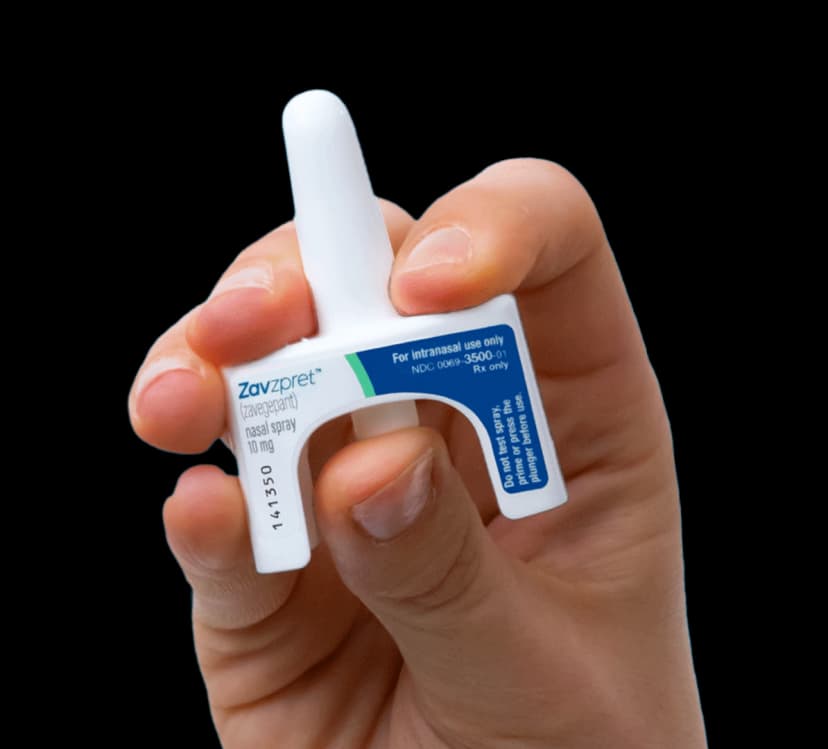
Zavzpret (Zavegepant)
A nasal spray CGRP antagonist for acute treatment of migraine with or without aura.
Drug Class: CGRP Antagonists
Zavzpret (zavegepant) is a nasal spray medication for the acute treatment of migraine with or without aura in adults. It's a CGRP (calcitonin gene-related peptide) receptor antagonist, part of a newer class of migraine-specific treatments.
Official website: zavzpret.com
Key Takeaways
- CGRP antagonist nasal spray for acute migraine
- Works differently than triptans-not a vasoconstrictor, but still requires label-based safety screening
- Nasal spray delivery provides rapid absorption
- Single dose per attack-one spray in one nostril
- Can be used with or without aura
How It Works
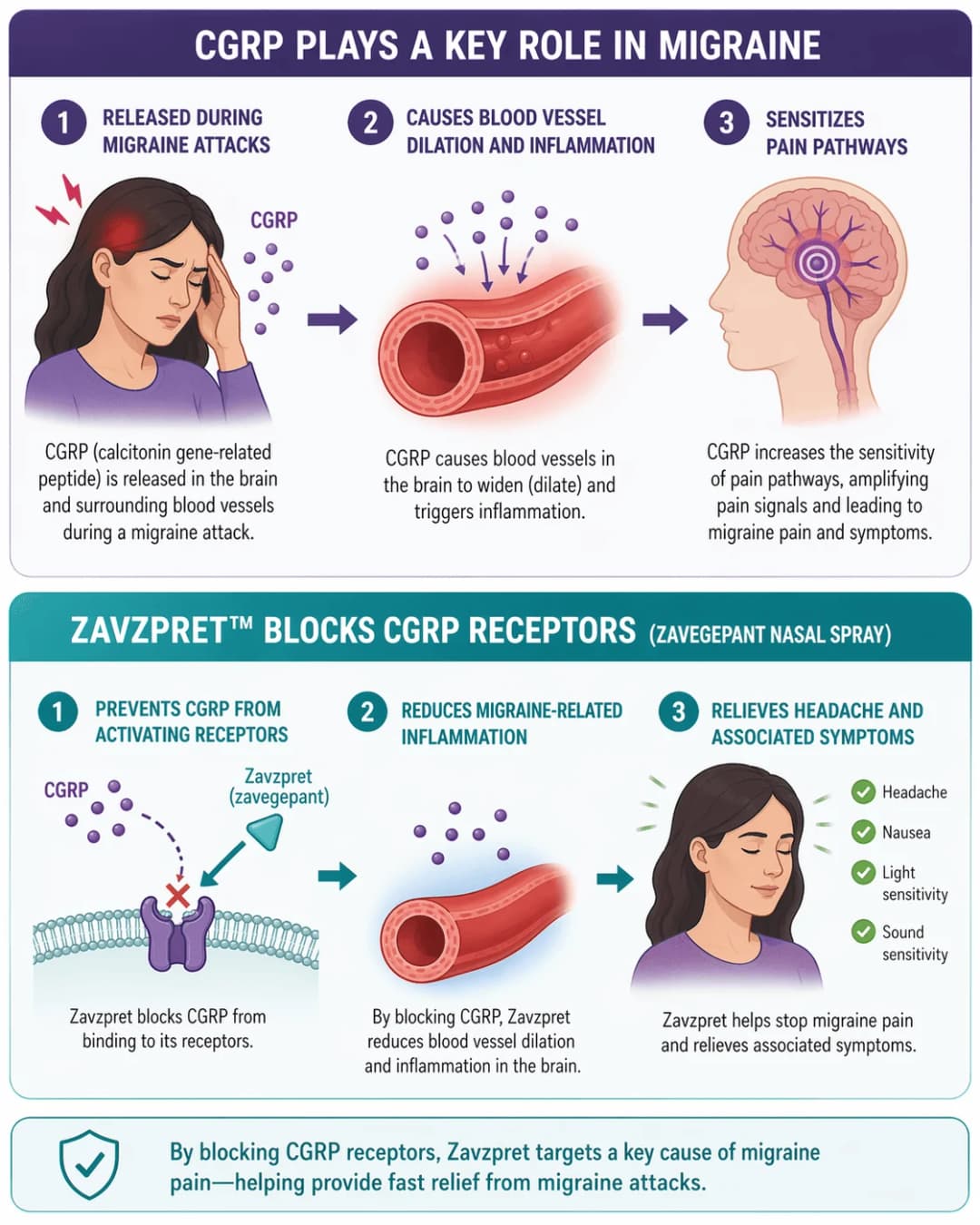
CGRP plays a key role in migraine:
- Released during migraine attacks
- Causes blood vessel dilation and inflammation
- Sensitizes pain pathways
Zavzpret blocks CGRP receptors:
- Prevents CGRP from activating receptors
- Reduces migraine-related inflammation
- Relieves headache and associated symptoms
Common Uses
- Acute treatment of migraine attacks
- Migraine with or without aura
- When triptans are contraindicated or ineffective
- Alternative to oral medications (especially with nausea)
How to Use
- Dosing: One spray (10 mg) in one nostril
- Timing: Use at migraine onset or any time during attack
- Maximum: One dose per 24 hours
- Technique: Do not prime or test-spray; each device is single-use and contains one dose
Administration Steps
- Blow nose gently if congested
- Insert nozzle into one nostril
- Close the other nostril with a finger
- Press down firmly once while breathing in gently through the nose
- Breathe out through the mouth
- Throw away the single-use device after the dose
What to Expect
During Attack
- Relief may begin within hours
- Addresses headache and associated symptoms
- May not eliminate attack completely in all patients
Response Rates
Clinical trials showed:
- Significant pain relief at 2 hours
- Many patients pain-free at 2 hours
- Also improved nausea, light sensitivity, sound sensitivity
Side Effects
Common
- Taste disturbance (dysgeusia)-most common
- Nasal discomfort
- Nausea
- Throat irritation
Less Common
- Nasal congestion
- Vomiting
- Dizziness
Generally Well-Tolerated
- Not a vasoconstrictor like triptans
- Current labeling warns about new or worsening hypertension and Raynaud's phenomenon
- Side effects usually mild and transient
Advantages of Zavzpret
Vs. Triptans
- No triptan-like vasoconstrictive effects
- May be an option when triptans are unsuitable, but cardiovascular history still matters
- Patients with uncontrolled blood pressure or circulation symptoms need clinician guidance and monitoring
- Alternative mechanism if triptans fail
Nasal Spray Benefits
- Bypasses GI tract (helpful with migraine-related nausea)
- Faster absorption than oral medications
- Useful when vomiting prevents oral medication
Precautions
- Pregnancy: Limited data; discuss with doctor
- Breastfeeding: Limited human data; discuss timing, infant age, and alternatives with your clinician
- Severe hepatic impairment: Not recommended
- Drug interactions: Check with pharmacist
Zavzpret vs. Other Acute Migraine Treatments
| Class | Examples | Notes |
|---|---|---|
| CGRP antagonists | Zavzpret, Nurtec | Not vasoconstrictors; labels include hypertension/Raynaud cautions |
| Triptans | Sumatriptan, rizatriptan | First-line, cardiovascular cautions |
| NSAIDs | Ibuprofen, naproxen | OTC, less migraine-specific |
| Ditans | Lasmiditan | Different mechanism, causes sedation |
CGRP Medications Landscape
| Medication | Type | Use |
|---|---|---|
| Zavzpret | Nasal spray | Acute treatment |
| Nurtec | Oral | Acute + prevention |
| Ubrelvy | Oral | Acute treatment |
| Aimovig, Ajovy, Emgality | Injection | Prevention |
Cost and Insurance
- Brand-name medication
- May require prior authorization
- Check manufacturer savings programs
- Coverage varies by plan
Frequently Asked Questions
How is Zavzpret different from triptans?
Triptans cause blood vessel constriction, which is why they're contraindicated in some cardiovascular conditions. Zavzpret blocks CGRP receptors and is not a vasoconstrictor, making it a possible option for patients who can't use triptans, but labeling still warns about new or worsening hypertension and Raynaud's phenomenon.
Can I use Zavzpret if I have heart disease?
Unlike triptans, Zavzpret does not have triptan-style vasoconstrictive contraindications. However, discuss your complete medical history with your doctor, especially uncontrolled blood pressure, circulation symptoms, or Raynaud's phenomenon.
Why does it affect my taste?
Taste disturbance is common because nasal spray can drain toward the throat and contact taste receptors. It is usually temporary.
Can I use Zavzpret for every migraine?
Use no more than one dose in 24 hours. The safety of treating more than 8 migraines in 30 days has not been established; if you're having frequent migraines, preventive therapy should be discussed.
What if one spray doesn't work?
Don't take a second dose within 24 hours. If Zavzpret consistently doesn't help, discuss alternatives with your doctor.
Can I use Zavzpret and Nurtec together?
Both are CGRP antagonists. Using them together isn't typically recommended. Discuss with your doctor if one isn't sufficient.
Medical Disclaimer: This information is for educational purposes only and does not replace professional medical advice. Follow your doctor's instructions regarding this medication.
References
For current U.S. drug labeling, contraindications, boxed warnings, pregnancy/lactation language, and formulation-specific dosing, check the official label databases and your prescriber's instructions.