

VP Shunt (Ventriculoperitoneal Shunt)
An implanted tube-and-valve system that drains cerebrospinal fluid from the brain to the abdomen, sometimes used in IIH when vision is threatened.
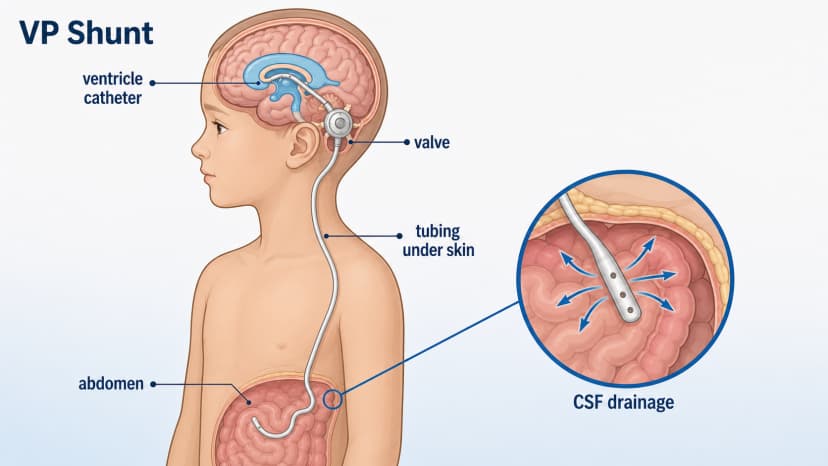
A ventriculoperitoneal (VP) shunt is an implanted drainage system for cerebrospinal fluid (CSF). One catheter sits in a brain ventricle, a valve regulates flow under the skin, and tubing carries fluid to the abdomen where it is absorbed. VP shunts are common in hydrocephalus and are sometimes used in IIH, especially when pressure and papilledema threaten vision.
Key Takeaways
- Drains CSF from the brain's ventricles to the abdomen
- Includes a catheter, valve, and tubing under the skin
- In IIH, the main goal is protecting vision when papilledema is dangerous
- Headache improvement is variable and should not be promised
- Requires lifelong monitoring because shunts can block, infect, or over-drain
When It's Used
- Hydrocephalus
- IIH not controlled with medication when vision is at risk
- Failed or unsuitable optic nerve sheath fenestration or other pressure-lowering strategies
- Need to protect vision from papilledema when medication is too slow or insufficient
How It Works
- A catheter drains CSF from a brain ventricle
- A valve under the scalp regulates flow
- Tubing runs under the skin down to the abdomen
- CSF is absorbed by the abdominal lining
- Some valves are programmable, meaning the drainage pressure can be adjusted without another operation
The Procedure
Before Surgery
- Brain imaging and review of pressure history
- Eye testing if the indication is papilledema or IIH
- General health and anesthesia evaluation
- Discussion of shunt type, valve settings, and revision risk
During Surgery
- General anesthesia
- Small incisions in the scalp and abdomen
- Catheter placed into a ventricle and tubing tunneled under the skin
- Often takes 1-2 hours
After Surgery
- Hospital stay is commonly 1-3 days
- Wound care and early activity restrictions
- Imaging may be done to confirm placement
- If the valve is programmable, MRI may require the setting to be checked afterward
Living with a Shunt
- Regular neurosurgery follow-up
- Learn signs of malfunction and when to call 911 or go to the emergency department
- Activity is usually not restricted long-term once healed
- Programmable valves may need pressure adjustments
- Most modern shunts are MRI-compatible, but valve settings may still need verification after MRI
Complications
Shunt Malfunction
Blockage, disconnection, or poor flow can cause symptoms of high pressure again: headache, nausea, vision changes, worsening papilledema, or altered alertness. Revision surgery may be needed.
Infection
Most shunt infections occur early, often within the first months. Fever, redness along the tubing, abdominal pain, worsening headache, or neurologic decline should be treated as urgent.
Over-Drainage
If too much CSF drains, low-pressure headaches can develop, often worse upright and better lying down. Valve adjustment may help if the shunt is programmable.
Other
- Abdominal complications
- Slit ventricle syndrome
- Need for multiple revisions over a lifetime
Success for IIH
- Protects vision when papilledema threatens sight
- Headache improvement is variable; shunting is generally not used for headache alone without specialist multidisciplinary review
- Revision rates are substantial, with many series reporting about 30-50% needing revision within years
- Alternative: lumboperitoneal shunt, chosen case by case
Call 911 immediately if a person with a shunt develops new or worsening headache with vomiting, sleepiness, confusion, seizure, new double vision, or worsening vision. Fever, redness along the shunt path, or abdominal pain also needs same-day emergency department evaluation; urgent-care clinics cannot manage possible shunt malfunction or infection.
Frequently Asked Questions
Is a VP shunt permanent?
Usually yes. A shunt is an implanted system that needs long-term neurosurgical follow-up. Some patients need revisions, valve adjustments, or replacement over time.
Will a VP shunt fix IIH headaches?
Sometimes, but headache response is unpredictable. In IIH, shunting is mainly used to protect vision when papilledema is dangerous or treatment is failing.
Can I have an MRI with a shunt?
Many modern shunts are MRI-compatible, but programmable valve settings can change after MRI. Your neurosurgery team may need to check or reset the valve afterward.
Should I go to urgent care for possible shunt malfunction?
No. Possible shunt malfunction or infection needs an emergency department that can coordinate neurosurgery and imaging. Urgent-care clinics usually cannot evaluate shunt pressure, ventricular size, infection, or the need for revision surgery.
Medical Disclaimer: This information is for educational purposes only and does not replace professional medical advice.
Sources:
- MedlinePlus. Hydrocephalus.
- American Association of Neurological Surgeons. Hydrocephalus.
- Mollan SP, et al. Idiopathic intracranial hypertension: consensus guidelines on management. J Neurol Neurosurg Psychiatry. 2018;89(10):1088-1100.