

Amblyopia (Lazy Eye)
Reduced vision in one eye due to abnormal visual development in childhood. Early treatment is essential for best outcomes.
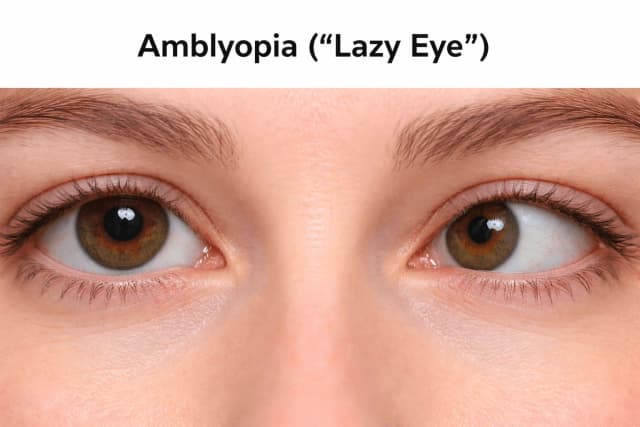
Amblyopia, commonly called "lazy eye," is reduced vision in one eye that occurs when the brain favors the other eye during visual development. It's the most common cause of vision loss in children and can be treated if caught early.
Key Takeaways
- Most common cause of childhood vision loss
- Develops in early childhood during visual development
- Often no symptoms-child may not know one eye sees poorly
- Best results when caught and treated early-generally before age 7, though PEDIG studies have shown meaningful gains in children up to age 17 with intensive therapy
- Screening is essential for early detection
What Is Amblyopia?
During early childhood, the visual system is developing. If one eye provides a clearer image than the other, the brain may "prefer" the better eye and suppress input from the weaker eye. Over time, the neural pathways for the weaker eye don't develop properly, resulting in permanently reduced vision unless treated.
Types of Amblyopia
Strabismic Amblyopia
- Caused by eye misalignment (strabismus)
- Brain suppresses the misaligned eye to avoid double vision
- Most common type
Refractive Amblyopia
- Caused by unequal refractive errors between eyes
- One eye significantly more nearsighted or farsighted
- May have no visible abnormality
Deprivation Amblyopia
Risk Factors
- Family history of amblyopia
- Premature birth
- Low birth weight
- Developmental delays
- Ptosis (drooping eyelid)
- Childhood cataracts
Signs to Watch For
Children with amblyopia often don't complain because they don't know their vision is abnormal:
- Squinting or closing one eye
- Head tilting
- Poor depth perception
- Difficulty catching balls
- Sitting close to TV/screens
- Failed vision screening
Diagnosis
Vision Screening
- All children should be screened by age 3-5
- Pediatrician or eye care provider
- Photo screening devices available
Comprehensive Eye Exam
- Visual acuity testing (age-appropriate methods)
- Cycloplegic refraction (dilated eye exam)
- Assessment of eye alignment
- Examination for other causes
Treatment
Corrective Lenses
- Glasses to correct refractive errors
- May be sufficient alone in some cases
- Must be worn consistently
Patching (Occlusion Therapy)
- Patch worn over the stronger eye
- Forces brain to use the weaker eye
- Duration varies (2-6 hours/day typical)
- See Occlusion Therapy
Atropine Drops
- Alternative to patching
- Blurs vision in stronger eye
- Used daily or on weekends
- May be better tolerated by some children
Treatment of Underlying Cause
- Strabismus surgery if needed
- Cataract removal if present
- Ptosis surgery if eyelid blocking vision
Prognosis
- Best outcomes with early treatment (before age 7)
- Treatment can work in older children but less effective
- Some improvement possible even in teenagers
- Compliance with treatment is crucial
- Regular follow-up needed
Frequently Asked Questions
Can adults be treated for amblyopia?
Treatment is most effective in childhood, but recent research suggests some improvement is possible in adults with intensive training programs. However, results are much more limited than in children.
How long does treatment take?
Treatment typically continues for months to years, depending on severity and response. Even after vision improves, maintenance patching may be needed to prevent regression.
Will my child need glasses forever?
Many children with amblyopia need glasses throughout childhood. Some may be able to reduce dependence on glasses as adults, but this varies.
Can amblyopia come back?
Yes, especially if treatment is stopped too early. Regular monitoring is important, and maintenance therapy may be needed.
Medical Disclaimer: This information is for educational purposes only and does not replace professional medical advice, diagnosis, or treatment.
Sources:
- American Academy of Ophthalmology. Amblyopia (Lazy Eye).
- National Eye Institute. Amblyopia (Lazy Eye).