

Chronic Progressive External Ophthalmoplegia (CPEO)
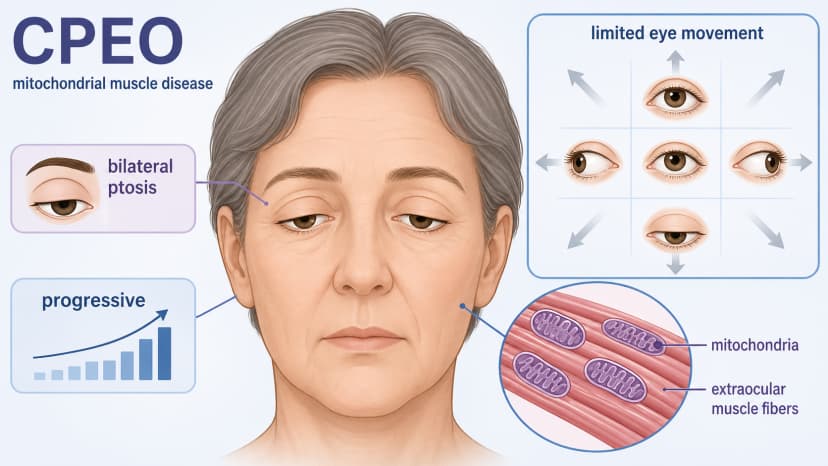
A mitochondrial disorder causing slowly progressive weakness of the eye muscles, leading to droopy eyelids and limited eye movement.
Chronic progressive external ophthalmoplegia (CPEO) is a condition characterized by slowly progressive weakness of the muscles that move the eyes and eyelids. It's usually caused by mitochondrial dysfunction-problems with the energy-producing parts of cells. The condition develops gradually and is often associated with other systemic problems.
Key Takeaways
- Progressive droopy eyelids (ptosis) and limited eye movement
- Usually caused by mitochondrial disease
- Develops slowly over years to decades
- Often little or no double vision because both eyes affected equally
- May be associated with other body systems involvement
Understanding CPEO
The muscles that move the eyes and lift the eyelids require significant energy. In CPEO, mitochondrial dysfunction impairs energy production in these muscles, causing them to weaken progressively. Because the condition develops slowly and affects both eyes similarly, the brain adapts, and double vision is often absent or minimal.
Symptoms
Eye and Eyelid Symptoms
Ptosis (droopy eyelids)
- Usually the first symptom
- Bilateral (both eyelids)
- Progressive-worsens over years
- May lift chin to see under lids
Limited eye movement
- Gradual restriction of gaze in all directions
- Usually symmetric
- May not cause double vision
Absence of Double Vision
- Symmetry means eyes remain aligned
- Brain adapts to gradual changes
- If diplopia present, consider other diagnoses
Associated Conditions (CPEO "Plus")
CPEO may occur with other features:
Kearns-Sayre Syndrome:
- Heart conduction abnormalities (dangerous)
- Retinal pigmentary changes
- Onset before age 20
Other associations:
- Hearing loss
- Muscle weakness
- Ataxia (balance problems)
- Endocrine problems (diabetes, hypoparathyroidism)
- Short stature
Causes
Mitochondrial DNA Mutations
- Most common cause
- Large deletions in mitochondrial DNA
- Point mutations
Nuclear DNA Mutations
- Genes affecting mitochondrial function
- May have autosomal dominant or recessive inheritance
Sporadic
- Many cases have no family history
- New mutations
Diagnosis
Clinical Features
- Progressive bilateral ptosis
- Symmetric ophthalmoplegia
- Slow progression
- Often no diplopia
Genetic Testing
- Mitochondrial DNA analysis
- Nuclear gene testing
- Blood or muscle sample
Muscle Biopsy
- Ragged red fibers (classic finding)
- Cytochrome oxidase-negative fibers
- May confirm mitochondrial myopathy
Other Testing
- ECG/cardiac monitoring (essential-look for heart block)
- Audiometry (hearing)
- Retinal examination
- Blood tests (glucose, lactate, hormones)
Rule Out Myasthenia Gravis
Myasthenia gravis can mimic CPEO but is treatable. Testing (acetylcholine receptor antibodies, single-fiber EMG) should be done.
Treatment
No Cure
Currently, no treatment reverses or stops CPEO progression.
Supportive Management
For ptosis:
- Ptosis crutches on glasses
- Surgical lid elevation (frontalis sling)
- Tape or props
For limited eye movement:
- Usually not needed if no diplopia
- Head positioning to use available movement
Monitor for Systemic Problems
- Regular cardiac monitoring (ECG, Holter)
- Pacemaker if heart block develops
- Hearing assessment
- Endocrine screening
Supplements (Uncertain Benefit)
- Coenzyme Q10
- L-carnitine
- B vitamins
- Evidence limited, but often tried
Living with CPEO
Practical Adaptations
- Tilt head back to see under droopy lids
- Consider driving implications
- Adequate lighting
- Safety considerations if balance affected
Cardiac Precautions
- Regular ECG monitoring essential
- Pacemaker if needed
- Avoid certain medications if heart block present
Genetic Counseling
- Inheritance patterns vary
- Some cases sporadic
- Important for family planning
Prognosis
Variable
- Slowly progressive over decades
- Life expectancy depends on associated features
- Kearns-Sayre syndrome has more serious cardiac implications
- Isolated CPEO often compatible with near-normal lifespan
Quality of Life
- Functional vision usually maintained
- Ptosis surgery can improve appearance and function
- Adaptation to limitations
Frequently Asked Questions
Why don't I have double vision if my eye muscles are weak?
Because CPEO affects both eyes equally and progresses slowly, your eyes remain aligned even though they don't move well. Your brain adapts to the gradual changes. This is different from conditions like third nerve palsy, where one eye is suddenly affected.
Is this the same as myasthenia gravis?
No, though they can look similar. Myasthenia gravis is an autoimmune condition that's treatable, while CPEO is a mitochondrial disorder without specific treatment. Testing can distinguish them-this is important because myasthenia can be effectively managed.
Will I go blind?
No. CPEO affects the muscles that move the eyes and eyelids, not vision itself. Your eyelids may droop so much that they block your vision, but surgery can correct this. Some patients with CPEO "plus" syndromes may have retinal changes affecting vision, but this is separate from the muscle weakness.
Do I need a pacemaker?
Not everyone with CPEO needs a pacemaker, but heart conduction problems are a serious concern, especially in Kearns-Sayre syndrome. Regular ECG monitoring is essential, and a pacemaker is recommended if significant heart block develops.
References
Medical Disclaimer: This information is for educational purposes only and does not replace professional medical advice, diagnosis, or treatment. If you have concerns about droopy eyelids, eye movement problems, or any symptoms, please consult a qualified healthcare provider.
Sources:
- DiMauro S, et al. Chronic progressive external ophthalmoplegia. UpToDate. 2024.
- Moraes CT, et al. Mitochondrial DNA deletions in progressive external ophthalmoplegia and Kearns-Sayre syndrome. N Engl J Med. 1989;320(20):1293-1299.
- United Mitochondrial Disease Foundation. CPEO.
- MedlinePlus Genetics. Progressive External Ophthalmoplegia.