

Drooping Eyelid (Ptosis)
A droopy eyelid can be cosmetic, functional, or a sign of serious neurological conditions. Learn when ptosis needs urgent evaluation.
Ptosis (TOE-sis) is a drooping upper eyelid. It can result from age-related stretching of eyelid tissues, but sudden or variable ptosis can also reflect a nerve problem, myasthenia gravis, or rarely an aneurysm that needs emergency imaging.
Key Takeaways
- A droopy lid can be mechanical, muscular, or neurological
- Sudden ptosis with a larger pupil on the same side is an emergency until proven otherwise
- Ptosis that fluctuates or worsens when tired points toward myasthenia gravis
- Old photos help-they often reveal whether the lid change is new or longstanding
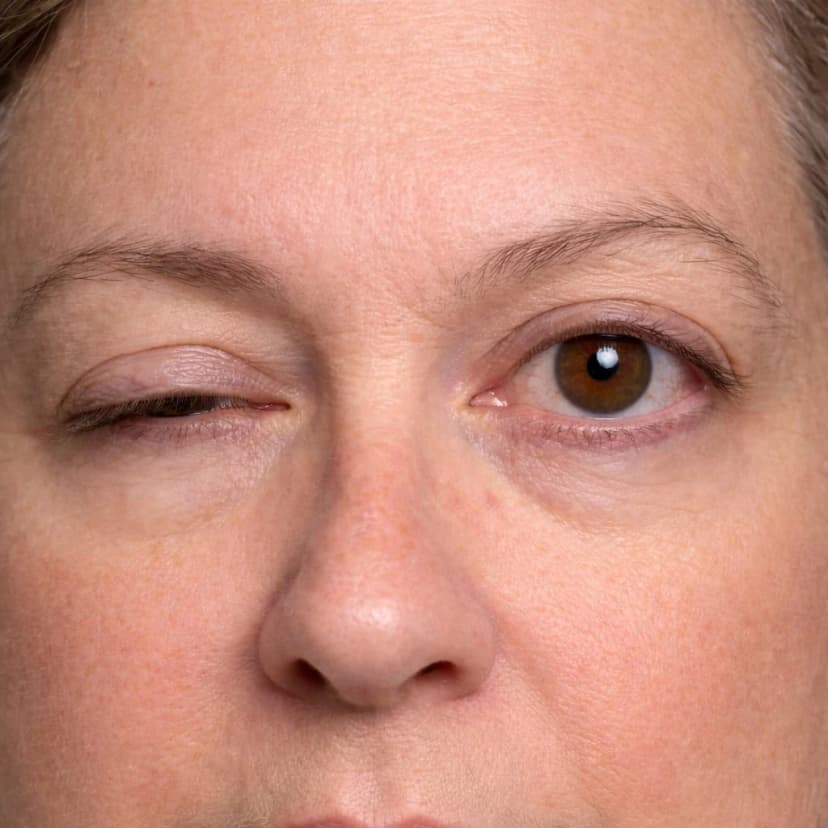
Types of Ptosis
By Timing
- Congenital-present from birth
- Acquired-develops later in life
By Involvement
- Unilateral-one eye
- Bilateral-both eyes
By Severity
- Mild-minimally noticeable
- Moderate-partially covers pupil
- Severe-covers pupil, blocks vision
Common Causes
Age-Related (Involutional/Aponeurotic)
The most common adult cause is age-related:
- Stretching or thinning of eyelid muscle tendon
- Usually gradual onset
- Often both eyes (may be asymmetric)
- Higher crease in affected eyelid
- No other neurological symptoms
Neurological Causes
Third cranial nerve (oculomotor) palsy
- Ptosis often complete (lid completely down)
- Eye may be deviated outward and downward
- Double vision when lid lifted
- If pupil is dilated-possible aneurysm, emergency
- Mild ptosis (2-3mm)
- Smaller pupil on same side
- May have decreased sweating on face
- Indicates problem in sympathetic nerve pathway
Myasthenia gravis
- Ptosis that varies throughout day
- Worse with fatigue, better after rest
- May fluctuate from eye to eye
- Often associated with double vision
Muscle Disorders
Chronic progressive external ophthalmoplegia (CPEO)
- Slowly progressive bilateral ptosis
- Limited eye movements
- Mitochondrial disorder
Muscular dystrophies
- Various forms can cause ptosis
- Usually with other muscle weakness
Other Causes
- Trauma-injury to lid or muscle
- Surgery complication-after eye surgery
- Contact lens wear-long-term hard lens wear
- Mass/tumor-lid or orbital mass weighing down lid
- Inflammation-lid swelling from various causes
Warning Signs
Call 911 or go to the ER NOW if a drooping lid occurs with:
- A larger pupil on the same side as the droop (dilated pupil)
- Sudden severe headache (especially "worst headache of your life")
- The eye turning outward and downward with double vision
- Weakness, numbness, or speech difficulty
- Difficulty breathing or swallowing (possible myasthenic crisis)
A third nerve palsy with pupil involvement is a brain aneurysm until proven otherwise - typically a posterior communicating artery aneurysm. This is a true emergency: do not wait to be seen at an eye clinic. Get to the nearest emergency department immediately so a CT angiogram or MRA can be done.
Schedule prompt evaluation for:
- Any new onset ptosis
- Ptosis that varies or fluctuates
- Ptosis with double vision
- Ptosis with smaller pupil
- Progressive worsening ptosis
What You'll Be Asked in Clinic
About the ptosis:
- When did you first notice it?
- Is it getting worse?
- Does it vary throughout the day?
- Worse when tired?
- One eye or both?
- Any photos showing when it started?
About associated symptoms:
- Double vision?
- Difficulty swallowing?
- Weakness anywhere?
- Headache?
- Change in pupil size?
About your health:
- Previous eye surgery?
- Contact lens history?
- Autoimmune conditions?
- Family history of similar problems?
How Ptosis Is Diagnosed
Clinical Examination
- Margin-reflex distance (MRD)-measuring lid height
- Levator function-how well the muscle works
- Pupil examination-size comparison, reactions
- Eye movement assessment-checking for nerve palsies
- Fatigue testing-looking for variability (myasthenia)
- Ice pack test-if myasthenia suspected
Additional Tests
- Acetylcholine receptor antibodies-for myasthenia
- MRI brain/orbits-if neurological cause suspected
- MRA/CTA-if aneurysm suspected (urgent)
- Chest CT-looking for thymoma in myasthenia
- Pharmacologic testing-apraclonidine for Horner syndrome
Treatment Options
Treatment depends on which system is causing the droop:
Age-Related Ptosis
- Observation-if mild and not affecting vision
- Ptosis repair surgery-tightening the muscle tendon
- Usually outpatient procedure with good results
Third Nerve Palsy
- Emergency imaging if pupil involved
- Treatment of underlying cause (aneurysm, diabetes, etc.)
- May resolve if microvascular (diabetic)
- Surgery for stable persistent cases
Horner Syndrome
- Identify and treat underlying cause
- Imaging to trace the nerve pathway
- Ptosis itself rarely needs surgery (mild)
Myasthenia Gravis
- Pyridostigmine-improves muscle strength
- Immunosuppressive medications
- Thymectomy-removal of thymus
- See myasthenia gravis
CPEO
- No specific treatment for underlying cause
- Surgery may help if ptosis severe
- Manage associated conditions
Frequently Asked Questions
Is ptosis always serious?
No. The most common cause is age-related weakening of the eyelid tendon; it may be bothersome or block vision, but it is usually not dangerous. New ptosis still needs evaluation because less common neurological causes can be serious.
Why did my doctor check my pupils so carefully?
A dilated pupil with ptosis can indicate a brain aneurysm compressing the third cranial nerve-a medical emergency. Checking pupils helps distinguish this from other causes.
Can ptosis affect my vision?
Yes, if the lid droops enough to cover the pupil. Severe ptosis blocks the upper visual field. Surgery is often recommended when ptosis interferes with vision.
Will my ptosis get worse?
It depends on the cause. Age-related ptosis typically progresses slowly. Myasthenia gravis ptosis fluctuates. Ptosis from nerve palsy may improve or stabilize depending on the cause.
Is ptosis surgery effective?
Yes, ptosis surgery is generally very effective for appropriate candidates. Success rates are high, though some people need adjustment procedures. Your surgeon can discuss expected outcomes.
Can I prevent ptosis?
Age-related ptosis isn't really preventable. Avoiding hard contact lenses (or limiting wear time) may reduce risk of contact lens-related ptosis. Treating conditions like myasthenia can help control associated ptosis.
References
Medical Disclaimer: This information is for educational purposes only and does not replace professional medical advice, diagnosis, or treatment. If you have concerns about drooping eyelid or any symptoms, please consult a qualified healthcare provider.
Sources:
- American Academy of Ophthalmology. Ptosis.
- Finsterer J. Ptosis: causes, presentation, and management. Aesthetic Plast Surg. 2003;27(3):193-204.
- North American Neuro-Ophthalmology Society. Droopy Eyelids (Ptosis).