

MOGAD (MOG Antibody Disease)
An autoimmune condition causing inflammation of the optic nerve and spinal cord, distinct from multiple sclerosis. Associated with antibodies against MOG protein.
MOG antibody disease (MOGAD) is an autoimmune inflammatory condition affecting the central nervous system. It primarily causes optic neuritis and myelitis (spinal cord inflammation). While it can appear similar to multiple sclerosis or neuromyelitis optica, MOGAD has distinct features and generally better outcomes.
Key Takeaways
- Autoimmune condition attacking the optic nerve and spinal cord
- Distinct from MS and NMO-different antibody and prognosis
- Optic neuritis is a common presentation
- Generally good visual recovery-better than NMO
- May be single episode or relapsing
Understanding MOGAD
MOG (myelin oligodendrocyte glycoprotein) is a protein found on the surface of myelin, the protective coating of nerve fibers. In MOGAD, the immune system produces antibodies against MOG, leading to inflammation in the optic nerves, spinal cord, or brain. This is different from MS and NMO, which involve different targets.
Symptoms
Optic Neuritis (Most Common)
- Eye pain with eye movement
- Vision loss-can be severe
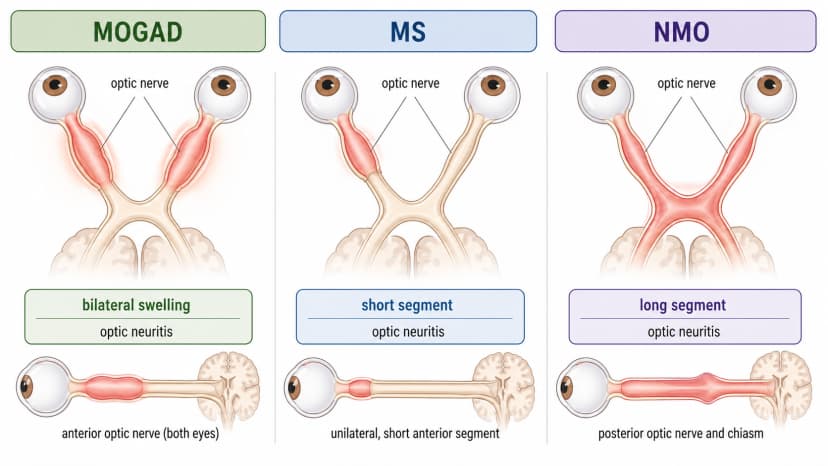
- Often affects both eyes (simultaneously or sequentially)
- More bilateral than typical MS optic neuritis
Myelitis (Spinal Cord Inflammation)
- Weakness in legs or arms
- Numbness or tingling
- Bowel or bladder problems
- May be severe
ADEM (Acute Disseminated Encephalomyelitis)
- Brain inflammation
- More common in children
- May cause confusion, seizures
- Often follows viral illness
Other Features
- Headache
- Nausea
- Fever (sometimes)
- Symptoms from other affected areas
Who Gets MOGAD?
- Can affect any age
- Children and young adults most common
- No strong gender preference
- May follow infection
Diagnosis
MOG Antibody Testing
- Blood test for MOG-IgG antibodies
- Should be done by reliable laboratory
- Test may be negative if done too early or late
MRI Imaging
MRI brain and orbits
- Shows optic nerve enhancement/swelling
- May show brain lesions (different pattern than MS)
- Spinal cord imaging if myelitis symptoms
Distinguish from Other Conditions
| Feature | MOGAD | MS | NMO |
|---|---|---|---|
| Antibody | MOG-IgG | None | AQP4-IgG |
| Optic neuritis | Often bilateral | Usually unilateral | Often severe |
| Visual recovery | Good | Good | Often poor |
| Relapse pattern | May be monophasic | Typically relapsing | Relapsing |
Other Testing
- Lumbar puncture-CSF analysis
- Visual evoked potentials
- OCT-retinal nerve fiber layer
Treatment
Acute Attacks
High-dose IV corticosteroids
- Methylprednisolone 1g daily for 3-5 days
- Usually very effective
- Slow oral prednisone taper often needed over 2-6 months (rebound common)
- For severe attacks or steroid failures
- Removes antibodies from blood
IV immunoglobulin (IVIg)
- Alternative for acute treatment
- May also prevent relapses
Preventing Relapses
For relapsing disease:
- Maintenance immunotherapy
- Options include: mycophenolate, azathioprine, rituximab
- IVIg may help maintain remission
- Treatment duration uncertain
Important Considerations
MS medications may not work for MOGAD and some could potentially worsen it. Accurate diagnosis is important for treatment selection.
Prognosis
Generally Favorable
- Visual recovery usually good
- Better outcomes than NMO
- Many patients have single episode
- Some have relapses
Relapse Risk
- About 50% have relapses
- Persistent MOG antibodies may indicate higher relapse risk
- Relapses more likely if steroids stopped quickly
Long-Term
- Most patients maintain good vision
- Disability generally mild
- Some accumulate deficits with multiple attacks
Frequently Asked Questions
Is MOGAD the same as multiple sclerosis?
No. While both cause inflammation in the nervous system, they are distinct diseases. MOGAD involves antibodies against MOG, has different MRI patterns, and generally has better outcomes than MS. Our optic neuritis and MS risk guide explains how these conditions are differentiated. Treatment approaches also differ.
Will my vision recover?
In MOGAD, visual recovery is generally good, especially with prompt treatment. Most patients recover useful vision, though some may have persistent deficits. This is better than the outcomes typically seen in NMO.
Will I have more attacks?
About half of MOGAD patients have only a single attack. The other half may have relapses. Your doctor may recommend preventive treatment based on your risk factors, including whether MOG antibodies persist.
Is this hereditary?
MOGAD is not considered hereditary, though autoimmune conditions may have some genetic component. It's not passed directly to children.
Do I need to take medication forever?
This is still being studied. Some patients can stop treatment after a period of remission, especially if MOG antibodies become negative. Your doctor will advise based on your individual situation.
References
Medical Disclaimer: This information is for educational purposes only and does not replace professional medical advice, diagnosis, or treatment. If you have concerns about MOGAD or any symptoms, please consult a qualified healthcare provider.
Sources:
- Banwell B, et al. Diagnosis of myelin oligodendrocyte glycoprotein antibody-associated disease. Lancet Neurol. 2023;22(3):268-282.
- Chen JJ, et al. Myelin oligodendrocyte glycoprotein antibody-associated optic neuritis. Curr Opin Ophthalmol. 2020;31(6):503-510.
- Jarius S, et al. MOG-IgG in NMO and related disorders: a multicenter study. Neurology. 2016;87(2):133-139.
- National Organization for Rare Disorders. MOG Antibody Disease.
- StatPearls [Internet]. Neuromyelitis Optica Spectrum Disorder.