

Superior Oblique Myokymia
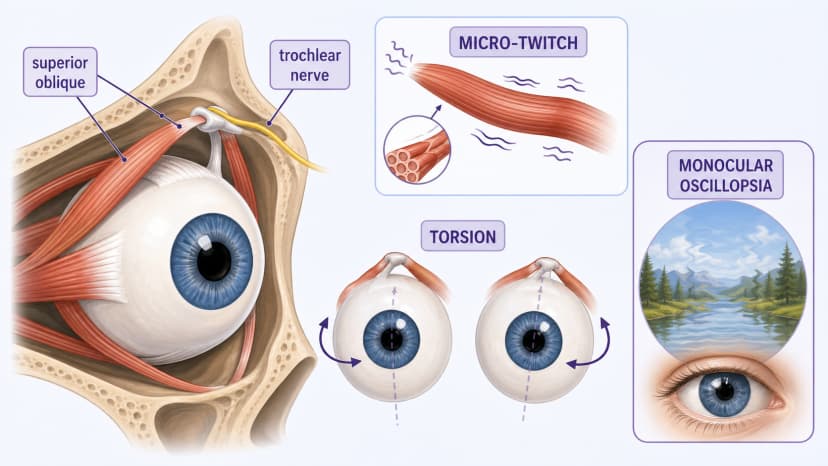
Intermittent, rapid contractions of the superior oblique muscle causing brief episodes of oscillopsia and monocular torsional diplopia.
Superior oblique myokymia (SOM) is a rare condition characterized by intermittent, involuntary contractions of the superior oblique muscle in one eye. These brief episodes cause the affected eye to make small, rapid rotational movements, resulting in a shimmering, jiggling, or bouncing sensation in vision.
Key Takeaways
- Intermittent eye muscle spasms affecting one eye
- Causes oscillopsia (shimmering/bouncing vision)
- Episodes are brief (seconds) but can be frequent
- Usually benign after appropriate evaluation, but symptoms can be disruptive
- Often responds to carbamazepine or similar medications
Understanding Superior Oblique Myokymia
The superior oblique muscle rotates the eye and helps with looking down and inward. In SOM, this muscle contracts spontaneously and rapidly in brief bursts. The cause is thought to be abnormal nerve signals or compression of the fourth cranial nerve, similar to how some people develop facial twitching from nerve compression.
Symptoms
Visual Symptoms
Oscillopsia
- Visual world appears to shimmer, jiggle, or bounce
- Brief episodes lasting seconds
- Can occur many times per day
- Usually only one eye affected
Monocular diplopia/torsion
- May perceive tilting or rotation of images
- Vertical component possible
When Symptoms Occur
- Often triggered by looking down
- May occur spontaneously
- Can be triggered by fatigue or stress
- Episodes typically brief (few seconds)
What Patients Describe
- "My vision shimmers"
- "Things jiggle briefly"
- "I see double momentarily"
- "My eye feels like it's vibrating"
Diagnosis
Clinical Examination
Observation of eye during episode:
- Small, rapid rotational/vertical movements
- Intorsion (top of eye rotates toward nose)
- Usually subtle-may need careful observation
- May need to look at conjunctival vessels to see movement
Triggers
- Ask patient to look down
- Stress, fatigue may provoke
- Patient can often tell when episode is happening
Imaging
- MRI brain may be considered
- Rarely shows vascular compression
- Often normal
- Done mainly to rule out other pathology
Differential Diagnosis
- Nystagmus
- Ocular flutter
- Myokymia of other muscles
Treatment
Medications (First-Line)
Carbamazepine or oxcarbazepine
- Often very effective
- Low doses usually sufficient
- Similar to treatment for trigeminal neuralgia
- Side effects: dizziness, drowsiness, blood count changes
Other options:
- Gabapentin
- Baclofen
- Beta-blockers (less common)
Observation
- Some cases are mild enough to tolerate
- May have periods of remission
- Usually safe to observe after appropriate evaluation if symptoms are mild
Surgical Options (Rarely Needed)
Superior oblique tenectomy/tenotomy
- Weakens the muscle
- Reserved for medication failures
- Effective in most surgical cases
- If vascular compression identified
- Rarely performed
- Potentially curative
Living with SOM
Practical Tips
- Identify and avoid triggers if possible
- Adequate sleep
- Stress management
- May need to take breaks during visually demanding tasks
Impact on Daily Life
- Usually manageable with medication
- Episodes are brief
- Typically does not cause structural eye damage
- Most people function well
Prognosis
Generally Good
- Responds well to medication in most cases
- Usually benign after appropriate evaluation
- May wax and wane
- Some cases resolve spontaneously
Long-Term
- Chronic condition for most
- May need long-term medication
- Surgery effective if medication fails
Frequently Asked Questions
Is this dangerous to my eye?
SOM is usually benign after appropriate evaluation. It typically does not cause structural eye damage, but symptoms can interfere with reading, work, or driving. The episodes are often brief, and the condition is manageable with treatment.
Why does this happen?
The exact cause isn't always clear. It may be due to abnormal signals in the fourth cranial nerve or, rarely, compression of the nerve by a blood vessel. Sometimes no cause is found.
Will medication help?
Yes, in most cases. Carbamazepine or similar medications are effective for many patients, often at low doses. If one medication doesn't work, others can be tried.
Is this related to the twitching I feel in my eyelid?
No. Eyelid myokymia (the common benign lid twitch most people experience) is different from superior oblique myokymia. SOM affects an eye movement muscle, not the eyelid, and causes oscillopsia rather than just a twitching sensation.
Do I need surgery?
Usually not. Most patients do well with medication. Surgery is reserved for cases that don't respond to medication or where medication isn't tolerated.
References
Medical Disclaimer: This information is for educational purposes only and does not replace professional medical advice, diagnosis, or treatment. If you have concerns about visual symptoms or any symptoms, please consult a qualified healthcare provider.
Sources:
- Brazis PW. Masqueraders of superior oblique myokymia. J Neuroophthalmol. 2010;30(1):97-101.
- Leigh RJ, Tomsak RL. Drug treatments for superior oblique myokymia. Arch Ophthalmol. 2009;127(5):669-672.
- Hashimoto M, et al. Superior oblique myokymia: clinical features and treatment. Neurology. 2004;62(12):2273-2276.
- American Academy of Ophthalmology EyeWiki. Superior Oblique Myokymia.
- StatPearls [Internet]. Superior Oblique Myokymia.