

Pilocarpine
A miotic eye drop that constricts the pupil, used in the treatment of acute angle-closure glaucoma and certain other eye conditions.
Drug Class: Cholinergic Agonists
Pilocarpine is a cholinergic (parasympathomimetic) eye drop that causes the pupil to constrict (miosis) and opens the drainage angle of the eye. It is a key medication in the treatment of acute angle-closure glaucoma and has been used in ophthalmology for over a century.
Key Takeaways
- Constricts the pupil (miosis) to open the drainage angle
- Critical in acute angle-closure treatment
- Used after IOP is partially lowered by other medications
- Common side effects include brow ache and dim vision
- Available in multiple concentrations (1%, 2%, 4%)
How It Works
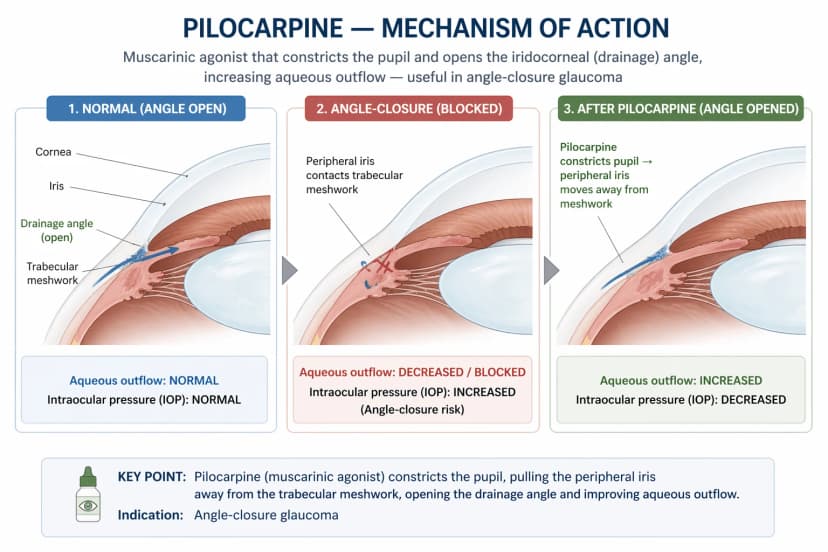
Pilocarpine works by:
- Stimulating the sphincter muscle of the iris, causing pupil constriction
- Pulling the peripheral iris away from the drainage angle
- Opening the trabecular meshwork for fluid outflow
- Contracting the ciliary muscle, which can increase outflow
In acute angle-closure, the iris physically blocks fluid drainage. By constricting the pupil, pilocarpine pulls the iris away from the drainage angle, allowing fluid to flow out and pressure to decrease.
Common Uses
- Acute angle-closure glaucoma-a critical component of emergency treatment
- Chronic angle-closure glaucoma (less common now)
- Before or after laser iridotomy
- Presbyopia correction (low-dose pilocarpine, e.g., Vuity)
- Certain diagnostic pupil testing
How to Use
- Dosing: As directed by your doctor-varies by condition and concentration
- Acute angle-closure: Typically 1-2% applied every 15-30 minutes initially, then less frequently
- Chronic use: Usually 3-4 times daily if prescribed for ongoing treatment
- Instillation: Wash hands, tilt head back, pull down lower eyelid, apply drop
- After instillation: Close eyes gently for 1-2 minutes; press on inner corner of eye to reduce systemic absorption
- Multiple drops: Wait 5-10 minutes between different eye medications
What to Expect
Immediate Effects
- Pupil constriction-noticeable within 15-30 minutes
- Dim vision-smaller pupil lets in less light
- Brow ache-from ciliary muscle contraction
- Accommodative spasm-temporary near-sightedness
Timeline in Acute Angle-Closure
- Used after initial IOP reduction with other agents (timolol, brimonidine, oral acetazolamide)
- Pilocarpine works best when pressure is already partially lowered
- At very high pressures, the iris sphincter may be ischemic and unresponsive
- Once effective, helps maintain angle opening until definitive treatment (laser iridotomy)
Side Effects
Common
- Brow ache or headache-from ciliary muscle contraction
- Dim vision-due to small pupil, especially in low light
- Myopic shift-temporary near-sightedness
- Blurred vision-accommodative changes
Less Common
- Eye redness
- Eye irritation or stinging
- Increased tearing
- Retinal detachment (rare, in predisposed eyes)
Systemic Side Effects (Rare)
- Sweating
- Nausea
- Salivation
- Abdominal cramps
Precautions
- Retinal conditions: Use with caution in patients at risk for retinal detachment
- Inflammation: Avoid in active uveitis (iritis)-can worsen inflammation
- Driving: Dim vision and accommodative changes may affect night driving
- Asthma: Systemic absorption may rarely worsen bronchospasm
- Pregnancy: Discuss with doctor
Pilocarpine in Acute Angle-Closure Treatment
Treatment Sequence
In acute angle-closure, pilocarpine is typically used as part of a multi-drug approach:
| Step | Medication | Purpose |
|---|---|---|
| 1 | Timolol, brimonidine | Begin lowering IOP |
| 2 | Oral/IV acetazolamide | Further IOP reduction |
| 3 | Pilocarpine | Constrict pupil once IOP begins to drop |
| 4 | Laser iridotomy | Definitive treatment |
Why Not Use Pilocarpine First?
At very high pressures (>50 mmHg), the iris sphincter muscle is ischemic (lacking blood flow) and won't respond to pilocarpine. IOP must be partially reduced first before pilocarpine becomes effective.
Frequently Asked Questions
Why does pilocarpine make my vision dim?
Pilocarpine constricts the pupil, which reduces the amount of light entering the eye. This is most noticeable in dim lighting conditions. The effect is temporary and lasts as long as the medication is active.
How long does pilocarpine last?
The effect of a single dose typically lasts 4-8 hours, depending on concentration. For acute angle-closure, frequent dosing may be needed initially.
Is pilocarpine still commonly used?
Pilocarpine remains essential for acute angle-closure emergencies. For chronic glaucoma, it has largely been replaced by newer medications with fewer side effects. It has also gained new relevance in low-dose form for presbyopia treatment.
Can I drive after using pilocarpine?
Use caution. The small pupil and accommodative changes can affect vision, especially in low-light conditions. Avoid driving until you know how pilocarpine affects your vision.
What if pilocarpine doesn't work?
In acute angle-closure with very high pressure, pilocarpine may not work initially because the iris muscle is ischemic. Once other medications lower the pressure sufficiently, pilocarpine usually becomes effective. If the angle remains closed, laser or surgical intervention is needed.
Medical Disclaimer: This information is for educational purposes only and does not replace professional medical advice. Follow your doctor's instructions regarding this medication.
References
For current U.S. drug labeling, contraindications, boxed warnings, pregnancy/lactation language, and formulation-specific dosing, check the official label databases and your prescriber's instructions.