

Visual Aura
Flashes of light, zigzag lines, or scintillating spots that often precede migraine headaches. Learn about visual aura and when it needs evaluation.
Visual aura often has a characteristic pattern: zigzags, shimmer, heat-wave distortion, flashing edges, or a blind spot that slowly spreads. It most often occurs with migraine, with or without headache. The gradual spread is important; sudden visual loss behaves differently and needs a different evaluation.
Key Takeaways
- Visual aura usually points to migraine, even when no headache follows
- Typical aura builds gradually, lasts 20-60 minutes, and often has positive visuals like shimmer or zigzags
- Very sudden, prolonged, one-eye-only, or weakness/speech-associated symptoms need evaluation
- Covering one eye can help distinguish the pattern: migraine aura usually remains visible because it is generated in the brain
What Visual Aura Looks Like
Visual aura is the most common type of migraine aura, and it tends to have a signature rhythm.
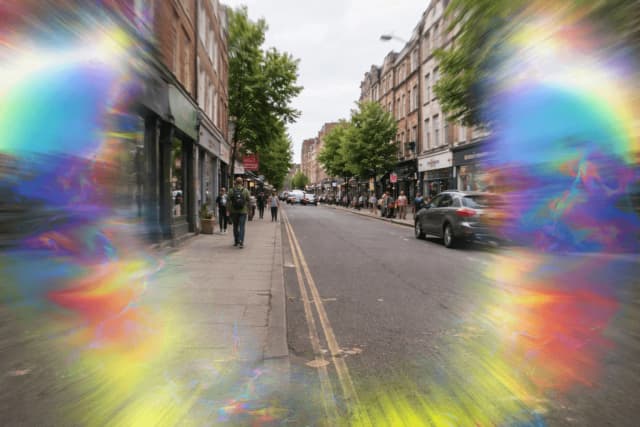
Classic migraine visual aura features:
Positive phenomena (seeing something):
- Scintillating scotoma-flickering, shimmering arc
- Fortification spectra-zigzag lines like castle walls
- Photopsia-flashing lights
- Kaleidoscope effects
- Sparkling or glittering dots
- Heat wave or shimmer effect
Negative phenomena (losing vision):
- Scotoma-blind spot that may expand (different from vision loss from optic nerve disease)
- Hemianopia-loss of half the visual field (similar to stroke but temporary)
Characteristic features:
- Starts small and expands outward over minutes
- Affects both eyes (homonymous-same side in each eye)
- Lasts 20-60 minutes typically
- May be followed by headache, nausea, light sensitivity (photophobia)
- Can occur without headache ("acephalgic migraine")
Timeline of Typical Migraine Aura
- Onset: Small visual disturbance begins, often near center of vision
- Spread: Expands gradually over 5-20 minutes
- Duration: Total aura lasts 20-60 minutes
- Resolution: Visual symptoms fade
- Headache phase: May follow within 60 minutes (or may not occur)
Migraine Aura vs. Other Visual Phenomena
| Feature | Migraine Aura | TIA/Stroke | Retinal Problem |
|---|---|---|---|
| Onset | Gradual (5+ min) | Sudden | Sudden |
| Duration | 20-60 min | Minutes to hours | Variable |
| Affects | Both eyes (homonymous) | Depends on location | One eye |
| Positive phenomena | Yes (zigzags, sparkles) | Rare | May have flashes |
| Expansion | Characteristic spreading | No | No |
| Followed by headache | Often | Unusual | No |
When Visual Phenomena Are NOT Migraine
Features suggesting NOT typical migraine aura:
- Sudden onset (not gradual over minutes)
- Duration less than 5 minutes or more than 60 minutes
- Only affects one eye (cover each eye to check)
- Always on the same side
- Motor weakness or speech difficulty during aura
- First aura after age 40 without prior migraine history
- Aura without typical migraine features ever following
- Permanent visual changes after aura resolves
These presentations need further evaluation.
Other Causes of Visual Phenomena
Eye Causes
- Flashes in peripheral vision
- New floaters
- One eye
- Usually older adults
- Flashes of light
- Curtain or shadow over vision
- One eye
- Emergency
Neurological Causes
TIA (transient ischemic attack)
- Sudden onset
- May have other neurological symptoms
- Stroke risk factors present
Occipital seizure
- Brief (seconds to minutes)
- Stereotyped (same each time)
- May have other seizure features
Other
- Persistent "static" in vision
- Different from migraine aura
- See visual snow syndrome
Entoptic phenomena
- Normal visual phenomena (floaters, blue field entoptic)
- Not pathological
When to Seek Care
Seek emergency care if visual phenomena occur with:
- Weakness, numbness, or speech difficulty
- Severe headache unlike any before
- Visual loss that doesn't resolve
- First ever episode after age 40
- Associated with eye pain or red eye
Schedule evaluation for:
- First-time visual aura (to confirm diagnosis)
- Change in your typical aura pattern
- Auras becoming more frequent
- Auras always affecting one side
- Aura lasting longer than 60 minutes
- Auras without ever having headache
How Visual Aura Is Diagnosed
Diagnosis is usually clinical, meaning the description of the episode is central:
Detailed History
- Exact description of what you see
- How long it lasts
- Whether it spreads or expands
- Timing relative to headache
- Frequency of episodes
- Any associated symptoms
Examination
- Complete eye exam (usually normal)
- Neurological exam (usually normal)
- Visual field testing if indicated
Testing (if atypical features)
- MRI brain-to rule out structural causes
- Visual field testing-to document any field loss
- OCT-if optic nerve involvement suspected
- EEG-if seizures suspected
- Cardiac evaluation-if stroke risk factors present
Treatment of Migraine with Aura
During Aura
- Find a quiet, dark place if possible
- Avoid driving until aura resolves
- Take acute migraine medication if appropriate
- Some people find caffeine helpful
Prevention (if frequent)
- Migraine preventive medications-various options
- Lifestyle modifications-regular sleep, meals, exercise
- Trigger identification and avoidance
- Magnesium supplementation-may help some people
Special Considerations
- Estrogen-containing contraceptives-generally avoided in migraine with aura due to stroke risk
- Triptans-generally safe to use, but not during aura phase
- Cardiovascular risk-slightly increased in migraine with aura; manage risk factors
Frequently Asked Questions
Is migraine aura dangerous?
Typical migraine aura itself is not dangerous in the moment, though it can be scary and disabling. Migraine with aura is linked to a slightly higher long-term vascular risk, so smoking, blood pressure, cholesterol, and estrogen-containing contraception deserve real attention.
Can I drive during an aura?
No. Visual aura can erase or distort enough of the scene to make driving unsafe. If it starts while driving, pull over safely and wait until it completely resolves.
Why do I get aura without headache?
This is called "acephalgic migraine" or "silent migraine." The aura is the same phenomenon; the headache phase simply doesn't follow. This is common and generally follows the same patterns as migraine with headache.
Should I go to the ER for migraine aura?
Not usually, if you have a history of similar auras. However, seek emergency care for your first ever aura, aura with unusual features, aura lasting more than 60 minutes, or any neurological symptoms like weakness or speech difficulty.
Can aura happen in both eyes?
Yes-in fact, this is typical. Migraine aura usually affects the same half of the visual field in both eyes (homonymous). This is because the disturbance is in the brain, not the eyes. If you cover one eye and the aura goes away, it may not be typical migraine.
Do children get visual aura?
Yes, children can have migraine with visual aura, though their descriptions may be different. Alice in Wonderland syndrome (distorted body image, size perception) is a migraine variant more common in children.
References
Medical Disclaimer: This information is for educational purposes only and does not replace professional medical advice, diagnosis, or treatment. If you have concerns about visual aura or any symptoms, please consult a qualified healthcare provider.
Sources:
- American Migraine Foundation. Migraine Aura.
- International Headache Society. ICHD-3 Criteria for Migraine with Aura.
- Schwedt TJ. Migraine with aura. UpToDate. 2024.