

Cavernous Sinus Syndrome
Multiple cranial nerve problems from a lesion in the cavernous sinus, causing eye movement problems, pain, and sensory changes.
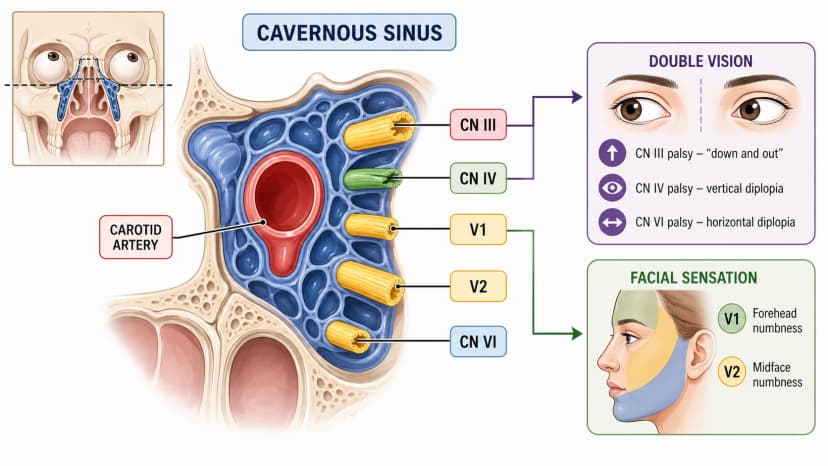
Cavernous sinus syndrome occurs when there's a problem affecting the cavernous sinus, a venous structure at the base of the skull. Multiple cranial nerves pass through here, so lesions cause combinations of eye movement problems, pain, and facial numbness.
Key Takeaways
- Multiple cranial nerves affected simultaneously
- Eye movement problems, pain, numbness
- Many possible causes-infection, tumor, vascular, inflammation
- Urgent evaluation needed-some causes are emergencies
- Treatment depends on underlying cause
Anatomy
The cavernous sinus contains:
- Cranial nerves III, IV, VI (eye movement)
- Cranial nerve V1, V2 (facial sensation)
- Sympathetic fibers
- Internal carotid artery
Symptoms
Eye Symptoms
- Double vision from multiple nerve involvement
- Ptosis (third nerve)
- Limited eye movement in multiple directions
- Proptosis (bulging eye)
- Pupil abnormalities
Pain and Sensory
Causes
Vascular
- Carotid-cavernous fistula
- Aneurysm
- Cavernous sinus thrombosis
Infectious
- Bacterial (often from sinus infection)
- Fungal (aspergillosis, mucormycosis)
Inflammatory
- Tolosa-Hunt syndrome
- Sarcoidosis
Neoplastic
- Meningioma
- Pituitary adenoma extension
- Metastases
- Lymphoma
Diagnosis
- MRI and MRA brain
- CT angiography
- Blood tests (infection, inflammation markers)
- Sometimes biopsy needed
- Lumbar puncture if infection suspected
Treatment
- Depends entirely on cause
- Antibiotics/antifungals for infection
- Anticoagulation for thrombosis
- Surgery or radiation for tumors
- Steroids for inflammation
Cavernous sinus syndrome can be an emergency. Call 911 immediately for confusion, sudden severe headache, new vision loss, or rapidly worsening neurologic symptoms. Fever, rapidly worsening eye swelling, a painful red bulging eye, or multiple new eye movement problems needs same-day emergency department evaluation; urgent-care clinics are not equipped to rule out cavernous sinus thrombosis, aneurysm, or invasive infection.
What Doctors Try to Separate Quickly
The urgent question is whether the cause is infection, vascular, tumor-related, or inflammatory. Cavernous sinus thrombosis and invasive fungal infection need rapid treatment. A carotid-cavernous fistula may need vascular imaging and endovascular care. Tolosa-Hunt syndrome is a diagnosis of exclusion; steroids should not be started until dangerous mimics have been considered.
Frequently Asked Questions
Why does one location cause so many eye symptoms?
Several nerves controlling eye movement, eyelid position, pupil function, and facial sensation pass through the cavernous sinus together. A single lesion there can affect multiple functions at once.
Is cavernous sinus syndrome the same as a sixth nerve palsy?
No. A sixth nerve palsy can occur by itself. Cavernous sinus syndrome usually involves more than one nerve or includes pain, facial numbness, pupil changes, or proptosis.
Why is MRI often needed?
The cavernous sinus sits deep at the skull base and cannot be assessed well by routine eye exam alone. MRI/MRA or CT/CTA helps identify infection, thrombosis, tumor, aneurysm, or fistula.
Medical Disclaimer: This information is for educational purposes only and does not replace professional medical advice.
Sources:
- American Academy of Ophthalmology EyeWiki. Cavernous Sinus Syndrome.
- StatPearls [Internet]. Cavernous Sinus Thrombosis.