

Unequal Pupil Size (Anisocoria)
When one pupil is larger or smaller than the other, it may be normal or indicate a neurological problem. Learn how to tell the difference.
Anisocoria (an-eye-so-KOR-ee-uh) is the medical term for unequal pupil size. A small difference can be normal, and old photos sometimes show it has been present for years. A new or obvious difference, especially with ptosis, headache, eye pain, or double vision, needs a more careful look.
Key Takeaways
- Small, stable anisocoria is common and often benign
- The key question is not just "are they unequal?" It is whether the larger or smaller pupil is the abnormal one
- A larger pupil with ptosis and double vision can indicate a third nerve palsy and possible aneurysm
- A smaller pupil with mild ptosis suggests Horner syndrome
- Old photos are genuinely useful for figuring out whether this is new
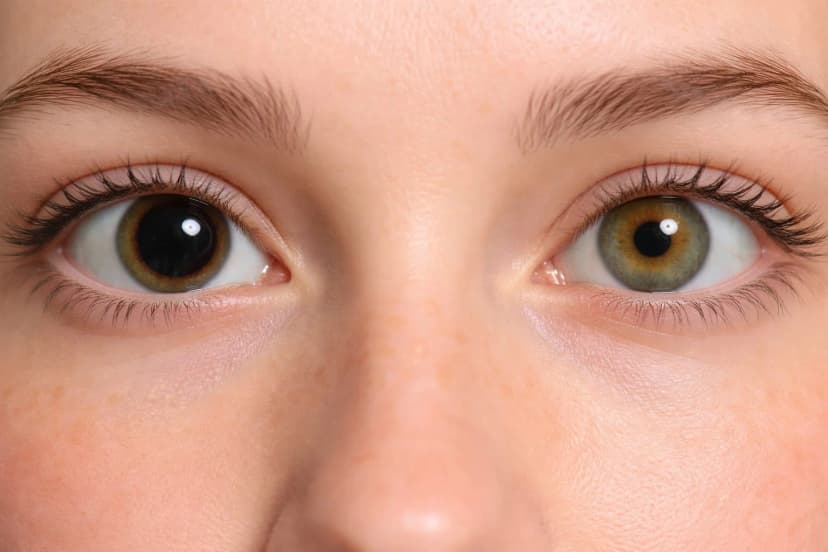
Understanding Pupils
Pupils are the eye's light valves. They:
- Constrict (get smaller) in bright light
- Dilate (get larger) in dim light
- Both should react equally and together
Pupil size is controlled by:
- Parasympathetic nerves-constrict the pupil (via third cranial nerve)
- Sympathetic nerves-dilate the pupil
Types of Anisocoria
Physiologic Anisocoria
- Normal variation present in ~20% of population
- Usually less than 1mm difference
- Same in light and dark
- No other symptoms
- Doesn't change over time
- Old photos often show it's longstanding
Larger Pupil Abnormal
Third cranial nerve palsy
- Pupil dilated and poorly reactive
- Usually with ptosis (droopy eyelid)
- Eye deviated outward/downward
- If acute, rule out aneurysm-emergency
Pharmacologic dilation
- Exposure to dilating agents (atropine, scopolamine patches)
- Pupil very large and doesn't react
- May be occupational or accidental
- Usually in young women
- Pupil larger, reacts sluggishly
- Better near reaction than light reaction
- Often benign
Trauma
- Iris damage from eye injury
- May be irregular pupil
Smaller Pupil Abnormal
Horner syndrome
- Pupil smaller (miosis)
- Mild ptosis (1-2mm)
- May have decreased sweating on face
- Indicates sympathetic pathway problem
- Requires workup to find cause
Pharmacologic constriction
- Exposure to constricting agents (pilocarpine, opiates)
- Very small pupil
Inflammation (uveitis)
- Pupil may be small and irregular
- Pain, redness, light sensitivity
Warning Signs
Call 911 immediately if unequal pupils are new and occur with severe sudden headache, weakness or numbness, altered consciousness, or recent head trauma. Go to the emergency department immediately, not urgent care, if unequal pupils occur with:
- Drooping eyelid with dilated pupil
- Eye pain
- Nausea and vomiting
- Double vision
A dilated pupil with ptosis can indicate a brain aneurysm-this is an emergency.
For comprehensive information about understanding and evaluating pupil abnormalities, see our complete guide: Understanding Pupil Abnormalities - When Unequal Pupils Need Attention.
When to Be Reassured
Anisocoria is less concerning when the history and exam are stable:
- It has been present for years (check old photos)
- Difference is small (less than 1mm) and stable
- Both pupils react briskly to light
- No other symptoms
- No ptosis, no double vision, no headache
How Anisocoria Is Evaluated
Key Questions
-
Which pupil is abnormal?
- Compare in light vs. dark
- If difference greater in dark → smaller pupil is abnormal (doesn't dilate)
- If difference greater in light → larger pupil is abnormal (doesn't constrict)
-
Is it old or new?
- Look at old photos
- Driver's license photos helpful
-
Are there other symptoms?
- Ptosis, double vision, pain, headache
Clinical Tests
- Light reaction testing-each pupil should constrict equally
- Near reaction testing-constriction with focusing close
- Pupil reactivity comparison-direct and consensual responses
- Examination in light and dark-to identify abnormal pupil
Pharmacologic Testing
If needed to diagnose:
- Apraclonidine drops-can support Horner syndrome
- Pilocarpine drops (dilute)-can support Adie's pupil
- Pilocarpine drops (regular)-tests for pharmacologic dilation
Imaging
- MRI brain/orbits-for third nerve palsy
- MRA or CTA-urgently if aneurysm suspected
- MRI/CT of neck and chest-for Horner syndrome workup
Specific Conditions
Horner Syndrome
Caused by interruption of sympathetic nerve pathway. Features:
- Mild ptosis
- Smaller pupil (miosis)
- May have anhidrosis (decreased sweating)
Requires workup to find underlying cause (can range from benign to serious).
See Horner syndrome
Adie's Tonic Pupil
Usually benign condition. Features:
- Larger pupil
- Sluggish or absent light reaction
- Better near reaction (light-near dissociation)
- Often in young women
- May have reduced tendon reflexes (Holmes-Adie syndrome)
Third Nerve Palsy with Pupil Involvement
Concerning for aneurysm. Features:
- Dilated, unreactive pupil
- Complete ptosis
- Eye deviated outward and down
- Severe headache may be present
Requires emergency imaging.
Frequently Asked Questions
Is having different pupil sizes dangerous?
Not necessarily. Physiologic anisocoria is a normal variant and is not dangerous by itself. New, changing, or symptom-associated anisocoria is different and should be evaluated.
How do I know if my anisocoria is old?
Look at old photos - driver's license, yearbook, family photos, or older phone photos. If the same difference has been present for years, it is more likely physiologic and benign.
Why does my doctor care which pupil is abnormal?
Because the cause is completely different. A larger abnormal pupil suggests parasympathetic or third nerve problem. A smaller abnormal pupil suggests sympathetic problem (Horner syndrome). The workup depends on which is abnormal.
Should I go to the ER for unequal pupils?
Yes, if they're new and accompanied by headache, ptosis, double vision, eye pain, or any neurological symptoms. If you've had stable, mild anisocoria for years with no symptoms, it's likely not urgent.
Can medications cause unequal pupils?
Yes. Many medications can affect pupil size-dilating drops, scopolamine patches, certain eye drops, some systemic medications. Accidental exposure (touching scopolamine patch then touching eye) is common.
References
Medical Disclaimer: This information is for educational purposes only and does not replace professional medical advice, diagnosis, or treatment. If you have concerns about unequal pupils or any symptoms, please consult a qualified healthcare provider.
Sources:
- StatPearls. Anisocoria. NCBI Bookshelf.
- Gross JR, McClelland CM, Lee MS. An approach to anisocoria. Curr Opin Ophthalmol. 2016;27(6):486-492.
- North American Neuro-Ophthalmology Society. Anisocoria.