

Corneal Abrasion
A scratch on the clear front surface of the eye causing pain, tearing, and light sensitivity. Learn about causes, treatment, and healing expectations.
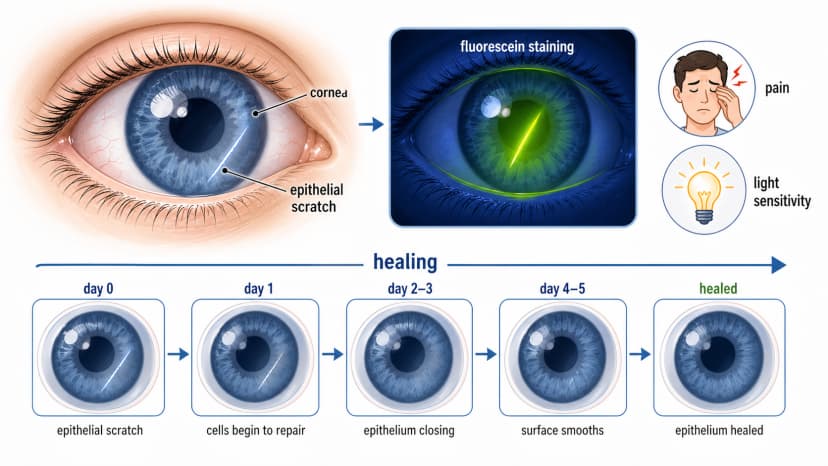
A corneal abrasion is a scratch or scrape on the cornea-the clear, protective outer layer at the front of your eye. Though often small, corneal abrasions can be extremely painful because the cornea has many nerve endings. The good news: most heal quickly with proper care.
Key Takeaways
- Very painful due to the cornea's dense nerve supply
- Usually heals quickly-most small abrasions heal within 24-72 hours
- Keep it clean-prevent infection with prescribed drops
- Don't rub the eye-can worsen injury
- Seek care if symptoms persist, worsen, or vision is affected
- Wear eye protection to prevent future injuries
Symptoms
Classic Presentation
- Intense eye pain-often disproportionate to injury size
- Sensation of something in the eye (foreign body sensation)
- Tearing (watery eye)
- Light sensitivity (photophobia)
- Blurred vision
- Redness
- Difficulty keeping the eye open
- Pain with blinking
Pain Characteristics
- Constant aching or sharp pain
- Worse with blinking
- May feel like sand or grit in the eye
- Can radiate around the eye
Common Causes
Mechanical Injury
- Fingernail scratch (often while putting in contacts)
- Paper edge
- Tree branch or plant
- Makeup applicators
- Children's fingers
- Sports injuries
- Sand or dirt particles
Contact Lens Related
- Overwearing contact lenses
- Sleeping in contacts (not approved for overnight wear)
- Dry or torn contact lens
- Poor lens hygiene
- Trapped particle under lens
Foreign Bodies
- Metal particles (grinding, welding)
- Sawdust or wood chips
- Sand or dirt
- Insects
Other Causes
- Dry eyes making cornea vulnerable
- Improper eye drop application
- Chemical exposure
- Eyelash or debris under lid
When to Seek Care
Seek immediate medical attention if:
- Injury from metal, especially grinding or hammering
- Chemical splash in the eye
- Something may be embedded in the eye
- Significant vision decrease
- Pus or discharge from the eye
- Symptoms worsening after 24 hours
- Pain not improving with treatment
- Large or central corneal injury
Where to Go
- Ophthalmologist or optometrist-ideal
- Urgent care with eye expertise
- Emergency room-if eye doctors unavailable
- Do not delay for potentially serious injuries
Diagnosis
Eye Examination
- Visual acuity-checking vision
- External examination-looking for foreign bodies
- Slit-lamp examination-magnified view of cornea
- Fluorescein staining-dye highlights abrasion under blue light
- Eyelid eversion-checking under eyelids for hidden debris
What the Doctor Looks For
- Size and location of abrasion
- Depth of injury
- Foreign material
- Signs of infection
- Corneal integrity
Treatment
First Aid (Before Seeing a Doctor)
Do:
- Blink several times to flush out particles
- Rinse with clean water or saline
- Seek medical care
Don't:
- Rub the eye
- Try to remove embedded objects
- Patch the eye without medical advice
- Use red-eye drops (they can mask problems)
Medical Treatment
Antibiotic Eye Drops or Ointment
- Erythromycin ointment-standard prophylaxis for corneal abrasions
- Fluoroquinolone drops for contact lens wearers
- Ointment lubricates and protects
- Use as prescribed, even if feeling better
Pain Management
- Oral pain relievers (ibuprofen, acetaminophen)
- Cycloplegic drops (dilate pupil, reduce spasm)
- Ice packs around (not on) the eye
Lubrication
- Artificial tears for comfort
- Help healing process
Eye Patching
- Generally NOT recommended for most abrasions
- May slow healing and increase infection risk
- Exception: may be used for large abrasions
Contact Lens Wearers
- Do not wear contacts until fully healed
- Complete antibiotic course
- Doctor clearance before resuming lens wear
- Consider new contact lenses after healing
Healing Process
Timeline
- Small abrasions: 24-48 hours
- Larger abrasions: 3-5 days
- Deep or complicated: may take longer
What to Expect
- Pain typically improves significantly within 24 hours
- Foreign body sensation may linger
- Light sensitivity resolves as healing progresses
- Vision returns to normal with healing
Factors Affecting Healing
- Size and depth of abrasion
- Location (central heals slower than peripheral)
- Underlying dry eye
- Contact lens wear history
- Infection (slows healing)
- Age and overall health
Complications
Infection (Corneal Ulcer)
Warning signs of infection:
- Increasing pain after initial improvement
- Worsening redness
- Discharge (especially yellow or green)
- White spot on cornea
- Decreased vision
Contact your doctor immediately if these occur.
Recurrent Corneal Erosion
- Abrasion recurs without new injury
- Often happens upon waking
- Due to poor healing of attachment between layers
- May need additional treatment
Scarring
- Large or deep abrasions may scar
- Central scarring can affect vision
- Most small abrasions heal without scarring
Prevention
Eye Protection
- Safety glasses for yard work, sports, construction
- Goggles when grinding, sawing, or using chemicals
- Protective eyewear in sports with projectiles
- Full-coverage glasses for high-risk activities
Contact Lens Safety
- Don't sleep in lenses unless approved for overnight wear
- Replace lenses on schedule
- Good hygiene-wash hands before handling
- Don't wear if eyes are irritated
- Remove if eye becomes painful
General Precautions
- Keep fingernails trimmed
- Be careful with mascara wands and eye makeup
- Wear sunglasses in windy, dusty conditions
- Treat dry eye to protect corneal surface
- Keep children's toys away from face level
Frequently Asked Questions
How long will the pain last?
Most abrasions start feeling significantly better within 24 hours. Complete pain relief typically comes within 48-72 hours for small abrasions. Larger injuries may take longer.
Can I go to work/school?
This depends on your symptoms and job requirements. Light sensitivity and tearing may make activities difficult initially. Most people can resume normal activities within 1-3 days.
When can I wear my contacts again?
Not until the abrasion has completely healed and your doctor has cleared you. This usually takes at least several days to a week. Wearing contacts too soon can worsen injury or cause infection.
Will I have a scar?
Small, superficial abrasions typically heal without scarring. Larger or deeper abrasions may leave some scarring. Scarring in the central cornea can affect vision more than peripheral scarring.
Do I need a follow-up visit?
Your doctor will advise. Generally, uncomplicated abrasions don't need follow-up if healing as expected. Larger abrasions, contact lens-related injuries, or any concerning features warrant follow-up.
Why does it still feel like something is in my eye?
The healing cornea is sensitive, and nerves may misinterpret healing signals as foreign body sensation. This typically resolves as healing completes. If it persists, see your doctor to ensure nothing is actually present.
References
Medical Disclaimer: This information is for educational purposes only and does not replace professional medical advice, diagnosis, or treatment. If you have a corneal abrasion, please seek appropriate medical care.
Sources:
- American Academy of Ophthalmology. Corneal Abrasion.
- Wipperman JL, Dorsch JN. Evaluation and management of corneal abrasions. Am Fam Physician. 2013;87(2):114-120.
- Ahmed F, House RJ, Feldman BH. Corneal Abrasions and Corneal Foreign Bodies. Prim Care. 2015;42(3):363-375.
- National Eye Institute. Corneal Conditions.