

Corneal Ulcer (Infectious Keratitis)
An infected open sore on the clear front surface of the eye. Contact lenses, injury, severe dryness, or a compromised cornea can set the stage.
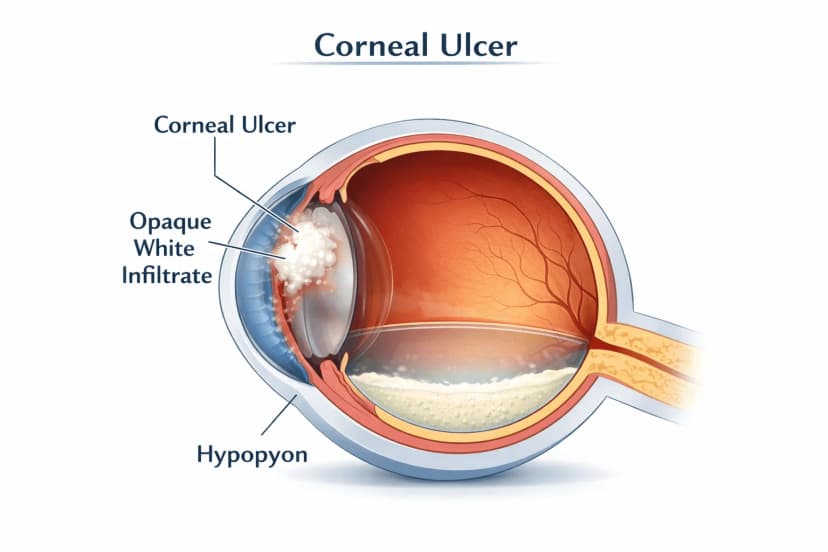
A painful red eye with a white or gray corneal opacity requires same-day evaluation. A corneal ulcer is an open sore on the clear front surface of the eye and is often infectious. It can cause severe pain, light sensitivity, discharge, and blurred vision as the cornea swells or scars. Contact lens wear is the leading risk factor in developed countries, but any scratched, dry, numb, exposed, or inflamed cornea is more vulnerable.
Key Takeaways
- This is an eye emergency because infection and scarring can permanently damage the cornea
- Contact lens wear is the top risk factor in developed countries, especially sleeping in lenses or poor lens hygiene
- Pain, redness, discharge, light sensitivity, and blurry vision are common warning symptoms
- A white or gray spot on the cornea is a serious warning sign, particularly if the eye is painful
- Strong antibiotic treatment may need to start quickly, sometimes after cultures are taken
- Do not delay evaluation; small ulcers can progress to vision-threatening scars or perforation
What Is a Corneal Ulcer?
The cornea is the clear, dome-shaped window at the front of the eye. A corneal ulcer is:
- An area where the corneal surface has broken down
- Usually infected with bacteria, fungi, or other organisms
- Associated with inflammation
- Potentially vision-threatening, especially if near the center of the cornea
Difference from Corneal Abrasion
- Abrasion: superficial scratch, usually heals quickly
- Ulcer: deeper, involves infection, requires aggressive treatment
Causes and Risk Factors
Contact Lens Wear (Most Common)
Contact lens-related ulcers are preventable.
Risk increases substantially with:
- Sleeping in contact lenses (even those approved for overnight wear)
- Swimming or showering in contacts
- Poor lens hygiene
- Using tap water with lenses
- Overwearing lenses
Other Risk Factors
Ocular Conditions:
- Severe dry eye
- Previous eye surgery
- Blepharitis
- Corneal exposure (from incomplete lid closure)
- Previous corneal disease
- Herpes simplex eye infection
Trauma:
- Scratch or injury to the cornea
- Foreign body
- Chemical burns
Systemic Factors:
- Diabetes
- Immunosuppression
- Malnutrition
- Vitamin A deficiency (in developing countries)
Common Infectious Organisms
Bacteria (Most Common):
- Pseudomonas aeruginosa-especially in contact lens wearers (aggressive)
- Staphylococcus aureus
- Streptococcus species
- Moraxella
Fungi:
- Fusarium
- Aspergillus
- Candida
- More common after plant/organic matter injury
Other:
- Acanthamoeba-from water exposure (contact lens wearers)
- Herpes simplex virus
- Herpes zoster virus
Symptoms
Warning Signs
Seek immediate care for:
- Severe eye pain-out of proportion to what you see
- Red eye with discharge
- White or gray spot on the cornea
- Sensitivity to light (photophobia)
- Blurred vision
- Feeling of something in the eye that doesn't go away
- Swollen eyelids
- Excessive tearing
These symptoms, especially in a contact lens wearer, are a medical emergency.
Symptom Progression
- Often starts as foreign body sensation
- Pain increases over hours
- Vision becomes increasingly blurry
- Light sensitivity worsens
- Discharge may develop
What You Might See
- Red eye (can be very red)
- White, gray, or yellowish spot on the colored part of the eye
- Cloudy cornea
- Pus in the eye (hypopyon-visible as a white layer in the lower part of the iris)
- Swollen lids
Diagnosis
Urgent Eye Examination
- Complete eye exam including visual acuity
- Slit lamp examination (microscope) to visualize the ulcer
- Assessment of ulcer size, depth, and location
- Check for hypopyon (pus in the eye)
- Evaluation of surrounding cornea
- Measurement of intraocular pressure
Corneal Cultures
For significant ulcers:
- Scraping of the ulcer for cultures
- Identifies the causative organism
- Guides antibiotic selection
- Especially important for severe, central, or atypical ulcers
Imaging
- Corneal topography (usually after healing)
- OCT of cornea (in some cases)
- B-scan ultrasound if view is obscured (to check for endophthalmitis)
Treatment
Emergency Treatment
Fortified Antibiotic Drops:
- Usually started empirically (before culture results)
- Fluoroquinolone (moxifloxacin, gatifloxacin) for mild to moderate
- Fortified antibiotics (specially compounded) for severe ulcers
- Initial dosing may be every hour around the clock
Treatment Depends on Severity:
| Severity | Characteristics | Treatment |
|---|---|---|
| Mild | Small peripheral infiltrate with limited epithelial defect and minimal anterior chamber reaction | Fluoroquinolone drops frequently |
| Moderate | Larger, approaching center | Fortified drops, hourly |
| Severe | Central, deep, hypopyon | Fortified drops, possibly hospital admission |
Additional Treatments
- Cycloplegic drops-reduce pain from ciliary spasm
- Pain management-oral pain medication
- Avoid patching-allows monitoring and medication delivery
- Discontinue contact lens wear-dispose of current lenses and case
Treatment for Specific Organisms
Fungal Ulcers:
- Antifungal drops (natamycin, voriconazole, amphotericin B)
- Much longer treatment course (weeks to months)
- May need oral antifungals
- Often require surgical intervention
Acanthamoeba:
- Extremely difficult to treat
- Combination of multiple drops (PHMB, chlorhexidine, propamidine)
- Treatment for months
- Often requires corneal transplant
Herpes:
- Antiviral drops (trifluridine) or oral antivirals
- May need topical steroids (carefully, under supervision)
Follow-Up
- Very frequent follow-up initially (daily or every other day)
- Treatment adjusted based on response
- Cultures reviewed when available
- Gradual taper as healing occurs
Complications
Potential Outcomes
With Prompt Treatment:
- Most bacterial ulcers heal
- Scarring depends on size and location
- Central scars affect vision more than peripheral
Possible Complications:
- Corneal scarring (permanent)
- Vision loss
- Corneal perforation
- Endophthalmitis (infection inside the eye)
- Need for corneal transplant
- Loss of eye (rare, severe cases)
Factors That Worsen Prognosis
- Delayed treatment
- Large or deep ulcer
- Central location
- Virulent organism (Pseudomonas)
- Fungal or Acanthamoeba infection
- Immunocompromised patient
After Healing
What to Expect
- Corneal scarring may occur (depends on ulcer severity/location)
- Vision may be affected by scarring
- May need glasses or contact lenses for irregular astigmatism
- May eventually need corneal transplant if scarring is significant
Returning to Contact Lenses
Before returning to contact lens wear:
- Complete healing confirmed by doctor
- Careful evaluation of what caused the ulcer
- Consider daily disposable lenses
- Strict hygiene education
- Never sleep in lenses
- Never expose lenses to water
Some patients are advised not to return to contact lens wear.
Prevention
For Contact Lens Wearers
Essential Practices:
- Never sleep in contact lenses (unless medically necessary)
- Never swim or shower in lenses
- Never use tap water with lenses
- Replace lenses on schedule
- Use proper disinfection (not saline alone)
- Replace lens case every 1-3 months
- Wash hands before handling lenses
- Don't "top off" old solution
Warning Signs to Remove Lenses:
- Any redness
- Pain
- Light sensitivity
- Blurred vision
- Discharge
General Prevention
- Treat underlying conditions (dry eye, blepharitis)
- Protect eyes from injury
- Seek prompt care for any eye injury or infection
- Don't ignore persistent symptoms
Frequently Asked Questions
How serious is a corneal ulcer?
Very serious. Corneal ulcers can cause permanent vision loss within days if not treated promptly and aggressively. They are a medical emergency.
Can I treat this at home?
No. Corneal ulcers require prescription medications, often specialty medications, and close monitoring. Delays in treatment significantly worsen outcomes.
Will I go blind?
With prompt treatment, most corneal ulcers heal successfully. However, vision may be affected if scarring occurs, especially if the ulcer was central. Severe or delayed cases can cause significant permanent vision loss.
Can I wear contacts again?
Possibly, after complete healing and with strict precautions. Daily disposable lenses and excellent hygiene are essential. Some patients are advised not to return to contact lens wear. Your doctor will guide this decision.
How did I get this?
The most common cause in developed countries is contact lens wear, especially sleeping in lenses or poor hygiene. Other causes include eye injury, severe dry eye, and other corneal diseases.
How long does treatment take?
Treatment duration varies from a week to months depending on the organism and severity. Bacterial ulcers typically improve within days but require weeks of drops. Fungal and Acanthamoeba ulcers require prolonged treatment.
References
Medical Disclaimer: This information is for educational purposes only and does not replace professional medical advice, diagnosis, or treatment. Corneal ulcers are medical emergencies-if you have symptoms, seek immediate care.
Sources:
- American Academy of Ophthalmology. Corneal Ulcer.
- Austin A, et al. Update on the management of infectious keratitis. Ophthalmology. 2017;124(11):1678-1689.
- Ung L, et al. The persistent dilemma of microbial keratitis: Global burden, diagnosis, and antimicrobial resistance. Surv Ophthalmol. 2019;64(3):255-271.