

Hordeolum (Stye)
A painful, red bump on the eyelid caused by an infected oil gland. Learn about symptoms, home treatment, and when to see a doctor.
A hordeolum, commonly called a stye, is a painful red bump on the eyelid caused by a bacterial infection of an oil gland or hair follicle. Styes are very common and usually resolve within a week with home treatment. While uncomfortable, they rarely cause serious complications.
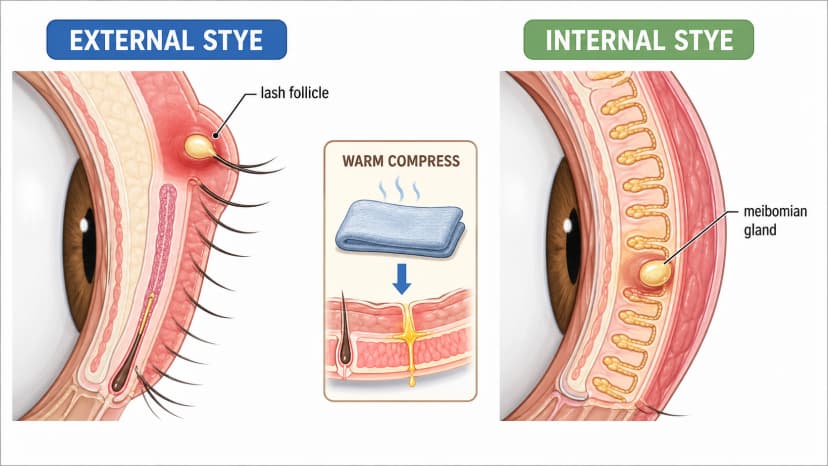
Key Takeaways
- Acute bacterial infection of an eyelid gland
- Painful, tender, red bump usually at the lid margin
- Most resolve within a week with warm compresses
- Do not squeeze or pop-can spread infection
- May become a chalazion if inflammation persists
- Good lid hygiene helps prevent recurrence
Types of Styes
External Hordeolum (Most Common)
- Located at base of eyelash
- Infection of Zeis gland (oil gland) or Moll gland (sweat gland)
- Points outward on lid margin
- Looks like a pimple on the eyelid
Internal Hordeolum
- Located on inner surface of eyelid
- Infection of meibomian gland
- May be deeper and larger
- Points inward
- Often more painful
Symptoms
Classic Presentation
- Painful, tender bump on eyelid
- Redness and swelling
- Located at or near lid margin
- May have visible "whitehead" or pus point
- Lid may feel heavy
- Tearing
- Light sensitivity
- Gritty or scratchy sensation
- Crusting along lashes
Timeline
- Usually develops rapidly (1-2 days)
- Peaks at days 2-4
- Often drains spontaneously
- Resolves within 1-2 weeks
Causes
Bacteria
- Usually Staphylococcus aureus
- Bacteria normally present on skin/lashes
- Overgrows when gland becomes blocked
Risk Factors
- Blepharitis
- Meibomian gland dysfunction (MGD)
- Rosacea
- Previous styes
- Poor lid hygiene
- Touching eyes with unwashed hands
- Leaving eye makeup on overnight
- Using old or contaminated makeup
- Contact lens wear (especially with poor hygiene)
- Stress and fatigue (may lower immunity)
Treatment
Home Treatment
Warm compress technique for styes:
- Apply clean, warm compress to closed eye
- Hold for 10-15 minutes
- Repeat 4-6 times daily
- Warmth increases blood flow and encourages drainage
- Do not squeeze or pop the stye
Most styes drain on their own within a week.
Additional Home Care
- Keep eyelids clean
- Gentle lid hygiene
- Avoid eye makeup until resolved
- Don't wear contact lenses until healed
- Don't share towels or pillowcases
When to Add Antibiotics
Topical antibiotics (ointment) may be prescribed if:
- Not improving with warm compresses
- Spreading infection
- Recurrent styes
Oral antibiotics may be needed for:
- Preseptal cellulitis (infection spreading to surrounding lid)
- Recurrent or multiple styes
- Immunocompromised patients
Surgical Drainage
If a stye:
- Doesn't drain on its own
- Persists more than 2 weeks
- Becomes very large
A doctor can make a small incision to drain it (incision and drainage).
When to See a Doctor
Seek prompt medical attention if:
- Stye doesn't improve after 1-2 weeks of treatment
- Vision becomes affected
- Redness and swelling spreads beyond the eyelid
- Fever develops
- Entire eyelid becomes swollen
- Eye becomes painful (beyond the stye area)
- Stye is very large or growing rapidly
- Recurrent styes
Spreading infection (preseptal cellulitis) needs antibiotic treatment.
Complications
Common
Chalazion Formation
- Stye resolves but leaves a firm, painless bump
- Infection gone but blocked material remains
- May need additional treatment (see chalazion)
Uncommon
Preseptal Cellulitis
- Infection spreads to eyelid tissue
- Lid becomes very swollen and red
- Needs oral antibiotics
- Usually responds well to treatment
Rare
Orbital Cellulitis
- Serious infection behind the eye
- Pain with eye movement
- Vision changes
- Requires hospital admission and IV antibiotics
Prevention
Daily Habits
- Good hand hygiene
- Avoid touching eyes
- Clean eyelids regularly
- Remove makeup before bed
- Replace eye makeup every 3-6 months
- Don't share eye makeup or tools
If You're Prone to Styes
- Daily warm compresses
- Regular lid hygiene
- Treat underlying blepharitis or MGD
- Consider omega-3 supplements
Contact Lens Hygiene
- Wash hands before handling lenses
- Clean and replace lenses as directed
- Don't sleep in lenses unless approved
- Replace lens case regularly
Stye vs. Other Eyelid Bumps
| Condition | Pain | Onset | Location | Treatment |
|---|---|---|---|---|
| Stye | Painful | Rapid | Lid margin | Warm compresses |
| Chalazion | Usually painless | Gradual | Mid-lid | Warm compresses, surgery |
| Xanthelasma | Painless | Gradual | Inner corner | Cosmetic removal |
| Papilloma | Painless | Gradual | Anywhere | Removal if desired |
Frequently Asked Questions
Can I pop a stye?
No. Never squeeze or pop a stye. This can spread the infection deeper into the eyelid or to surrounding tissue. Let it drain naturally with warm compress treatment.
Is a stye contagious?
The bacteria causing styes (usually Staph) can spread, but styes themselves don't spread like pink eye. However, don't share towels, pillows, or eye makeup to be safe.
Can I wear contact lenses with a stye?
Avoid wearing contact lenses until the stye has completely healed. Lenses can irritate the area and may become contaminated.
How long does a stye last?
Most styes resolve within 7-10 days with proper treatment. Some may last up to 2 weeks. If it persists longer, see a doctor.
Why do I keep getting styes?
Recurrent styes often indicate underlying blepharitis or MGD. Treating these conditions with regular lid hygiene and warm compresses can prevent recurrence.
Should I throw away my eye makeup?
Discard any eye makeup (mascara, eyeliner) that was used just before or during the stye. These products can harbor bacteria and cause reinfection.
Will a stye leave a scar?
Most styes heal without scarring. If surgically drained, the incision is usually on the inside of the lid and doesn't leave a visible scar.
References
Medical Disclaimer: This information is for educational purposes only and does not replace professional medical advice, diagnosis, or treatment. If you have a concerning eyelid bump, please consult a qualified healthcare provider.
Sources:
- American Academy of Ophthalmology. What Are Chalazia and Styes?.
- Lindsley K, et al. Interventions for acute internal hordeolum. Cochrane Database Syst Rev. 2017;1(1):CD007742.
- Bragg KJ, et al. Hordeolum. StatPearls. 2023.
- American Academy of Ophthalmology EyeWiki. Stye.