

Meibomian Gland Dysfunction (MGD)
A leading cause of dry eye where oil glands in the eyelids become blocked. Learn about symptoms, diagnosis, and effective treatments.
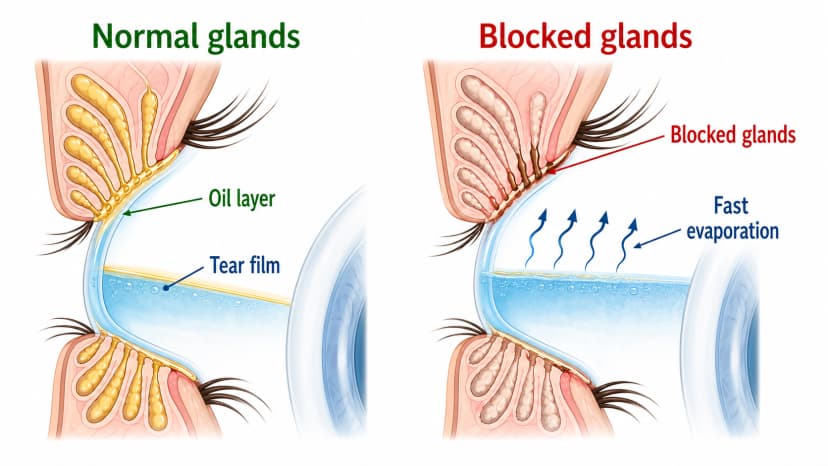
Meibomian gland dysfunction (MGD) is the most common cause of dry eye syndrome. The meibomian glands are tiny oil glands in your eyelids that produce the lipid (oil) layer of your tears. When these glands become blocked or don't function properly, tears evaporate too quickly, leading to dry, irritated eyes. If you've been wondering why your eyes feel dry or irritated, MGD is one of the most common reasons.
Key Takeaways
- Most common cause of evaporative dry eye
- Oil glands in eyelids become blocked or produce poor quality oil
- Symptoms overlap with dry eye-grittiness, burning, fluctuating vision
- Often associated with blepharitis and rosacea
- Treatment includes warm compresses, lid hygiene, and in-office procedures
- Gland damage can be permanent-early treatment important
Understanding Meibomian Glands
- About 25-40 glands in each upper lid
- About 20-30 glands in each lower lid
- Gland openings along lid margin (behind eyelashes)
- Secrete meibum (oil) with each blink
- Meibum forms outer layer of tear film
- Prevents tear evaporation
What Goes Wrong in MGD
Gland Blockage
- Meibum becomes thick and waxy
- Blocks gland openings
- Stagnant oil thickens further
- Bacteria may overgrow
Gland Dropout
- Blocked glands eventually atrophy
- Gland loss is often permanent
- Remaining glands work harder
Tear Film Consequences
- Without adequate oil layer, tears evaporate quickly
- Leads to dry eye symptoms
- Creates cycle of inflammation
Symptoms
Eye Symptoms
- Dryness and grittiness
- Burning or stinging
- Foreign body sensation
- Itching
- Redness
- Blurred vision that fluctuates
- Eye fatigue
- Light sensitivity
- Discomfort worse at end of day
Lid Signs
- Crusty or flaky lid margins
- Red or swollen lid margins
- Visible blocked gland openings
- Foam or debris in tear film
- Recurrent styes (hordeolum) or chalazia
Risk Factors
Demographics
- Age-more common over 50
- Female sex-especially after menopause
Medical Conditions
- Rosacea-strong association
- Blepharitis
- Seborrheic dermatitis
- Demodex mites
- Autoimmune conditions
Medications and Treatments
- Isotretinoin (Accutane)
- Antihistamines
- Antidepressants
- Hormone replacement therapy
Lifestyle Factors
- Contact lens wear
- Extended screen time (reduced blinking)
- Low humidity environments
- High-fat diet (may affect oil quality)
Diagnosis
Clinical Examination
Lid Margin Assessment
- Blocked gland openings (capped or pouting)
- Lid margin redness and irregularity
- Telangiectasia (dilated blood vessels)
Gland Expression
- Gentle pressure on lids
- Assesses quality of expressed meibum
- Normal: clear oil; abnormal: thick, toothpaste-like, or nothing
Tear Film Evaluation
- Tear break-up time (TBUT)
- Tear film debris or foam
Specialized Testing
Meibography
- Imaging of meibomian glands
- Shows gland structure
- Reveals gland dropout (atrophy)
- Helps track progression
Tear Osmolarity
- Elevated in dry eye
- Can monitor treatment response
InflammaDry (MMP-9)
- Detects inflammation
- Helps guide treatment
Treatment
Home Treatments
- Heat melts thickened meibum
- Use warm (not hot) compress
- Apply 10-15 minutes daily
- Commercial heated eye masks available
- Must be warm enough, long enough
- Clean lid margins daily
- Commercial lid scrubs or diluted baby shampoo
- Hypochlorous acid sprays (Avenova, others)
- Remove debris and reduce bacterial load
Lid Massage
- After warming, gently massage lids
- Press glands toward lid margin
- Helps express thickened meibum
- Supplement tear film
- Lipid-containing formulations helpful
Prescription Treatments
Antibiotics
- Oral doxycycline or azithromycin
- Anti-inflammatory effects on meibomian glands
- Also improve meibum quality
- Usually short courses
Anti-inflammatory Drops
- Cyclosporine (Restasis/Cequa)
- Lifitegrast (Xiidra)
- Address underlying inflammation
Evaporation-Preventing Drops
- Perfluorohexyloctane (Miebo)-FDA-approved for dry eye associated with MGD
In-Office Procedures
- Manual expression by doctor
- More thorough than home massage
- May require anesthetic
- Device applies controlled heat and pressure
- 12-minute in-office treatment
- Clears blocked glands
- Effects can last months
- Other devices: iLux, TearCare
Intense Pulsed Light (IPL)
- Light therapy for lid margin
- Reduces inflammation
- Improves gland function
- Especially helpful with rosacea
- Keep tears on eye longer
- Often combined with other treatments
Emerging Treatments
- Meibomian gland probing
- Newer thermal devices
- Combination approaches
What to Expect from Treatment
Timeline
- Warm compresses: immediate comfort, cumulative benefit
- Antibiotics: improvement over 2-4 weeks
- Anti-inflammatory drops: 2-3 months for full effect
- LipiFlow: improvement within weeks, lasting months
Ongoing Management
MGD is usually chronic and requires:
- Consistent lid hygiene routine
- Regular artificial tear use
- Periodic in-office treatments
- Attention to environmental factors
If you've been newly diagnosed, see just diagnosed with dry eye - what now? for a step-by-step treatment plan. For common misconceptions about dry eye and MGD, see dry eye myths vs facts.
Gland Preservation
Meibomian gland dropout is often irreversible. Early treatment helps preserve remaining glands. If you have MGD, consistent treatment is important to prevent further gland loss.
Prevention and Lifestyle
Daily Habits
- Warm compress routine
- Regular lid cleaning
- Complete blinking (especially during screen use)
- Breaks from screens (20-20-20 rule)
Environment
- Use humidifier in dry environments
- Avoid direct air flow on eyes
- Protective eyewear in wind
Diet
- Omega-3 fatty acids - evidence is mixed (a large clinical trial found uncertain benefit for dry eye symptoms)
- Stay hydrated
- Some evidence for Mediterranean-style diet
Contact Lens Care
- Daily disposables may be better
- Proper cleaning routine
- Give eyes breaks from lenses
Frequently Asked Questions
Can MGD be cured?
MGD is typically a chronic condition requiring ongoing management rather than cure. However, with consistent treatment, symptoms can usually be well-controlled and gland function preserved.
Are warm compresses really necessary?
Yes. Warm compresses are fundamental to MGD treatment. The heat melts thickened meibum and allows glands to function. Doing them consistently makes a significant difference.
How do I know if my warm compress is warm enough?
It should feel comfortably warm on your closed eyes-not hot enough to burn. The compress needs to maintain warmth for 10-15 minutes. Many people find commercial heated eye masks maintain heat better than washcloths.
Will I need LipiFlow or similar treatments?
Not everyone needs these procedures. Many people do well with consistent home care. In-office procedures are typically considered when home treatments alone aren't sufficient.
Is MGD related to styes?
Yes. Styes (hordeola) and chalazia are often related to MGD. Blocked glands can become infected (stye) or develop chronic inflammation (chalazion). Treating MGD can help prevent these.
Can MGD cause permanent vision problems?
Severe, untreated MGD can damage the cornea, but this is uncommon with proper treatment. The bigger concern is permanent gland loss, which makes treatment harder over time.
References
Medical Disclaimer: This information is for educational purposes only and does not replace professional medical advice, diagnosis, or treatment. If you have symptoms of meibomian gland dysfunction, please consult a qualified healthcare provider.
Sources:
- Nichols KK, et al. The International Workshop on Meibomian Gland Dysfunction. Invest Ophthalmol Vis Sci. 2011;52(4):1917-2085.
- American Academy of Ophthalmology. Meibomian Gland Dysfunction.
- Geerling G, et al. The International Workshop on Meibomian Gland Dysfunction: Report of the Subcommittee on Management and Treatment. Invest Ophthalmol Vis Sci. 2011;52(4):2050-2064.