

Chalazion
A painless bump on the eyelid caused by a blocked oil gland. Learn about causes, home treatment with warm compresses, and when surgery is needed.
A chalazion is a slowly developing, usually painless bump on the eyelid caused by a blocked meibomian (oil) gland. Unlike a stye (hordeolum), which is an acute infection, a chalazion is a chronic inflammatory response to trapped oil. While often resolving with home treatment, some chalazia require minor surgical drainage.
Key Takeaways
- Caused by blocked meibomian gland-not an infection
- Usually painless (unlike a stye)
- Warm compresses are first-line treatment
- May take weeks to months to resolve
- Can be drained surgically if persistent
- Often associated with MGD or blepharitis
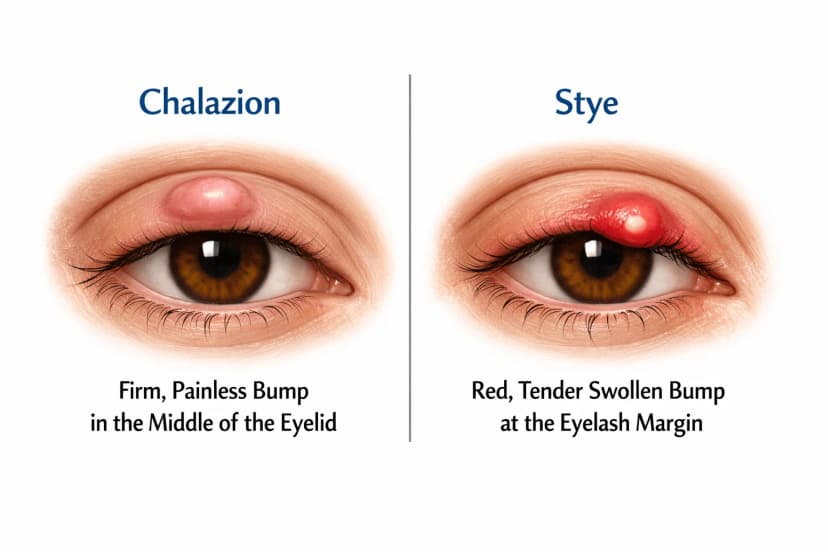
Chalazion vs. Stye
| Feature | Chalazion | Stye |
|---|---|---|
| Cause | Blocked gland (chronic) | Infected gland (acute) |
| Pain | Usually painless | Painful, tender |
| Location | Usually mid-lid, points inward | Lid margin, points outward |
| Onset | Gradual (days to weeks) | Rapid (1-2 days) |
| Treatment | Warm compresses, possibly surgery | Warm compresses, antibiotics if needed |
Note: A stye can evolve into a chalazion once the acute infection resolves but the blocked material remains.
Symptoms
What It Looks and Feels Like
- Firm, round bump on eyelid
- Usually painless (may be tender initially)
- Gradually enlarges over days to weeks
- Can occur on upper or lower lid
- May point toward the inside of the lid
- Can cause lid swelling
- Vision may be affected if large (presses on eye)
When It Becomes a Problem
- Cosmetically noticeable
- Large enough to press on eyeball (causing blurred vision or astigmatism)
- Persistent despite treatment
- Recurrent chalazia
Causes and Risk Factors
How It Develops
- Meibomian gland becomes blocked
- Oil backs up in the gland
- Gland ruptures internally
- Body mounts inflammatory response to leaked oil
- Inflammatory tissue (granuloma) forms-the chalazion
Risk Factors
- Meibomian gland dysfunction (MGD)
- Blepharitis
- Rosacea
- Seborrheic dermatitis
- Previous chalazia
- Poor lid hygiene
- Contact lens wear
- High-fat diet (possibly)
Treatment
Home Treatment (First Line)
Warm compress technique:
- Apply warm compress to closed eyelid
- Temperature: comfortably warm (not hot)
- Duration: 10-15 minutes
- Frequency: 4-6 times daily initially
- Gently massage after warming
- Continue for several weeks
Patience is important-chalazia often take 2-8 weeks to resolve.
Lid Hygiene
- Lid scrubs to keep lid margins clean
- Treat underlying blepharitis
- Hypochlorous acid spray
Medical Treatment
If not improving with warm compresses:
Steroid Injection
- Corticosteroid injected into chalazion
- Reduces inflammation
- Can resolve chalazion without surgery
- May need multiple injections
For Recurrent Chalazia
- Oral doxycycline (50-100 mg daily for 3+ months)
- Anti-inflammatory effect on meibomian glands
- Reduces recurrence rate
Surgical Treatment
Incision and Curettage (I&C)
When warm compresses and/or injection don't work:
- Minor in-office procedure
- Local anesthesia
- Incision usually on inside of lid (no visible scar)
- Contents scraped out
- Heals quickly
- May use antibiotic ointment after
What to expect from chalazion surgery:
- Takes about 15-20 minutes
- Pressure but minimal pain during procedure
- Patch worn for a few hours after
- Bruising and swelling for several days
- Usually resolves completely
- Can recur (especially if underlying MGD not treated)
When to See a Doctor
Routine Evaluation
- Chalazion not improving after 4-6 weeks of warm compresses
- Chalazion larger than a pea
- Affecting vision
- Recurrent chalazia
Urgent Evaluation
See a doctor promptly if:
- Chalazion becomes acutely painful and red (may have become infected)
- Fever develops
- Lid becomes very swollen
- Vision changes
- Chalazion in unusual location
- Recurrent chalazia in same spot (rarely, can indicate lid cancer)
Complications
From the Chalazion
- Cosmetic concern
- Induced astigmatism (from pressure on eye)
- Secondary infection (becoming a stye)
- Granuloma formation
- Rarely: preseptal cellulitis if infected
From Surgery (Uncommon)
- Bleeding
- Infection
- Recurrence
- Lid notching (rare)
Prevention
If You're Prone to Chalazia
- Daily warm compresses
- Regular lid hygiene
- Treat blepharitis and MGD
- Consider omega-3 supplements
- Avoid touching/rubbing eyes
When to Consider LipiFlow or Similar
For patients with frequent recurrent chalazia due to MGD, in-office treatments like thermal pulsation (LipiFlow) may help prevent future episodes.
Chalazion in Children
Chalazia are common in children:
- Treatment approach similar to adults
- Warm compresses can be challenging (shorter attention span)
- Surgery may require general anesthesia in young children
- Most resolve with conservative treatment
- Rule out other conditions if atypical
Frequently Asked Questions
How long will it take to go away?
With consistent warm compress treatment, many chalazia resolve in 2-8 weeks. Some may take longer or require additional treatment. Patience and consistency are key.
Can I pop or squeeze it?
No. Attempting to squeeze a chalazion can worsen inflammation, spread material into surrounding tissue, or introduce infection. Let it resolve naturally or seek medical treatment.
Will it come back?
Recurrence is possible, especially if you have underlying MGD or blepharitis. Maintaining good lid hygiene and treating underlying conditions reduces recurrence risk.
Is a chalazion contagious?
No. Chalazia are not infections and cannot spread to other people. Unlike conjunctivitis, you don't need to worry about contaminating others.
Will it leave a scar?
If treated conservatively (warm compresses) or with standard surgical technique (incision on inside of lid), scarring is minimal or invisible. External incisions are sometimes needed for very large chalazia and may leave a small scar.
Can a chalazion be cancerous?
Typical chalazia are not cancerous. However, a recurring "chalazion" in the same location that doesn't fully resolve should be evaluated to rule out sebaceous carcinoma, a rare eyelid cancer that can mimic a chalazion.
Should I avoid wearing makeup?
While you have an active chalazion, avoiding eye makeup reduces irritation and potential contamination. Resume once resolved, but keep makeup brushes clean.
References
Medical Disclaimer: This information is for educational purposes only and does not replace professional medical advice, diagnosis, or treatment. If you have a persistent eyelid bump, please consult a qualified healthcare provider.
Sources:
- StatPearls. Chalazion. NCBI Bookshelf.
- Gilchrist H, Lee G. Management of chalazia in general practice. Aust Fam Physician. 2009;38(5):311-314.
- Arbabi EM, et al. The treatment of chalazion: a review. Eye Contact Lens. 2021;47(3):136-140.