

Optic Disc Drusen
Calcified deposits within the optic nerve head that can mimic papilledema but are usually benign.
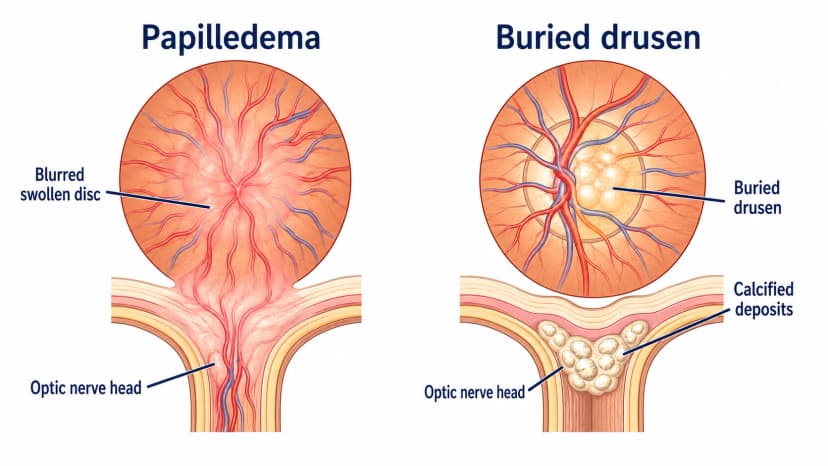
Optic disc drusen (ODD) are abnormal deposits of protein and calcium within the optic nerve head. They can make the optic disc appear elevated, mimicking papilledema, but they're usually a benign finding.
Key Takeaways
- Benign deposits in the optic nerve head
- Can mimic papilledema-important distinction
- Usually asymptomatic but can affect peripheral vision
- Often inherited (autosomal dominant)
- Monitoring recommended for visual field changes
What Are They
- Calcified hyaline deposits
- Within substance of optic nerve head
- Build up over years
- May become visible (surface) or remain buried
- Often bilateral
Symptoms
Often None
- Many discovered incidentally
- Routine eye exam finding
When Present
- Visual field deficits-peripheral loss
- Rarely central vision affected
- Rarely: transient visual obscurations
- Very rarely: sudden vision loss (from vascular event)
Why They Matter
Pseudo-papilledema
- Elevated discs can look like papilledema
- Important to distinguish-papilledema needs workup
- Avoids unnecessary testing
Diagnosis
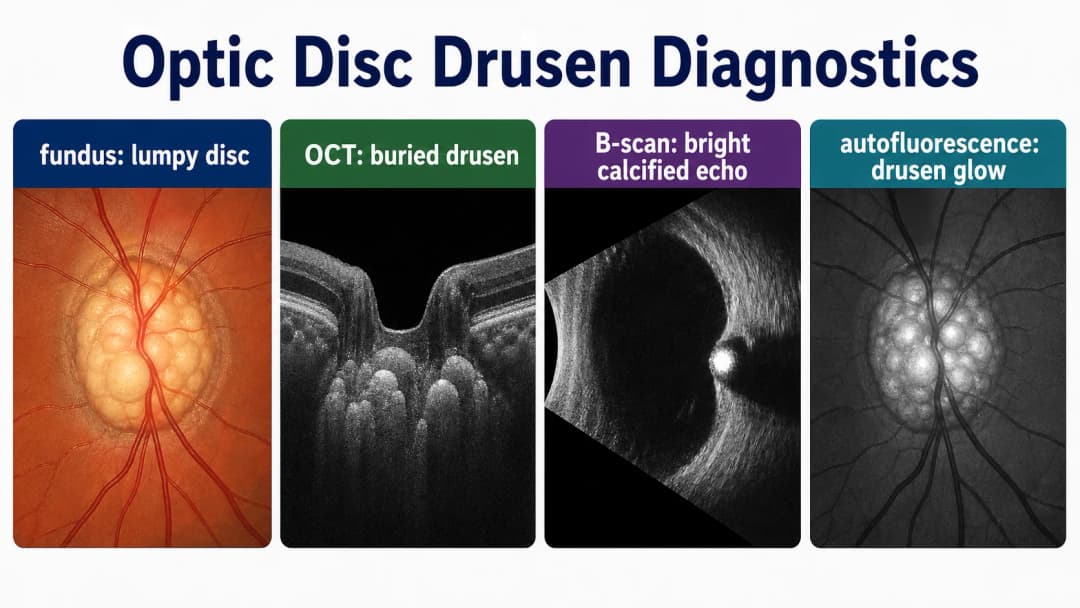
- Clinical appearance (lumpy, elevated disc, no hyperemia)
- OCT-shows drusen, no subretinal fluid
- B-scan ultrasound-drusen are bright
- Autofluorescence-drusen glow
- CT orbit (rarely needed)-shows calcification
Full image description
Key Differences from Papilledema
| Feature | Drusen | Papilledema |
|---|---|---|
| Disc margins | Irregular, lumpy | Blurred, hyperemic |
| Vessels | Normal | Dilated, obscured |
| Hemorrhages | Rare | Common |
| Symptoms | Usually none | Headache, TVOs |
Management
- Confirmation of diagnosis
- Baseline visual field testing
- Periodic monitoring (every 1-2 years)
- No treatment to remove drusen
- Manage any visual field loss conservatively
Prognosis
Excellent for most. Progressive visual field loss occurs in minority. Central vision usually preserved.
Frequently Asked Questions
Are optic disc drusen the same as drusen in macular degeneration?
No. Optic disc drusen are deposits in the optic nerve head. Macular drusen are retinal deposits associated with age-related macular degeneration. They are different findings in different locations.
Can optic disc drusen cause headaches?
They usually do not cause headaches. Headache with a swollen-looking optic nerve is one reason doctors work carefully to separate drusen from true papilledema.
Do optic disc drusen need treatment?
There is no treatment that removes the drusen. The practical plan is confirming the diagnosis, getting a baseline visual field test, and monitoring for field loss or rare vascular complications.
Medical Disclaimer: This information is for educational purposes only and does not replace professional medical advice.
Sources:
- American Academy of Ophthalmology EyeWiki. Optic Disc Drusen.
- StatPearls/NCBI Bookshelf. Optic Disc Drusen.
- North American Neuro-Ophthalmology Society. Optic Disc Drusen.