

Papilledema
Swelling of the optic discs from elevated pressure inside the skull. Papilledema is a sign of increased intracranial pressure requiring urgent investigation.
Papilledema is swelling of the optic discs caused by elevated intracranial pressure (pressure inside the skull). Unlike other causes of optic disc swelling, papilledema specifically refers to swelling from increased brain pressure and is always a significant finding requiring investigation.
New-onset papilledema is a medical emergency until proven otherwise.
Call 911 immediately if optic disc swelling has been found and you also have:
- Severe or rapidly worsening headache, especially the "worst headache of your life"
- Sudden vision loss, new double vision, or episodes of vision blacking out
- BE-FAST stroke symptoms: balance trouble, new vision symptoms, face droop, arm weakness, speech trouble, confusion, or trouble walking
- Seizure, fainting, or a recent head injury
- Severe nausea and vomiting
- Fever with neck stiffness
These features can mean a brain tumor, hemorrhage, meningitis, cerebral venous sinus thrombosis, or stroke. If papilledema is found without these symptoms, go to the emergency department the same day or follow the ordering clinician's urgent imaging plan; do not wait for a routine outpatient appointment.
Key Takeaways
- Papilledema is optic disc swelling from elevated intracranial pressure
- It's a sign, not a diagnosis-must find the underlying cause
- Causes include tumors, bleeding, IIH, and blocked drainage
- Can cause permanent vision loss if not treated
- Requires urgent evaluation with imaging and often lumbar puncture
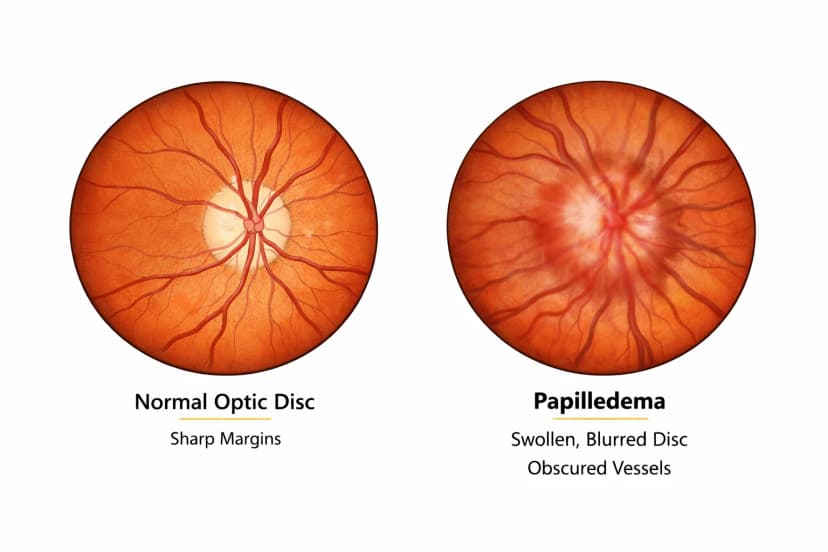
Understanding Papilledema
The optic nerve connects the eye to the brain. It's surrounded by cerebrospinal fluid (CSF), the same fluid that surrounds the brain. When pressure increases inside the skull, it's transmitted to the optic nerve, causing the optic disc (the visible front portion) to swell.
Symptoms
Visual Symptoms
- Transient visual obscurations-brief (seconds) episodes of vision graying or blacking out
- Often triggered by position changes or straining
- Enlarged blind spot-may not be noticed by patient
- Visual field defects-if longstanding
- Vision usually preserved early but at risk if untreated
Other Symptoms (From Elevated Pressure)
- Headache-often worse in morning, with straining
- Pulsatile tinnitus-whooshing sound in ears
- Nausea and vomiting
- Double vision-from sixth nerve palsy
- Symptoms may depend on underlying cause
Causes
Mass Lesions
- Brain tumors
- Brain abscess
- Hematomas (bleeding)
- Metastatic cancer
Obstruction of CSF Flow/Drainage
- Hydrocephalus
- Venous sinus thrombosis (blocked brain drainage veins)
- Aqueductal stenosis
Increased CSF Production
- Rare tumors that produce excess CSF
Idiopathic Intracranial Hypertension (IIH)
- Elevated pressure without tumor or obstruction
- Most common in young overweight women
- Diagnosis of exclusion (after ruling out other causes)
- See the IIH patient journey guide for what to expect from diagnosis through treatment
Other
- Malignant hypertension
- Certain medications
- Sleep apnea
- Vitamin A toxicity
Papilledema vs. Other Disc Swelling
Not all swollen optic discs are papilledema. Other causes include:
| Condition | Key Features |
|---|---|
| Papilledema | Bilateral, from elevated ICP, vision initially preserved |
| Optic neuritis | Usually unilateral, painful, significant vision loss |
| Ischemic optic neuropathy | Sudden vision loss, usually unilateral |
| Optic disc drusen | Lumpy disc appearance, often asymptomatic |
| Infiltration | Cancer, inflammation-usually unilateral |
Diagnosis
Fundoscopic Examination
Ophthalmoscopy reveals:
- Elevated optic discs
- Blurred disc margins
- Dilated veins
- Hemorrhages around disc
- Usually bilateral (both eyes)
- Graded by severity (Frisén grades 1-5 based on disc appearance and obscuration of retinal vessels)
Optical Coherence Tomography (OCT)
- Measures retinal nerve fiber layer thickness
- Quantifies disc swelling
- Monitors changes over time
Brain Imaging
MRI brain with MRV-preferred initial study
- Rules out tumor, bleeding, hydrocephalus
- MRV shows venous sinuses
- May show IIH signs (empty sella, flattened globes)
CT scan-if MRI not immediately available or contraindicated
Lumbar Puncture (Spinal Tap)
Done after imaging confirms no mass
- Measures opening pressure
- Analyzes CSF composition
- May be therapeutic (temporarily relieves pressure)
Visual Field Testing
- Documents baseline vision
- Monitors for progression
- Guides treatment urgency
Treatment
Treatment depends on underlying cause:
For Mass Lesions
- Neurosurgical intervention
- Treatment of underlying tumor/condition
- Steroids to reduce swelling
For Venous Sinus Thrombosis
- Anticoagulation (blood thinners)
- Sometimes intervention
For IIH
- Weight loss
- Acetazolamide
- Topiramate
- Shunting if medical treatment fails
- Optic nerve fenestration if vision threatened
For Hydrocephalus
- Shunting (VP shunt)
- Endoscopic treatment
Monitoring
- Regular visual field testing
- Serial OCT
- Follow disc appearance
- Adjust treatment based on response
Prognosis
With Timely Treatment
- Good visual outcomes possible
- Depends on underlying cause
- Early intervention critical
Without Treatment
- Progressive optic nerve damage
- Visual field loss
- Potential permanent vision loss
- Optic atrophy develops
Frequently Asked Questions
Is papilledema serious?
Yes. Papilledema indicates elevated pressure inside the skull, which always has a cause that needs to be identified. Some causes (like brain tumors) are serious, and even "benign" causes like IIH can damage vision if untreated.
Can papilledema cause permanent vision loss?
Yes, if the underlying cause isn't treated. The elevated pressure damages the optic nerve over time, leading to permanent visual field loss and potentially blindness. This is why monitoring and treatment are important.
What's the difference between papilledema and optic disc edema?
Papilledema specifically refers to disc swelling from elevated intracranial pressure. Optic disc edema is a broader term for swelling from any cause. The terms are often misused, which is why careful evaluation is important.
How urgent is papilledema?
Urgent. If papilledema is found, imaging should be done promptly to identify the cause. If a mass lesion is found, treatment may be emergent. Even without a mass, evaluation should be completed within days.
Why do I need vision tests if I can see fine?
Visual field loss from papilledema often starts peripherally (at the edges) and may not be noticed. Testing documents your baseline and allows detection of subtle changes that need treatment adjustment.
References
Medical Disclaimer: This information is for educational purposes only and does not replace professional medical advice, diagnosis, or treatment. If you have concerns about papilledema or any symptoms, please consult a qualified healthcare provider.
Sources:
- Friedman DI. Papilledema and pseudotumor cerebri syndrome. UpToDate. 2024.
- Biousse V, et al. Optic disc edema in raised intracranial pressure. Surv Ophthalmol. 2016;61(6):701-707.
- American Academy of Ophthalmology EyeWiki. Papilledema.
- North American Neuro-Ophthalmology Society. Idiopathic Intracranial Hypertension/Pseudotumor Cerebri.