

Just Diagnosed with Dry Eye - What Now?
What a new dry eye diagnosis means, common treatment options, home care, and when to escalate beyond over-the-counter drops.
A new dry eye diagnosis should identify the pattern: low tear production, meibomian gland dysfunction (MGD), inflammation, medication-related dryness, or a mixed picture. Treatment works best when the plan matches that pattern rather than relying on random over-the-counter drops.
Key Takeaways
- Dry eye is chronic but manageable - most patients find significant relief with the right treatment combination
- There are two main types - evaporative (oil layer problem) and aqueous-deficient (not enough tears) - and treatment depends on which type you have
- Treatment follows a ladder - starting with over-the-counter drops and building up to prescriptions or procedures as needed
- Daily home care matters most - warm compresses, lid hygiene, and environmental changes form the foundation
- Prescription options exist when OTC drops aren't enough - Restasis, Xiidra, and others can reduce inflammation and improve tear production
- Regular follow-up with your eye doctor helps track progress and adjust treatment over time
Understanding Your Diagnosis
Dry eye disease means your eyes either don't produce enough tears or the tears evaporate too quickly. The result is the same - an unstable tear film that leaves the eye surface exposed, causing burning, stinging, grittiness, and sometimes paradoxically watery eyes.
Two Types of Dry Eye
- Evaporative dry eye (most common) - the oil layer of your tears is deficient, usually because of MGD or blepharitis. Tears form normally but evaporate too fast.
- Aqueous-deficient dry eye - the lacrimal gland doesn't produce enough of the watery layer. This is less common and sometimes associated with autoimmune conditions.
Many patients have a combination of both types.
What Tests May Have Been Done
Your eye doctor may have used one or more of these to confirm your diagnosis:
- Tear break-up time (TBUT) - measures how quickly your tear film becomes unstable after a blink
- Schirmer test - measures tear production using a small paper strip under the lower lid
- OSDI questionnaire - a standardized symptom survey to grade severity
- MMP-9 testing - detects a marker of inflammation on the eye surface
- Meibography - images the oil glands in your eyelids to assess structural damage
The Treatment Ladder
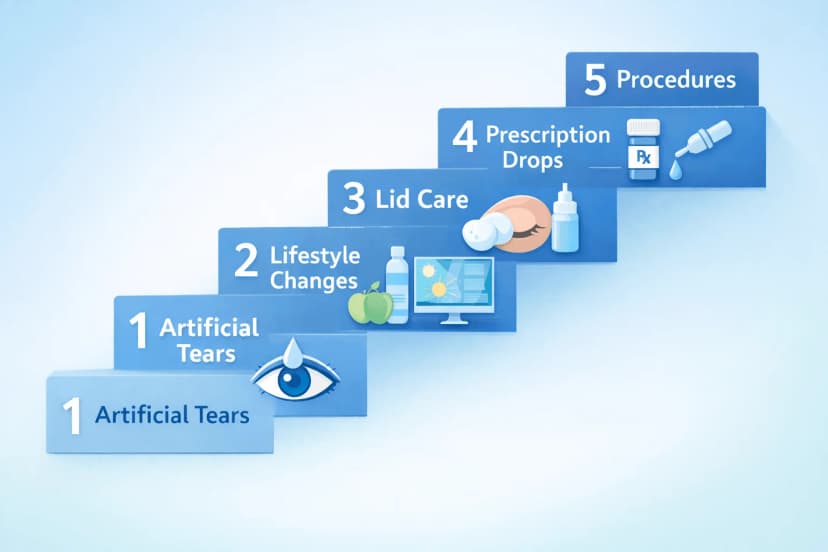
Dry eye treatment is stepped - you start with the basics and add therapies as needed. Most patients use a combination of approaches.
Start with Over-the-Counter Artificial Tears
Artificial tears are the foundation of dry eye treatment. They supplement your natural tears and provide immediate (though temporary) relief.
- Use preservative-free drops if you need them more than 4 times daily
- Try different brands - some work better than others depending on your tear deficiency
- For help choosing the right drops, see our guide on how to choose eye drops for dry eyes
Reduce Environmental Triggers
Simple changes can make a meaningful difference:
- 20-20-20 rule - every 20 minutes, look at something 20 feet away for 20 seconds to reduce screen-related dryness
- Humidifier - maintain 40-60% indoor humidity, especially in winter or air-conditioned spaces
- Omega-3 fatty acids - fish oil or flaxseed oil supplements may support tear quality
- Hydration - adequate water intake supports overall tear production
- Positioning - keep screens below eye level to reduce exposed eye surface area
Add Eyelid Care When Glands Are Involved
If your dry eye involves MGD or blepharitis, eyelid care is essential:
- Warm compresses - apply a warm mask or cloth for 5-10 minutes daily to soften blocked oil glands
- Lid hygiene - clean eyelid margins daily with a gentle lid scrub or diluted baby shampoo to remove debris and bacteria
Step 4: Prescription Drops
When OTC drops aren't enough, your doctor may prescribe anti-inflammatory or tear-stimulating medications. For a detailed comparison of all available prescription options, see comparing dry eye prescription drops.
Common prescriptions include:
- Restasis (cyclosporine) - reduces inflammation and helps increase natural tear production
- Xiidra (lifitegrast) - blocks an inflammatory pathway involved in dry eye
Step 5: In-Office Procedures
For moderate to severe dry eye that doesn't respond fully to drops:
- Punctal plugs - tiny silicone plugs placed in tear drainage ducts to keep tears on the eye longer
- Meibomian gland expression - your doctor manually clears blocked oil glands
- Thermal pulsation (LipiFlow) - applies controlled heat and pressure to restore gland function
- Intense pulsed light (IPL) - treats eyelid inflammation, especially helpful for ocular rosacea-related dry eye
Combination Therapy
Most patients with moderate to severe dry eye use multiple treatments simultaneously - for example, artificial tears for immediate relief, warm compresses for MGD, and a prescription drop for underlying inflammation. Your doctor will tailor the combination to your specific type and severity.
Think of dry eye management like skincare - a consistent daily routine works better than treating only during flare-ups. The patients who do best are the ones who stick with their regimen even on good days.
Home Care Essentials
A Simple Daily Routine
- Morning - warm compress for 5-10 minutes, followed by lid hygiene
- Throughout the day - artificial tears every 3-4 hours (or as needed), screen breaks every 20 minutes
- Evening - repeat warm compress if needed; use a thicker gel or ointment drop at bedtime for overnight protection
Environment Checklist
- Humidifier running in bedroom and office
- Computer screen positioned below eye level
- Air vents directed away from face
- Wraparound sunglasses for windy or dry outdoor conditions
- Avoid direct fan airflow while sleeping
Diet and Supplements
- Omega-3-rich foods: salmon, sardines, flaxseed, walnuts
- Stay well hydrated (aim for 8 glasses of water daily)
- Omega-3 supplements (1,000-2,000 mg daily) if dietary intake is low - discuss with your doctor
When Prescription Treatment Is Needed
Consider talking to your doctor about prescription options if:
- You're using artificial tears more than 4-6 times daily and still symptomatic
- Symptoms interfere with reading, screen work, or driving
- You have persistent redness or fluctuating vision
- Warm compresses and lid hygiene haven't provided enough relief after 4-6 weeks
What to Expect from Prescription Drops
Prescription dry eye drops work differently from artificial tears. Instead of temporarily replacing moisture, they target the underlying inflammation or tear deficiency. This means results take time.
Be patient with prescription drops. Anti-inflammatory medications like Restasis and Xiidra typically take 3-6 months to reach their full effect. Many patients notice improvement around 6-8 weeks, but stopping early is the most common reason prescriptions "don't work." Continue using artificial tears for immediate comfort while the prescription builds its effect.
Living with Dry Eye Long Term
Dry eye is chronic for many people, but symptoms can often be reduced with consistent treatment and periodic adjustment when the eye surface or medications change.
Expect Flare-Ups
Symptoms will fluctuate. Common triggers include:
- Seasonal changes (winter dryness, spring allergies)
- Extended screen use or travel
- Hormonal changes
- Illness, stress, or poor sleep
- Starting a new medication (antihistamines, antidepressants, blood pressure medications)
Track Your Symptoms
Keeping a brief symptom diary can help you and your doctor identify patterns and triggers. Note which days are worse and what was different - weather, screen time, sleep, medications, or environment.
Regular Check-Ups
See your eye doctor at least once a year (more often if symptoms are unstable) to:
- Reassess tear production and meibomian gland health
- Adjust medications if needed
- Check for corneal surface changes
- Discuss new treatment options as they become available
Frequently Asked Questions
Is dry eye a permanent condition?
For most people, dry eye is chronic - meaning it requires ongoing management rather than a one-time cure. However, if your dry eye is caused by a specific factor (such as a medication or temporary environmental exposure), it may improve or resolve once that factor is addressed. Most patients find that consistent treatment keeps symptoms well controlled.
Will my dry eye get worse over time?
Not necessarily. Untreated dry eye can worsen gradually, particularly if meibomian gland damage progresses. But with proper treatment, most patients stabilize or improve. Early and consistent management helps prevent progression.
Can dry eye be cured?
There's no single cure, but dry eye can be managed effectively. Some patients achieve near-complete symptom resolution with the right treatment combination. The goal is long-term comfort and a stable ocular surface, not necessarily eliminating the underlying tendency toward dryness.
How long until I feel better?
OTC artificial tears provide immediate temporary relief. Environmental changes and lid care typically show results within 2-4 weeks of consistent use. Prescription drops take longer - usually 6-12 weeks for noticeable improvement and 3-6 months for full effect.
When should I use OTC drops versus prescription drops?
OTC artificial tears are appropriate for mild symptoms and as a supplement to other treatments. If you need drops more than 4-6 times daily or your symptoms significantly impact daily activities, discuss prescription options with your doctor. Many patients use both - artificial tears for immediate comfort and a prescription drop for long-term improvement.
Can I still wear contact lenses?
Many people with dry eye wear contacts successfully. Daily disposable lenses are generally best tolerated. Use preservative-free rewetting drops labeled safe for contacts, follow your wearing schedule, and discuss lens options with your eye doctor. If dryness makes standard contacts intolerable, scleral lenses are an alternative that many dry eye patients find comfortable.
Can dry eye affect my vision?
Yes. An unstable tear film causes fluctuating, blurry vision that temporarily clears with blinking. Severe, untreated dry eye can damage the corneal surface, but this is uncommon with proper treatment. If you notice persistent vision changes, see your eye doctor.
Should I get a second opinion?
If your symptoms aren't improving despite treatment, or if you're unsure about your diagnosis, a second opinion is always reasonable. A dry eye specialist or cornea specialist may offer additional testing or treatment options.
References
Medical Disclaimer: This information is for educational purposes only and does not replace professional medical advice, diagnosis, or treatment. If you have been diagnosed with dry eye or have symptoms of dry or irritated eyes, please consult a qualified healthcare provider for personalized care.
Sources:
- American Academy of Ophthalmology. Dry Eye Preferred Practice Pattern.
- National Eye Institute. Dry Eye.
- Tear Film & Ocular Surface Society (TFOS). DEWS II Report. Ocul Surf. 2017.
- American Optometric Association. Dry Eye.