

Ectropion
A condition where the eyelid turns outward, exposing the inner surface and causing tearing, dryness, and irritation. Learn about types, causes, and surgical repair.
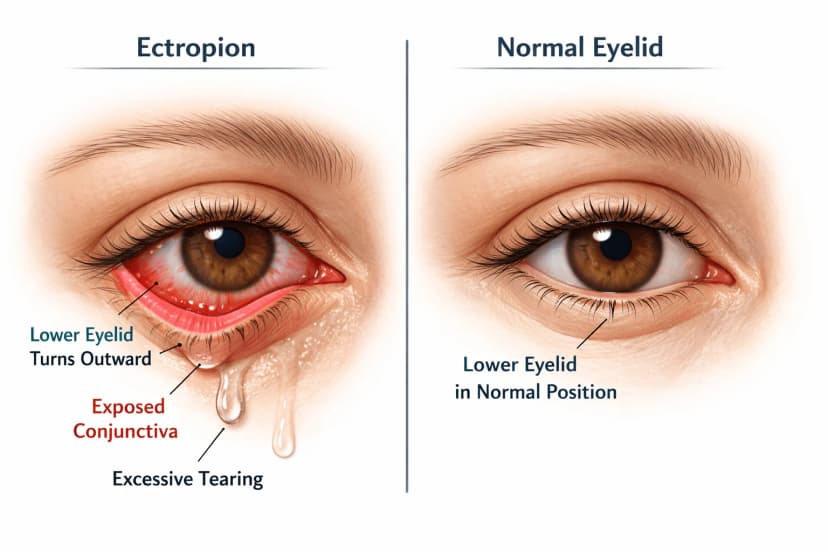
Ectropion is a condition in which the eyelid (usually the lower lid) turns outward, away from the eyeball. This exposes the inner eyelid surface (palpebral conjunctiva) and prevents the eyelid from properly contacting the eye. The result is tearing, dryness, irritation, and potential corneal damage from exposure.
Key Takeaways
- The eyelid turns outward, exposing the inner surface
- Most commonly caused by aging (involutional ectropion) - loss of eyelid muscle tone
- Causes paradoxical tearing - tears overflow because the lid can't direct them to the drain
- Corneal exposure is the main concern - can lead to dryness, ulceration, and scarring
- Eyelid surgery is the definitive treatment
- Lubricating drops and ointments protect the eye while awaiting surgery
Types of Ectropion
Involutional (Most Common)
- Caused by age-related weakening and stretching of the eyelid tissues
- The lower lid gradually sags away from the eye
- Worsens over time
- Most common form by far
Cicatricial
- Caused by scarring of the skin below the eyelid
- Scar tissue pulls the lid outward
- Causes include: burns, trauma, skin cancer surgery, sun damage, chronic dermatitis
- Can be severe
Paralytic
- Caused by facial nerve (CN VII) palsy
- The orbicularis muscle cannot maintain lid tone
- Associated with Bell's palsy or after facial nerve injury/surgery
- Often accompanied by incomplete eyelid closure (lagophthalmos)
Mechanical
- Caused by a mass or growth weighing the lid down
- Eyelid tumors, severe edema, or excess skin can cause this
- Treating the underlying cause may resolve the ectropion
Congenital
- Present at birth (rare)
- May be associated with Down syndrome or other conditions
Symptoms
- Excessive tearing (epiphora) - the lower punctum (tear drain) is pulled away from the eye, so tears cannot drain and overflow onto the cheek
- Dry, irritated eye - despite the tearing, the exposed ocular surface dries out
- Redness of the exposed inner eyelid and eye
- Foreign body sensation - gritty or sandy feeling
- Crusting along the eyelid
- Sensitivity to wind and dry environments
- Blurred vision from poor tear film
- Cosmetic concern - visible drooping of the lower lid
Why do my eyes water if the lid turns outward? This seems contradictory, but the tears are overflowing because the lower punctum (drain opening) is no longer in contact with the tear lake. Even though tears are being produced, they cannot enter the drainage system and instead spill over the lid margin.
Causes and Risk Factors
- Aging - the most common cause; loss of eyelid tissue elasticity and muscle tone
- Previous eyelid surgery - especially if too much skin was removed
- Facial nerve palsy (Bell's palsy)
- Skin scarring - from burns, trauma, or surgery
- Sun damage - chronic UV exposure damages eyelid skin
- Skin conditions - eczema, contact dermatitis
- Eyelid tumors or masses
Diagnosis
- Clinical examination - ectropion is visible on inspection
- Eyelid laxity assessment - snap-back test (pulling the lid away and releasing it) and distraction test
- Assessment of tear drainage - the punctum should be in contact with the eye
- Corneal examination - checking for exposure-related damage (punctate keratitis, corneal ulceration)
- Facial nerve function - if paralytic ectropion is suspected
Treatment
Conservative Management (Temporary)
While awaiting surgery or if surgery is not an option:
- Artificial tears - frequent lubrication during the day
- Lubricating ointment - at night to protect the cornea
- Taping the lid - gently taping the lower lid upward at night
- Moisture chamber glasses - reduce evaporation
- Treating underlying causes - managing dermatitis, removing masses
Surgical Repair (Definitive Treatment)
Eyelid surgery is the standard treatment for ectropion:
For involutional ectropion:
- Lateral tarsal strip - the most common procedure; tightens the lower lid by shortening and reattaching the lateral aspect
- Medial conjunctivoplasty - if the medial (inner) aspect is predominantly affected
- Quick outpatient procedure under local anesthesia
- High success rate
For cicatricial ectropion:
- Skin grafting or flap surgery - replaces the scarred, shortened skin with healthy tissue
- More complex than involutional repair
For paralytic ectropion:
- Lid tightening combined with other procedures
- May include gold or platinum weight implant in the upper lid (if lagophthalmos is present)
- Treating the underlying facial nerve palsy when possible
Recovery After Surgery
- Mild bruising and swelling for 1-2 weeks
- Sutures removed or dissolve within 1-2 weeks
- Antibiotic ointment for several days
- Most patients return to normal activities within 1 week
- Full healing and cosmetic result over 4-6 weeks
Complications of Untreated Ectropion
- Corneal exposure keratopathy - drying and damage to the corneal surface
- Corneal ulceration - can threaten vision
- Chronic conjunctivitis - from exposure and poor tear drainage
- Skin breakdown from chronic tearing and wiping
When to See a Doctor
See an eye doctor if:
- Your lower eyelid is sagging or turning outward
- You have chronic tearing, especially with redness or irritation
- You notice that your lower eyelid doesn't snap back when gently pulled
- You have new eyelid drooping after facial palsy or surgery
Seek urgent care if:
- Eye pain with redness and light sensitivity (possible corneal ulcer from exposure)
- Vision changes associated with ectropion
- Signs of corneal damage (white spot on the cornea)
Frequently Asked Questions
Is ectropion surgery effective?
Yes. Eyelid tightening surgery has a high success rate for involutional ectropion. Most patients experience significant improvement in tearing, comfort, and appearance.
Will ectropion come back after surgery?
The eyelid tissues continue to age after surgery, so there is a small risk of recurrence over many years. However, most repairs are durable and lasting.
Is the surgery painful?
The procedure is performed under local anesthesia and is generally well-tolerated. Post-operative discomfort is mild and managed with over-the-counter pain relievers and cold compresses.
What's the difference between ectropion and entropion?
Ectropion is the eyelid turning outward (away from the eye), while entropion is the eyelid turning inward (toward the eye). Both are common in elderly patients and both can cause corneal problems, but through different mechanisms - exposure in ectropion, and lash rubbing in entropion.
Can I prevent ectropion?
Age-related ectropion is difficult to prevent. Sun protection for the eyelid skin may help slow tissue changes. Avoiding aggressive eye rubbing may also help maintain lid tone.
References
Medical Disclaimer: This information is for educational purposes only and does not replace professional medical advice, diagnosis, or treatment. If you have symptoms of ectropion, please consult a qualified healthcare provider.
Sources:
- American Academy of Ophthalmology. Ectropion.
- Vallabhanath P, Carter SR. Ectropion and entropion. Curr Opin Ophthalmol. 2000;11(5):345-351.
- Olver JM. Surgical tips on the lateral tarsal strip. Eye. 1998;12(Pt 6):1007-1012.
- Collin JR. A Manual of Systematic Eyelid Surgery. 3rd ed. Butterworth-Heinemann; 2006.
- American Academy of Ophthalmology EyeWiki. Ectropion.