
Bell's Palsy
Sudden facial weakness affecting one side of the face, including eye closure. Learn about causes, eye care, and recovery expectations.
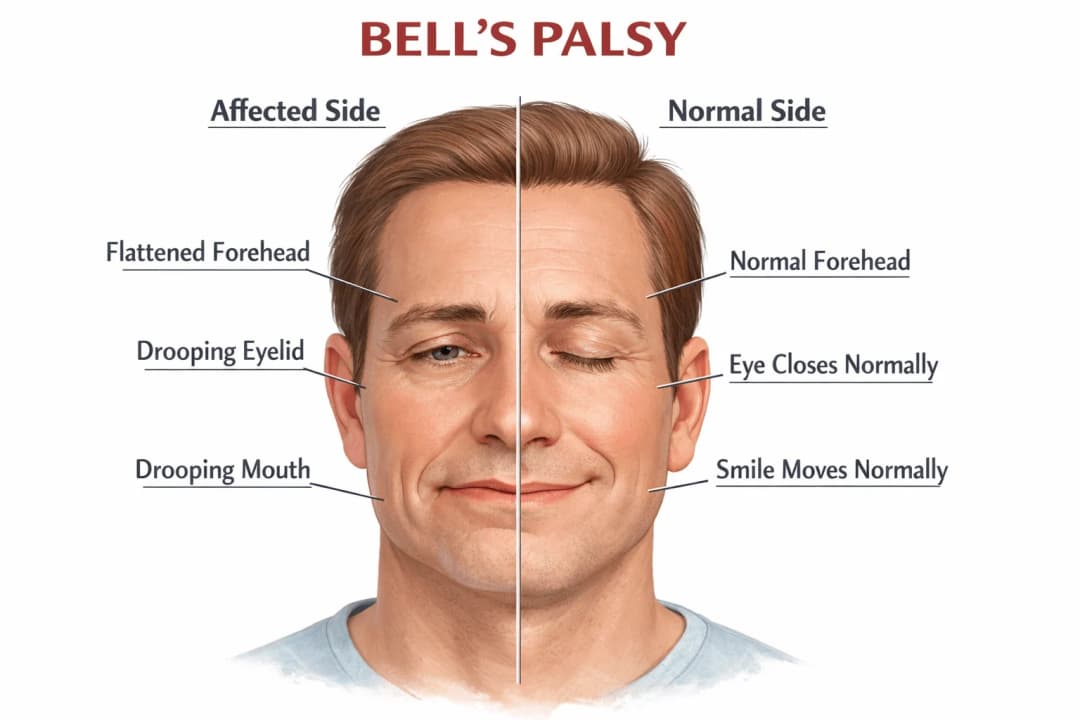
Bell's palsy is sudden weakness or paralysis of the facial nerve (cranial nerve VII) affecting one side of the face. It impacts the ability to close the eye, raise the eyebrow, and move the mouth on the affected side. While alarming, most people recover fully.
Key Takeaways
- Sudden facial weakness affecting one side of the face
- Eye protection is critical-inability to close the eye can damage the cornea
- Most people recover well, often within weeks to months
- Early steroid treatment improves outcomes
- Bell's palsy is not a stroke-but sudden facial weakness should be medically assessed promptly to rule out stroke and other causes
Symptoms
Facial Weakness
- Weakness develops over hours to 1-2 days
- Affects one side of the face
- Inability to:
- Close the eye
- Raise the eyebrow
- Smile on the affected side
- Puff out the cheek
Eye-Related Symptoms
- Cannot fully close the eye
- Excessive tearing or dry eye (see medical conditions that cause dry eye)
- Eye irritation and redness
- Light sensitivity
- Blurred vision (from corneal exposure)
Other Symptoms
- Pain behind the ear (often precedes weakness)
- Decreased taste
- Sensitivity to loud sounds
- Drooling
- Difficulty eating and drinking
What Causes Bell's Palsy
Suspected Cause
- Viral inflammation of the facial nerve
- Likely caused by herpes simplex virus reactivation
- Nerve swells within its bony canal, causing compression
Risk Factors
- Diabetes
- Pregnancy, especially the third trimester
- Upper respiratory infection
- Weakened immune system
Conditions to Rule Out
Bell's palsy is a diagnosis of exclusion. Other causes of facial weakness must be considered:
- Stroke (if forehead is spared, seek emergency evaluation)
- Lyme disease
- Tumors
- Ramsay Hunt syndrome (shingles affecting the ear)
- Other infections
Eye Care in Bell's Palsy
Why Eye Protection Is Critical
When you can't close your eye:
- Cornea dries out and can be damaged
- Risk of corneal ulcer and scarring
- Can cause permanent vision loss if untreated
Protective Measures
Daytime:
- Artificial tears frequently (every 1-2 hours)
- Gel drops for longer-lasting moisture
- Wrap-around glasses to reduce evaporation
Nighttime (most important):
- Lubricating ointment before bed
- Tape eyelid closed (paper tape)
- Moisture chamber or plastic wrap
- Sleep on the unaffected side
If symptoms of corneal damage occur:
Seek immediate eye care if you experience:
- Increasing eye pain
- Redness worsening
- Vision changes
- White spot on cornea
Medical/Surgical Options for Eye
- Temporary eyelid weights (stick-on or surgical)
- Botox to lower upper lid
- Temporary tarsorrhaphy (partial eyelid closure)
- Gold weight implant (if prolonged paralysis)
Treatment
Steroids
- Prednisone started within 72 hours of onset
- Improves recovery rates
- Usually 10-14 day course with taper
- Most important early treatment
Antivirals
- Often prescribed with steroids
- Valacyclovir or acyclovir
- Evidence for benefit is less clear than steroids
- Typically given for suspected viral cause
Physical Therapy
- Facial exercises
- Massage
- May help with recovery
- Especially useful if recovery is incomplete
Prognosis and Recovery
Recovery Timeline
- Most improvement occurs within 3 weeks
- Recovery continues for up to 6 months (or longer)
- 70-80% recover completely without treatment
- With early steroids, >90% have good recovery
Signs of Recovery
- Twitching of facial muscles
- Return of movement (often forehead first)
- Gradual improvement in eye closure
Incomplete Recovery
Some patients may experience:
- Residual weakness
- Synkinesis (unintended movements, like eye closing when smiling)
- Crocodile tears (tearing while eating)
- Facial tightness
Living with Bell's Palsy
First Few Weeks
- Focus on eye protection
- Complete steroid course
- Rest
- Be patient-recovery takes time
Eating and Drinking
- Food may collect in affected cheek
- Drinking may be difficult (liquid escapes)
- Eat slowly, smaller bites
- Use a straw for liquids
Emotional Impact
- Facial changes can be distressing
- Social anxiety is common
- Recovery is usually good-focus on this
- Support groups may help
Frequently Asked Questions
Is Bell's palsy a stroke?
No, Bell's palsy is not a stroke. However, facial weakness can be a stroke symptom. Forehead involvement can help clinicians distinguish peripheral from central facial weakness, but it is not enough to self-diagnose. Seek urgent evaluation if stroke symptoms are present or if there is any uncertainty.
How long will it last?
Most people see significant improvement within 3 weeks and near-complete recovery within 3-6 months. A small percentage may have permanent residual weakness.
Can Bell's palsy happen again?
About 7-12% of people experience recurrence, sometimes on the opposite side. Recurrence should prompt additional testing to rule out other causes.
Should I see a neurologist?
An initial evaluation is often done by a primary care doctor or emergency physician. If symptoms are atypical, not improving, or recurrent, neurological evaluation is recommended.
Why is eye care so important?
The cornea must stay moist to remain healthy. Without the ability to blink and close the eye, the cornea can dry out, develop ulcers, scar, and even perforate. This can cause permanent vision loss-but is preventable with proper care.
Can I drive?
If your eye closes properly (even partially) and your vision is good, driving is usually possible. If you cannot close your eye, you may have difficulty with wind and glare. Discuss with your doctor.
References
Medical Disclaimer: This information is for educational purposes only and does not replace professional medical advice, diagnosis, or treatment. If you experience sudden facial weakness, seek prompt medical evaluation.
Sources:
- American Academy of Neurology. Practice guideline: Steroids and antivirals for Bell palsy. Neurology. 2012;79(22):2209-2213.
- Baugh RF, et al. Clinical practice guideline: Bell's palsy. Otolaryngol Head Neck Surg. 2013;149(3 Suppl):S1-27.
- Gronseth GS, Paduga R. Evidence-based guideline update: Steroids and antivirals for Bell palsy. Neurology. 2012.
- MedlinePlus. Bell's Palsy.
- MedlinePlus. Bell's Palsy.