

Long COVID Vision Issues
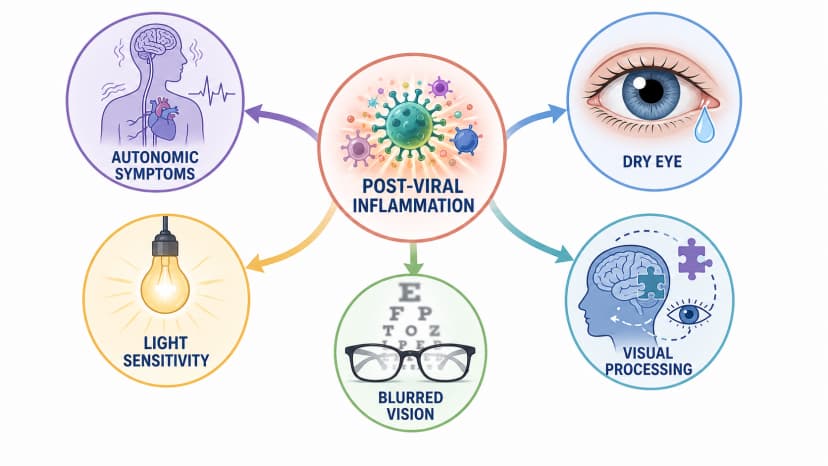
Visual symptoms that persist or develop following COVID-19 infection, including blurred vision, light sensitivity, and visual processing problems.
Long COVID (post-acute sequelae of SARS-CoV-2, or PASC) can affect many organ systems, including vision. Some patients experience new or worsening visual symptoms that persist for weeks, months, or longer after their initial COVID-19 infection. These symptoms are an area of ongoing research.
Key Takeaways
- Visual symptoms can persist after COVID-19 recovery
- Common symptoms: blurred vision, light sensitivity, visual processing problems
- Eyes are often normal on examination
- Multiple possible mechanisms-still being studied
- Many patients improve over time
Understanding Long COVID Vision Issues
COVID-19 can affect the visual system in several ways: direct viral effects on the eyes, immune-mediated inflammation, damage to blood vessels, or effects on brain function including visual processing. The persistence of symptoms in Long COVID may relate to ongoing inflammation, autoimmunity, or changes in how the nervous system functions.
Symptoms
Vision-Related Symptoms
Commonly reported:
- Blurred vision
- Light sensitivity (photophobia)
- Difficulty focusing, especially switching between distances
- Eye strain with reading or screens
- Dry eye symptoms
- Double vision (less common)
Visual Processing Problems
Similar to post-traumatic vision syndrome:
- Difficulty reading
- Words seem to move on page
- Difficulty with busy visual environments
- Motion sensitivity
- Visual fatigue
Eye-Related Symptoms
- Eye pain or discomfort
- Foreign body sensation
- Tearing
- Red eyes
Associated Symptoms
- Brain fog
- Fatigue
- Headache
- Dizziness
- Cognitive difficulties
Possible Mechanisms
Still Being Studied
Several theories exist:
- Inflammation affecting visual pathways
- Microvascular damage (small blood vessel injury)
- Autonomic dysfunction affecting eye muscles
- Direct effects on retina or optic nerve
- Exacerbation of pre-existing dry eye
What We Know
- COVID-19 can cause various eye manifestations during acute infection
- Some patients have measurable changes on testing
- Many patients have normal exams despite symptoms
- The brain's visual processing may be affected
Diagnosis
Eye Examination
- Assess visual acuity
- Evaluate eye surface (dry eye)
- Check eye movements and focusing
- Fundus examination
- OCT if indicated
Testing for Visual Processing
- Accommodative testing (focusing ability)
- Vergence testing (eye coordination)
- Sometimes formal vision therapy evaluation
Other Testing
- May need evaluation for other Long COVID symptoms
- Neurological assessment if warranted
- Blood tests for inflammation
Treatment
For Dry Eye
- Artificial tears
- Warm compresses
- Omega-3 supplements
- Prescription drops if severe
For Focusing/Visual Processing Problems
- Updated glasses prescription
- Reading glasses if not previously needed
- Vision therapy may help
- Prism glasses in selected cases
For Light Sensitivity
- Sunglasses, tinted lenses
- FL-41 tints may help
- Gradual light exposure
- Avoid dark environments (can worsen sensitivity)
General Long COVID Management
- Pacing activities
- Adequate rest
- Addressing coexisting conditions
- Rehabilitation as needed
What May Help
- Time-many patients improve
- Addressing all contributing factors
- Regular follow-up
- Patience with recovery
Living with Long COVID Vision Issues
Practical Tips
For screen use:
- Take frequent breaks (20-20-20 rule)
- Reduce screen brightness
- Use larger text
- Blue light filtering (may or may not help)
For reading:
- Use larger print
- Take breaks
- Consider audiobooks
- Adequate lighting
General:
- Pace visual activities
- Rest when fatigued
- Wear sunglasses as needed
- Communicate with employers about accommodations if needed
Prognosis
Generally Improving
- Many patients improve over time
- Improvement may be gradual (months)
- Some have persistent symptoms
- Research ongoing for treatments
Factors Affecting Recovery
- Severity of initial infection
- Other Long COVID symptoms
- Pre-existing conditions
- Time since infection
Frequently Asked Questions
Are my eyes damaged from COVID?
In most cases of Long COVID vision problems, the eyes themselves are not damaged. The symptoms often relate to how the visual system is functioning rather than structural damage. However, COVID-19 can occasionally cause eye inflammation that does need treatment.
Will my vision return to normal?
Many patients see improvement over time, though recovery can be slow. Some patients recover fully, while others have persistent symptoms. Addressing contributing factors like dry eye and visual processing problems can help.
Should I get new glasses?
A new eye exam is reasonable if you're having vision changes. Some patients do need updated prescriptions. However, many Long COVID visual symptoms won't be solved by glasses if the underlying problem is visual processing rather than focus.
Is this permanent?
We're still learning about Long COVID. Many patients improve over months, and ongoing research may lead to new treatments. While some patients have prolonged symptoms, permanent visual damage is uncommon.
Can vaccination cause these symptoms?
COVID-19 itself is much more commonly associated with visual symptoms than vaccination. Any vaccine can rarely cause immune responses, but Long COVID-like visual symptoms following vaccination alone are uncommon.
References
Medical Disclaimer: This information is for educational purposes only and does not replace professional medical advice, diagnosis, or treatment. If you have concerns about vision changes after COVID-19, please consult a qualified healthcare provider.
Sources:
- Bertoli F, et al. Ocular findings in COVID-19 patients. Ophthalmology. 2021;128(2):e50.
- Davis HE, et al. Characterizing long COVID in an international cohort. EClinicalMedicine. 2021;38:101019.
- NIH RECOVER Initiative. Long COVID Research.
- American Academy of Ophthalmology. Coronavirus and Your Eyes.