

Pituitary Tumor
Tumors of the pituitary gland that can compress the optic nerves and chiasm, causing characteristic visual field loss and hormonal imbalances.
Pituitary tumors (pituitary adenomas) are growths in the pituitary gland at the base of the brain. When large enough, they can compress the optic chiasm (where the optic nerves cross), causing a characteristic pattern of vision loss affecting peripheral vision in both eyes.
Key Takeaways
- Affects peripheral vision in both eyes (bitemporal hemianopia)
- May cause hormonal problems depending on tumor type
- Often slow-growing-symptoms develop gradually
- Treatable-surgery, medications, or radiation
- Vision often improves after successful treatment
Understanding Pituitary Tumors
The pituitary gland sits in a bony pocket (sella turcica) just below the optic chiasm. When a tumor grows upward, it presses on the crossing fibers in the chiasm. These fibers carry information from the temporal (outer) visual fields of each eye, which is why peripheral vision is lost on both sides.
Symptoms
Visual Symptoms
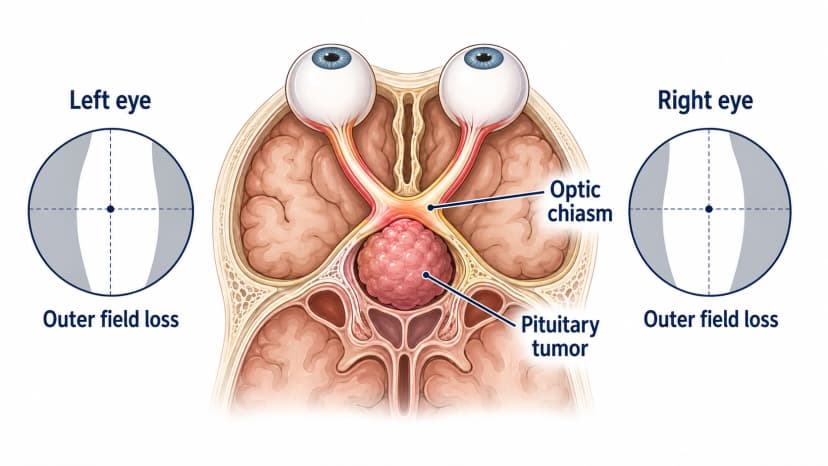
Bitemporal hemianopia
- Loss of outer (peripheral) visual fields in both eyes
- May not notice initially-central vision preserved
- Difficulty with peripheral awareness
Other visual symptoms:
- Blurred vision
- Double vision (if nerves to eye muscles affected)
- Complete vision loss in one eye (rare, severe cases)
Hormonal Symptoms
From hormone-secreting tumors:
- Prolactinoma: irregular periods, breast discharge, infertility
- Growth hormone tumor: enlarged hands/feet, facial changes
- ACTH tumor (Cushing's): weight gain, diabetes, high blood pressure
- TSH tumor: hyperthyroid symptoms
From hormone deficiency (large tumors):
- Fatigue
- Low libido
- Cold intolerance
- Menstrual changes
Other Symptoms
- Headache
- Fatigue
- Sometimes no symptoms (incidental finding)
Gradual loss is easy to miss: Many patients don't notice peripheral vision loss because it develops slowly and both eyes work together. Often discovered during routine eye exam or when symptoms become significant.
Types of Pituitary Tumors
By Size
- Microadenoma: Less than 10mm-rarely causes visual problems
- Macroadenoma: 10mm or larger-may compress optic chiasm
By Function
- Non-functioning: Don't produce hormones-discovered by mass effect
- Functioning: Produce excess hormones-symptoms depend on hormone type
Diagnosis
Eye Examination
- Visual field testing-shows characteristic bitemporal pattern
- Visual acuity
- Color vision testing
- Optic nerve assessment-may show optic atrophy
Imaging
MRI brain with pituitary protocol
- Best test for visualizing pituitary tumors
- Shows size and relationship to optic chiasm
- Characterizes tumor type
Hormonal Testing
- Complete pituitary hormone panel
- Specific tests based on suspected tumor type
- Important for treatment planning
Treatment
Medications
For prolactinomas (most common):
- Cabergoline or bromocriptine
- Often shrink tumor effectively
- May restore vision without surgery
Surgery
Transsphenoidal surgery
- Through nose/sinuses to reach pituitary
- Minimally invasive
- Gold standard for most non-prolactinomas
Craniotomy
- Through skull-for large or complex tumors
- Less common approach
Radiation
- For residual or recurrent tumors
- Stereotactic radiosurgery (focused)
- Conventional radiation (fractionated)
Hormone Replacement
- May be needed after surgery
- Lifelong monitoring of pituitary function
Visual Prognosis
Factors Affecting Recovery
- Duration of vision loss before treatment
- Severity of visual field defects
- Success of tumor removal/shrinkage
- Presence of optic atrophy
Expected Outcomes
- Many patients see visual field improvement
- Improvement may occur within weeks of treatment
- Some permanent loss if optic atrophy present
- Regular monitoring needed
Living with Pituitary Tumors
Driving
- Visual field requirements must be met
- May need to wait until stable after treatment
- Discuss with your doctor
Follow-up
- Regular MRI scans
- Visual field testing
- Hormonal assessments
- Lifelong monitoring usually needed
What to Ask at Diagnosis
Pituitary care is multidisciplinary. Useful questions include:
- Is this a prolactinoma, another hormone-secreting tumor, or a nonfunctioning macroadenoma?
- Is the optic chiasm compressed, and do my visual fields show a bitemporal pattern?
- Do I need urgent treatment for vision, or can the endocrine workup happen first?
- After treatment, who follows MRI, hormones, and vision, and on what schedule?
Frequently Asked Questions
Is a pituitary tumor cancer?
The vast majority of pituitary tumors are benign (not cancer). True pituitary cancer is extremely rare. However, even benign tumors can cause problems by growing and pressing on nearby structures.
Will my vision come back after treatment?
Many patients experience significant improvement in their visual fields after successful treatment, especially if caught early. However, if significant optic nerve damage (atrophy) has occurred, some vision loss may be permanent.
Do I need surgery, or can the tumor be treated with medication?
This depends on the tumor type. Prolactinomas often respond well to medication and may not need surgery. Other tumor types usually require surgery as primary treatment.
How often will I need follow-up?
Initially, follow-up is frequent (every few months) to monitor response to treatment. Once stable, annual or less frequent monitoring may be appropriate. Visual fields, MRI, and hormonal testing are all part of long-term follow-up.
References
Medical Disclaimer: This information is for educational purposes only and does not replace professional medical advice, diagnosis, or treatment. If you have concerns about pituitary tumors or any symptoms, please consult a qualified healthcare provider.
Sources:
- Melmed S, et al. Diagnosis and treatment of pituitary adenomas. J Clin Endocrinol Metab. 2011;96(2):273-288.
- Danesh-Meyer HV, et al. Visual outcomes following pituitary tumor surgery. Pituitary. 2007;10(3):283-291.
- The Pituitary Society. Patient Resources.
- American Academy of Ophthalmology EyeWiki. Pituitary Adenoma.