

Optic Atrophy
Pallor (pale color) of the optic disc indicating damage or death of optic nerve fibers.
Optic atrophy refers to the pale appearance of the optic disc that occurs when optic nerve fibers have been damaged or died. It's a sign of prior injury, not a diagnosis itself.
Key Takeaways
- Pallor of the optic disc visible on examination
- Sign of optic nerve damage-not a diagnosis
- Many possible causes
- Usually indicates permanent damage
- Work up to find underlying cause
What It Looks Like
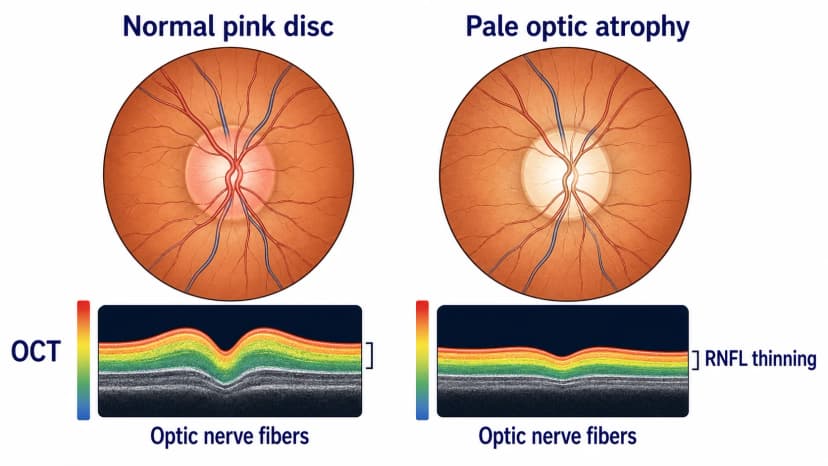
- Pale optic disc (instead of normal pink/orange)
- Reduced number of visible small blood vessels
- May be segmental or complete
- Cupping may be present
- OCT shows nerve fiber layer thinning
Common Causes
Inflammatory
- Prior optic neuritis
- NMO attacks
Vascular
Compressive
Hereditary
Other
- Papilledema (long-standing)
- Glaucoma
- Trauma
- Toxic/nutritional
- Neonatal injury (Wallerian degeneration)
Finding the Cause
- Detailed history
- Visual field testing
- OCT
- MRI brain and orbits
- Blood tests as indicated
What It Means
- The underlying damage has occurred
- Vision loss is usually permanent
- Focus shifts to:
- Finding and treating underlying cause
- Preventing further damage
- Low vision rehabilitation
Prognosis
Once optic atrophy develops, the nerve fiber loss is permanent. The goal is to preserve remaining vision and address any ongoing or treatable cause.
Frequently Asked Questions
Is optic atrophy the same as optic neuritis?
No. Optic neuritis is one possible cause of optic nerve injury. Optic atrophy is the pale, thinned appearance that can remain after many different injuries.
Can optic atrophy improve?
The lost nerve fibers usually do not regrow. Vision can improve if there is still reversible swelling, inflammation, or compression, but established atrophy usually means permanent damage.
Why do I need MRI or blood tests if the atrophy is already present?
Because the important question is whether damage is still active or treatable. MRI, visual field testing, OCT, and targeted blood tests help separate old stable damage from ongoing compression, inflammation, nutritional deficiency, or inherited disease.
Medical Disclaimer: This information is for educational purposes only and does not replace professional medical advice.
Sources:
- American Academy of Ophthalmology. Optic Atrophy. EyeWiki.
- Osborne NN, et al. Optic nerve and neuroprotection strategies. Eye. 2004;18(11):1075-1084.