

Anisocoria (Unequal Pupils)
A difference in pupil size between the two eyes, which may be normal or indicate an underlying condition.
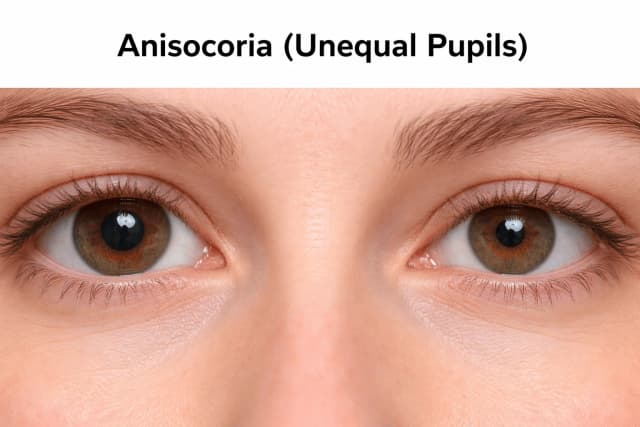
Anisocoria means the two pupils are different sizes. While sometimes normal (physiologic anisocoria), it can indicate important conditions affecting pupil control.
Key Takeaways
- Difference in pupil size between eyes
- Can be normal (physiologic anisocoria)
- Or indicate disease-must differentiate
- Key question: Which pupil is abnormal?
- Compare in light and dark to help determine
For comprehensive information about understanding and evaluating pupil abnormalities, including when to be concerned and what to expect during evaluation, see our guide: Understanding Pupil Abnormalities - When Unequal Pupils Need Attention.
Is It Normal or Abnormal?
Physiologic Anisocoria
- Up to 1mm difference is common
- Equal difference in light and dark
- No other symptoms
- Pupils both react normally
- Present in ~20% of population
Pathologic Anisocoria
- Greater than 1mm typically
- Difference changes in light vs dark
- May have other symptoms
- Abnormal pupil reactions
Finding the Abnormal Pupil
Difference Greater in Light
- Larger pupil is abnormal
- Can't constrict properly
- Causes: third nerve palsy, pharmacologic dilation, Adie's pupil
Difference Greater in Dark
- Smaller pupil is abnormal
- Can't dilate properly
- Causes: Horner syndrome, pharmacologic constriction, old iritis
Important Causes
Larger Pupil Abnormal
- Third nerve palsy-with ptosis, diplopia
- Adie's tonic pupil-benign
- Pharmacologic mydriasis
- Trauma to iris
Smaller Pupil Abnormal
- Horner syndrome-with mild ptosis
- Inflammation (iritis)
- Pharmacologic miosis
- Argyll Robertson pupils
Red Flags
Seek Immediate Evaluation:
- Dilated pupil with ptosis and double vision-possible aneurysm
- New anisocoria with headache or neck pain
- After head trauma
What to Bring to the Visit
Old photos can be surprisingly useful. Driver's license photos, phone pictures, and family photos may show whether the pupil difference is new or longstanding. Bring a list of eye drops, motion-sickness patches, inhalers, migraine medicines, and any recent exposure to plants or chemicals, because medication or contact exposure can change pupil size.
Frequently Asked Questions
Can normal people have unequal pupils?
Yes. Physiologic anisocoria is common and usually small, often about 1 mm or less, with normal reactions and no other symptoms.
Why does the room lighting matter?
If the difference is bigger in bright light, the larger pupil is usually the abnormal one. If the difference is bigger in the dark, the smaller pupil is usually the abnormal one.
When is anisocoria an emergency?
New anisocoria with double vision, a droopy eyelid, severe headache, neck pain, trauma, weakness, or confusion needs urgent evaluation.
Medical Disclaimer: This information is for educational purposes only and does not replace professional medical advice.
Sources:
- American Academy of Ophthalmology. Anisocoria. EyeWiki.