

Functional Vision Loss
Vision symptoms without identifiable structural damage. Symptoms are real and reflect functional brain-body processing changes that require supportive care and a respectful diagnostic approach.
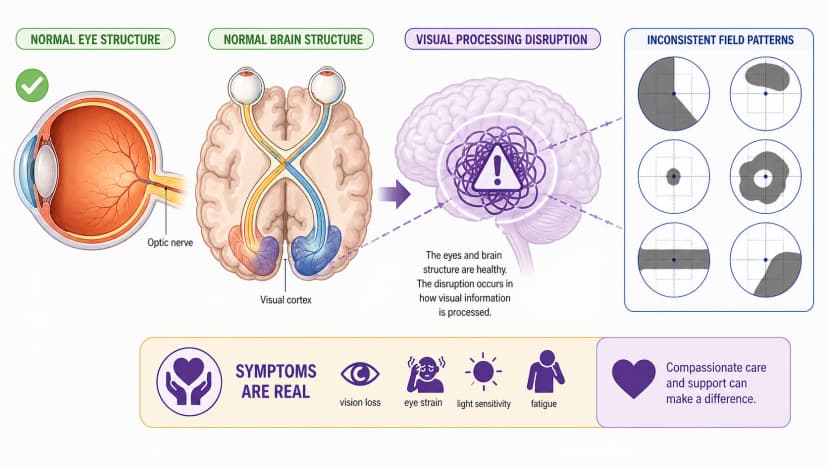
Functional vision loss (also called non-organic vision loss) refers to visual symptoms that cannot be explained by structural eye or brain abnormalities. This doesn't mean the symptoms aren't real-they are genuinely experienced-but they arise from functional changes in brain-body processing rather than structural tissue damage.
Key Takeaways
- Symptoms are real-not faking or malingering
- No structural abnormality found despite symptoms
- More common than often recognized
- Biopsychosocial factors may contribute
- Good prognosis with appropriate management
Understanding Functional Vision Loss
The brain is complex, and the mind-body connection is powerful. In functional vision loss, changes in brain network functioning can alter visual processing, producing genuine symptoms without structural eye disease. Stress or psychological factors can contribute in some people but are not required for diagnosis. This is similar to other functional neurological disorders.
Important Distinctions
- Functional = genuine symptoms without structural cause
- Malingering = intentionally faking symptoms (rare)
- Factitious disorder = producing symptoms for psychological reasons (rare)
Most patients with functional vision loss are not faking-they truly experience their symptoms.
Symptoms
Visual Symptoms
- Blurred vision
- Complete vision loss (one or both eyes)
- Visual field deficits (often tunnel vision)
- Variable symptoms
- Symptoms may fluctuate or be inconsistent
Characteristic Patterns
- Symptoms don't match any organic pattern
- Visual field "spiraling" or "tubular" defects
- Inconsistent findings on examination
- Vision better than expected for stated symptoms
- May have normal reaction to visual threats
Associated Features
- Often occurs in context of stress or trauma
- May have other functional symptoms
- History of anxiety or depression common
- Past trauma or adverse life events
Who Gets Functional Vision Loss?
- More common in younger patients
- Slightly more common in women
- Often associated with psychological stressors
- May occur in high-achieving individuals
- Can affect anyone
Diagnosis
Clinical Approach
A supportive, non-judgmental approach is essential. Patients aren't faking, and an accusatory approach is harmful and counterproductive.
Examination Findings
Positive signs of functional vision loss:
- Foggy mirror test-can write on fogged mirror
- Tracking/optokinetic responses present despite "blindness"
- Avoids obstacles while walking
- Inconsistent responses
Absence of organic findings:
- Normal pupil reactions
- Normal fundus examination
- Normal OCT
- Normal MRI if needed
What We Look For
- Patterns inconsistent with any known organic disease
- Internal inconsistencies in symptoms
- Normal objective findings
- Positive functional signs
Important Considerations
Always rule out organic causes first-functional diagnosis is not just an exclusion diagnosis but should include positive functional findings.
Management
Explanation
Most important step
- Explain findings clearly and positively
- Acknowledge symptoms are real
- Explain functional mechanism
- Provide reassurance about prognosis
- Avoid dismissive language
Example Approach
"Your visual system is structurally normal, which is good news. The symptoms you're experiencing are real, but they're coming from how your brain is processing visual information, not from damage. This is a recognized condition, and the good news is that recovery is expected."
Treatment
- Identifying and addressing stressors
- Psychological support or therapy
- Physical/vision therapy in some cases
- Treating underlying anxiety or depression
- Regular follow-up
What to Avoid
- Dismissive approach
- Accusatory language
- Unnecessary testing (reinforces illness)
- Avoiding the diagnosis
Prognosis
Generally Favorable
- Most patients improve with appropriate management
- Good prognosis especially in children
- Earlier intervention helps
- Recovery may be gradual
Factors Affecting Outcome
- Duration of symptoms before diagnosis
- Acceptance of diagnosis
- Addressing underlying psychological factors
- Support system
Frequently Asked Questions
Am I making this up?
No. Functional vision loss is a real condition where the symptoms are genuinely experienced. Your brain is processing visual information differently, producing real symptoms without physical damage. This is not the same as faking or imagining symptoms.
Does this mean it's "all in my head"?
In the sense that the problem is in how your brain processes vision rather than in your eyes-yes. But this doesn't make it less real or less deserving of care. The brain is part of your body, and conditions affecting it are legitimate medical conditions.
Will my vision recover?
Most people with functional vision loss improve, especially with understanding the diagnosis and addressing any underlying stressors. Recovery may be gradual, and support from mental health professionals can help.
Should I see a psychiatrist?
Not necessarily, but many patients benefit from some form of psychological support. Stress, anxiety, and past trauma often play a role, and addressing these can help recovery. This doesn't mean you're "crazy"-it means addressing all contributing factors.
Why did this happen to me?
Functional symptoms often arise during times of stress or after difficult experiences. The brain has ways of expressing distress through physical symptoms. This is not a weakness or failure-it's a recognized medical phenomenon.
Where should I go for evaluation?
Patients with functional vision loss benefit from a neuro-ophthalmologist who can rule out structural disease while providing a respectful, supportive approach. If you've seen multiple providers without a clear answer, a neuro-ophthalmology evaluation can help clarify the diagnosis. Hashemi Eye Care has experience evaluating complex, unexplained visual symptoms.
References
Medical Disclaimer: This information is for educational purposes only and does not replace professional medical advice, diagnosis, or treatment. If you have concerns about vision changes or any symptoms, please consult a qualified healthcare provider.
Sources:
- Stone J, et al. Functional disorders in neurology. Handb Clin Neurol. 2016;139:447-459.
- Bruce BB, et al. Functional visual loss in adults. Neurology. 2012;78(23):1808-1815.
- Keane JR. Neuro-ophthalmic signs and symptoms of hysteria. Neurology. 1982;32(7):757-762.
- American Academy of Ophthalmology EyeWiki. Functional Visual Loss.
- MedlinePlus. Conversion Disorder.