

Hyphema
Blood pooling in the front chamber of the eye, usually after blunt trauma. Rebleeding, high eye pressure, and corneal staining are the big concerns.
Hyphema means blood has entered the anterior chamber, the fluid space between the cornea and iris. It is most commonly caused by blunt eye trauma, including sports injuries, falls, or assault. The visible blood is only part of the concern: eye pressure can rise, bleeding can recur during the first few days, and prolonged blood contact can cause corneal blood staining.
Key Takeaways
- Hyphema is blood between the cornea and iris, sometimes just a thin layer, sometimes a full chamber
- Blunt trauma is the usual trigger, including sports injuries, fights, falls, and projectile injuries
- Rebleeding risk is highest in the first several days, so activity restriction is part of preventing complications
- Eye pressure can rise quickly, and corneal blood staining can threaten vision
- Sickle cell disease or trait changes the risk calculus, because pressure problems can be more dangerous
- Follow-up checks matter, even if the eye looks better in the mirror
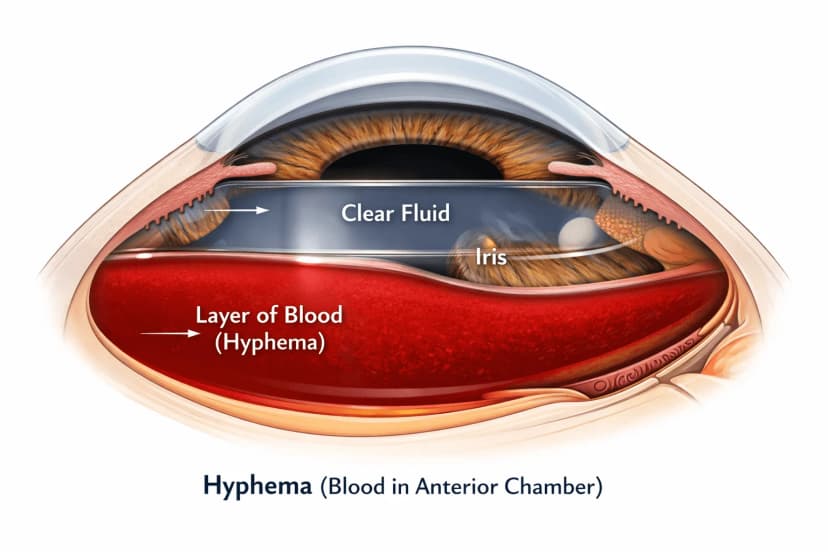
What Is Hyphema?
Anatomy
The anterior chamber is:
- The space behind the cornea (clear front surface)
- In front of the iris (colored part)
- Filled with aqueous humor (clear fluid)
Grading
Hyphema is graded by how much of the anterior chamber is filled with blood:
| Grade | Blood Level |
|---|---|
| Microhyphema | Suspended RBCs only, no layered blood |
| Grade I | Less than 1/3 of anterior chamber |
| Grade II | 1/3 to 1/2 of anterior chamber |
| Grade III | More than 1/2 of anterior chamber |
| Grade IV (Total/8-ball) | Complete filling of anterior chamber |
Causes
Traumatic (Most Common)
- Blunt trauma: sports (especially baseball, basketball, racquet sports), fights, falls
- Penetrating injuries: less common but more serious
- Iatrogenic: after eye surgery
Non-Traumatic (Spontaneous)
- Abnormal iris blood vessels (rubeosis from diabetes, vein occlusion)
- Blood vessel abnormalities (juvenile xanthogranuloma, hemangioma)
- Blood thinners (anticoagulants)
- Bleeding disorders
- Intraocular tumors
- Herpes infection
- After cataract surgery (UGH syndrome-uveitis, glaucoma, hyphema)
Spontaneous hyphema (without trauma) requires investigation for underlying cause.
Symptoms
What Patients Experience
- Visible blood in the eye (may be noticed in mirror)
- Blurred vision (varies with amount of blood)
- Eye pain (often from associated inflammation or pressure elevation)
- Light sensitivity (photophobia)
- History of injury (in traumatic cases)
What the Doctor Sees
- Blood layering in the anterior chamber (settles with gravity)
- May be small (microhyphema) or filling entire chamber
- Associated injuries (in trauma): abrasions, iris damage, lens problems
Initial Evaluation
Complete Eye Exam
- Visual acuity: how much vision is affected
- Intraocular pressure (IOP): often elevated
- Slit lamp examination: details of hyphema and other injuries
- Dilated exam: to check retina (if media clear enough)
- Gonioscopy: to check drainage angle (often deferred initially)
Ruling Out Other Injuries
In traumatic hyphema, must evaluate for:
- Open globe (surgical emergency)
- Corneal abrasion
- Iris damage
- Lens dislocation
- Retinal detachment
- Orbital fracture
Special Testing
- Ultrasound (if can't see inside due to blood): to rule out retinal detachment
- Sickle cell screening: essential in at-risk populations
- CT orbit: if concerned about fracture or foreign body
Sickle Cell Disease Consideration
Sickle cell disease/trait significantly increases risk of complications:
- Red blood cells sickle in the low-oxygen anterior chamber
- Sickled cells block drainage more effectively
- Even mildly elevated IOP causes optic nerve damage
- Certain medications (carbonic anhydrase inhibitors) are contraindicated
- Ask about sickle cell disease or trait; testing is often considered for patients with personal/family history or ancestry from higher-prevalence populations
Treatment
Activity Restriction
- Bed rest or limited activity: reduces risk of rebleeding
- Head elevation (30-45 degrees): helps blood settle away from visual axis
- No strenuous activity, bending, straining
- Eye shield: protects from additional injury
- No aspirin or NSAIDs: increases bleeding risk
Medications
Cycloplegics:
- Dilate pupil and reduce ciliary spasm
- Increase comfort
- May reduce rebleeding
Topical Steroids:
- Reduce inflammation
- May reduce rebleeding risk
- Use with caution (can raise IOP)
Aminocaproic Acid (Sometimes):
- Antifibrinolytic agent
- Reduces rebleeding risk
- Side effects limit use
- Generally reserved for higher-risk cases
IOP-Lowering Medications:
- If pressure elevated
- Avoid carbonic anhydrase inhibitors in sickle cell patients
- Beta blockers, alpha agonists used instead
Surgical Intervention
Indications for surgical washout:
- Corneal blood staining (developing or present)
- IOP uncontrolled despite medications
- Total (8-ball) hyphema not resolving
- Earlier intervention in sickle cell patients
Procedures:
- Anterior chamber washout (paracentesis)
- Evacuation of clot
- Possible irrigation
Complications
Elevated Intraocular Pressure
- Blood cells clog trabecular meshwork (drainage system)
- Can cause optic nerve damage (glaucoma)
- Must be monitored closely
- More dangerous in sickle cell patients
Rebleeding
Rebleeding typically occurs 3-5 days after initial injury.
- Occurs in 5-30% of patients
- Usually worse than initial bleed
- Higher risk of complications
- Risk factors: larger initial hyphema, use of aspirin/NSAIDs, poor compliance with activity restriction
Corneal Blood Staining
- Blood penetrates into the cornea
- Causes persistent vision impairment
- May take months to years to clear
- May be permanent
- More likely with large hyphemas and elevated IOP
Other Complications
- Optic atrophy: from prolonged elevated IOP
- Angle recession: damage to drainage system causing later glaucoma
- Synechiae: iris sticking to lens or cornea
- Cataract: from trauma or chronic inflammation
Prognosis
Factors Affecting Outcome
Better Prognosis:
- Small hyphema (Grade I)
- No rebleeding
- Normal IOP
- No sickle cell disease
- No other eye injuries
- Good compliance with treatment
Worse Prognosis:
- Large hyphema (Grade III-IV)
- Rebleeding
- Elevated IOP
- Sickle cell disease
- Associated eye injuries
- Delayed treatment
Visual Outcomes
- Most Grade I hyphemas resolve with good vision
- Larger hyphemas and complications reduce chances
- Associated injuries (retinal, optic nerve) affect outcome
- Even after resolution, at risk for late glaucoma
Follow-Up
Acute Phase
- Daily or every-other-day exams initially
- Monitor IOP closely
- Watch for rebleeding
- Assess blood clearing
Long-Term
Long-term monitoring is essential after hyphema:
- Risk of angle recession glaucoma (can develop years later)
- Annual eye exams recommended
- IOP monitoring
- Gonioscopy to assess angle damage
- May need lifelong surveillance
Prevention
Sports Eye Protection
- Polycarbonate protective eyewear
- Mandatory in high-risk sports (racquetball, paintball)
- Reduces eye injury risk by 90%
General Safety
- Wear safety glasses for hazardous activities
- Childproof home environment
- Supervise children with projectile toys
Frequently Asked Questions
How long does it take for the blood to clear?
Small hyphemas typically clear within a week. Larger ones may take several weeks. The blood is gradually absorbed by the body. During this time, activity restriction and close monitoring continue.
Will I have permanent vision damage?
Most patients with uncomplicated hyphema recover good vision. However, complications (elevated IOP, corneal staining, rebleeding) or associated injuries can cause permanent damage. Following treatment recommendations closely improves outcomes.
Why do I need bed rest?
Activity restriction reduces the risk of rebleeding, which typically causes a worse outcome than the initial injury. The blood vessel that bled is fragile during healing (especially days 3-5). Physical activity, bending, and straining can cause it to rebleed.
Can I take pain medicine?
Avoid aspirin and NSAIDs (ibuprofen, naproxen) as they increase bleeding risk. Acetaminophen (Tylenol) is usually safe. Your doctor may prescribe other pain medication if needed.
Why do I need sickle cell testing?
Sickle cell disease or trait significantly increases the risk of complications from hyphema. Treatment is modified in these patients. Testing is recommended for anyone at risk (African descent, Mediterranean, Middle Eastern, South Asian).
Will I be at risk for future eye problems?
Yes. Angle recession (damage to the drainage system) can cause glaucoma years after the injury. This is why long-term annual eye exams and IOP monitoring are recommended even after the hyphema has resolved.
References
Medical Disclaimer: This information is for educational purposes only and does not replace professional medical advice, diagnosis, or treatment. If you have eye trauma with bleeding, seek immediate medical attention.
Sources: