

Keratitis (Corneal Inflammation)
Inflammation of the cornea from infection, injury, or other causes. Learn about types, symptoms, and why prompt treatment is essential.
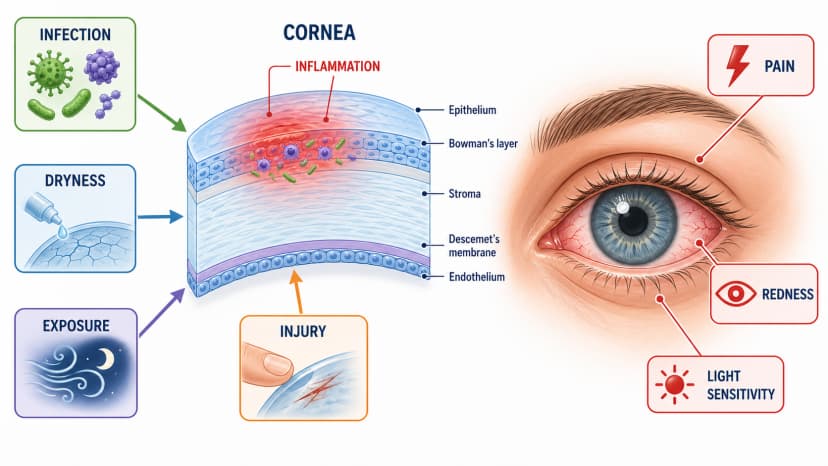
Keratitis is inflammation of the cornea-the clear, dome-shaped surface that covers the front of the eye. It can be caused by infections (bacterial, viral, fungal, parasitic), injury, dry eyes, or autoimmune conditions. Infectious keratitis, especially when associated with a corneal ulcer, is a sight-threatening emergency requiring prompt treatment.
Key Takeaways
- Inflammation of the cornea from various causes
- Infectious keratitis is an emergency-can cause rapid vision loss
- Contact lens wear is the #1 risk factor for infectious keratitis in developed countries
- Symptoms: pain, redness, light sensitivity, blurred vision, discharge
- Requires prompt evaluation-don't wait to see if it gets better
- Treatment depends on cause-antibiotics, antivirals, or other therapy
Types of Keratitis
Infectious Keratitis
Bacterial Keratitis:
- Most common infectious type in contact lens wearers
- Common organisms: Pseudomonas, Staphylococcus, Streptococcus
- Can progress rapidly to corneal ulcer
- Requires aggressive antibiotic treatment
Viral Keratitis:
- Herpes simplex keratitis-most common
- Herpes zoster (shingles) keratitis
- Adenoviral keratitis
- Each has specific treatment
Fungal Keratitis:
- Often after plant/organic material injury
- Fusarium, Aspergillus, Candida
- Slower progression than bacterial
- Harder to treat, prolonged therapy needed
Parasitic Keratitis:
- Acanthamoeba keratitis-water exposure, especially with contact lenses
- Very difficult to treat
- Associated with contaminated water/contact lenses
Non-Infectious Keratitis
Exposure Keratitis:
- From incomplete eyelid closure (Bell's palsy, thyroid eye disease)
- Cornea dries and breaks down
Neurotrophic Keratitis:
- Loss of corneal sensation
- Poor healing
- Secondary to nerve damage (herpes, surgery, diabetes)
Autoimmune/Inflammatory:
- Peripheral ulcerative keratitis
- Associated with rheumatoid arthritis and other conditions
- Marginal keratitis
Contact Lens-Related:
- Sterile infiltrates
- Tight lens syndrome
- Can progress to infectious
Risk Factors
Contact Lens Wear
Contact lens wear is the leading risk factor for infectious keratitis in developed countries.
Risk is dramatically increased by:
- Sleeping in contact lenses
- Swimming or showering in lenses
- Poor lens hygiene
- Using tap water with lenses
- Overwearing lenses
Other Risk Factors
- Previous eye surgery (LASIK, transplant)
- Eye trauma
- Severe dry eye
- Blepharitis
- Compromised immune system
- Steroid eye drop use
- Previous herpes eye infection
- Eyelid abnormalities
Symptoms
Warning Signs
Seek immediate care for:
- Eye pain-especially severe or worsening
- Red eye with discharge
- Light sensitivity (photophobia)
- Blurred vision
- White spot on the cornea
- Excessive tearing
- Foreign body sensation
These symptoms, especially in a contact lens wearer, require urgent evaluation.
Symptom Patterns by Type
| Type | Pain | Discharge | Other Features |
|---|---|---|---|
| Bacterial | Severe | Purulent | Rapid onset |
| Viral (HSV) | Moderate | Watery | Recurrent, decreased sensation |
| Fungal | Variable | Variable | Slower onset, after plant injury |
| Acanthamoeba | Severe (out of proportion) | Variable | Water/lens exposure |
Diagnosis
Clinical Examination
- Visual acuity
- Slit lamp examination (essential)
- Corneal staining with fluorescein
- Assessment of infiltrate size, depth, location
- Check for hypopyon (pus in anterior chamber)
- Corneal sensation (decreased in herpes)
Laboratory Studies
For significant infiltrates:
- Corneal scraping for culture
- Gram stain
- Fungal stains and cultures
- Acanthamoeba testing if suspected
- HSV testing if indicated
Imaging
- OCT may show depth of involvement
- Confocal microscopy can help identify organisms (especially Acanthamoeba)
Treatment
Bacterial Keratitis
Empiric Treatment (Before Culture Results):
- Broad-spectrum topical antibiotics
- Fluoroquinolone drops (moxifloxacin, gatifloxacin) for mild to moderate
- Fortified antibiotics (cefazolin + tobramycin) for severe
- Frequent dosing initially (every 1-2 hours)
Adjustments:
- Based on culture results
- Clinical response
Viral Keratitis (Herpes Simplex)
- Antiviral treatment (oral and/or topical)
- Trifluridine drops or ganciclovir gel
- Oral acyclovir or valacyclovir
- No steroids for epithelial disease (makes it worse)
- Steroids carefully used for stromal disease (with antiviral cover)
Fungal Keratitis
- Antifungal drops (natamycin, voriconazole, amphotericin B)
- Prolonged treatment (weeks to months)
- Often requires oral antifungals
- May need surgical intervention (debridement, possibly transplant)
Acanthamoeba Keratitis
- Combination of anti-amoebic drops
- PHMB (polyhexamethylene biguanide), chlorhexidine
- Treatment for months
- Often severe and prolonged
- May ultimately need corneal transplant
Supportive Care
- Cycloplegic drops (reduce pain)
- Oral pain medication
- Discontinue contact lens wear
- Close follow-up (daily initially for severe cases)
Complications
Potential Outcomes
- Corneal scarring-may obstruct vision
- Corneal perforation-if untreated or severe
- Endophthalmitis-infection spreads inside eye
- Vision loss-permanent if not treated promptly
- Need for corneal transplant
Prevention
For Contact Lens Wearers
Essential Practices:
- Never sleep in contact lenses
- Never swim or shower in lenses
- Never use tap water with lenses
- Replace lenses on schedule
- Use proper disinfection
- Wash hands before handling lenses
- Replace lens case regularly
General Prevention
- Treat underlying conditions (dry eye, blepharitis)
- Protect eyes from injury
- Don't share eye drops
- Seek prompt care for any eye injury or symptoms
Frequently Asked Questions
Can keratitis cause blindness?
Yes, untreated infectious keratitis can cause permanent vision loss. This is why prompt treatment is so important. The outcome depends on the cause, severity, and how quickly treatment begins.
How long does keratitis take to heal?
Healing time varies greatly:
- Mild bacterial: days to weeks
- Severe bacterial: weeks
- Fungal: weeks to months
- Acanthamoeba: months to years
- Viral: variable, may recur
When can I wear contacts again?
Only after complete healing and clearance from your doctor. You'll typically need to wait weeks after the infection resolves. Use fresh lenses and a new case. Some patients are advised not to return to contact lens wear.
What's the difference between keratitis and conjunctivitis?
- Keratitis: inflammation of the cornea (clear front surface)
- Conjunctivitis (pink eye): inflammation of the conjunctiva (membrane covering white of eye) Keratitis is generally more serious and vision-threatening.
Can keratitis come back?
Some types, especially herpes simplex keratitis, can recur. Preventive measures (ongoing antiviral medication) may be recommended for recurrent cases.
References
Medical Disclaimer: This information is for educational purposes only and does not replace professional medical advice, diagnosis, or treatment. Eye pain with redness requires prompt medical evaluation.
Sources:
- American Academy of Ophthalmology. Keratitis.
- Austin A, et al. Update on the management of infectious keratitis. Ophthalmology. 2017;124(11):1678-1689.
- Ung L, et al. The persistent dilemma of microbial keratitis. Surv Ophthalmol. 2019;64(3):255-271.
- National Eye Institute. Corneal Conditions.