

Neuroretinitis
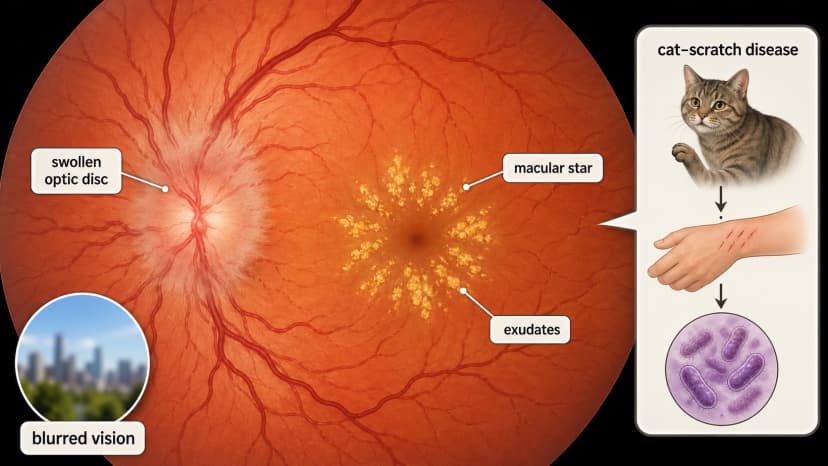
Inflammation of the optic nerve and retina, often caused by infection (especially cat scratch disease). Characterized by optic disc swelling with a macular star pattern.
Neuroretinitis is inflammation involving both the optic nerve and the retina. It produces a characteristic appearance: swelling of the optic disc combined with a "star" pattern of fluid and lipid deposits in the macula. The most common cause is cat scratch disease, though other infections and conditions can cause it.
Key Takeaways
- Optic disc swelling with macular star is the classic finding
- Cat scratch disease is the most common cause
- Usually affects one eye
- Good visual prognosis in most cases
- Treat underlying infection when identified
Understanding Neuroretinitis
In neuroretinitis, inflammation affects the blood vessels of the optic disc, causing them to leak fluid and lipids. This material spreads into the retina around the macula, creating the characteristic star pattern as it settles along the radial pattern of retinal nerve fibers.
Symptoms
Visual Symptoms
- Blurred vision in one eye
- Vision loss-usually moderate
- Central visual field defect
- May notice a spot in vision
Other Symptoms
- Usually painless (unlike optic neuritis)
- Symptoms of underlying infection may be present:
- Fever
- Lymph node swelling
- Cat scratch or exposure history
- Flu-like illness
Timeline
- Onset usually over days
- Macular star may appear after disc swelling (1-2 weeks)
- Vision loss precedes visible star pattern
Causes
Infectious (Most Common)
Cat Scratch Disease (Bartonella henselae)
- Most common cause
- History of cat scratch or bite
- Regional lymph node swelling
- Fever may precede eye symptoms
Other Infections:
- Lyme disease
- Syphilis
- Toxoplasmosis
- Tuberculosis
- Viral infections
Non-Infectious
- Inflammatory conditions
- Malignant hypertension
- Rarely, an autoimmune process
Diagnosis
Clinical Examination
- Visual acuity-moderately reduced
- Pupil exam-relative afferent pupillary defect (RAPD)
- Fundus exam-disc edema and macular star
- Visual field testing-central or paracentral defect
Laboratory Testing
For cat scratch disease:
- Bartonella serology (IgG and IgM)
- May be negative early-repeat if suspected
Other tests based on suspicion:
- Lyme serology
- Syphilis testing (RPR, FTA-ABS)
- Toxoplasmosis serology
- TB testing
- ACE level (sarcoidosis)
Imaging
- MRI brain and orbits may be done to evaluate optic nerve
- Usually shows optic nerve enhancement
Distinguish from Optic Neuritis
| Feature | Neuroretinitis | Optic Neuritis |
|---|---|---|
| Pain with eye movement | No (usually painless) | Yes |
| Macular star | Present | Absent |
| MS association | No | Yes |
| Disc swelling | Always | Sometimes |
| Infectious cause | Common | Rare |
Treatment
Cat Scratch Disease
Often self-limited but antibiotics may speed recovery:
- Azithromycin
- Doxycycline
- Rifampin
Treatment is especially considered for:
- Severe vision loss
- Immunocompromised patients
- Systemic symptoms
Other Infections
- Treat the specific underlying infection
- Antibiotic choice depends on organism
Supportive Care
- Monitor for improvement
- No proven role for steroids alone
- Follow visual acuity and fields
Prognosis
Generally Excellent
- Most patients recover good vision
- Vision typically returns to near normal
- Recovery may take weeks to months
Timeline
- Disc swelling resolves over weeks
- Macular star fades over months
- Final vision often 20/40 or better
Complications (Rare)
- Persistent vision loss
- Recurrence
- Permanent disc pallor
Frequently Asked Questions
Is this the same as optic neuritis?
No. While both involve the optic nerve, neuroretinitis is characterized by the macular star and is usually caused by infection. Optic neuritis is painful, doesn't have a macular star, and is often associated with multiple sclerosis. The distinction matters because the treatment and prognosis differ.
Will my vision come back?
In most cases, yes. Neuroretinitis-especially from cat scratch disease-has a good visual prognosis. Most patients recover vision of 20/40 or better, though full recovery may take several months.
Do I need antibiotics?
For cat scratch disease, the condition often resolves without antibiotics, but treatment may speed recovery and is generally recommended for more severe cases. Your doctor will advise based on your specific situation.
Should I get rid of my cat?
No. Cat scratch disease is caused by a bacterium that cats can carry, but most cats are healthy carriers and your cat is not a threat after this episode. However, avoid rough play that might lead to scratches, keep cats' nails trimmed, and wash any scratches promptly.
Can this come back?
Recurrence is uncommon but possible. If you have new symptoms in either eye, contact your doctor promptly.
References
Medical Disclaimer: This information is for educational purposes only and does not replace professional medical advice, diagnosis, or treatment. If you have concerns about vision changes or any symptoms, please consult a qualified healthcare provider.
Sources:
- Purvin V, et al. Neuroretinitis: review of the literature and new observations. J Neuroophthalmol. 2011;31(1):58-68.
- Suhler EB, et al. Cat-scratch disease neuroretinitis. Curr Opin Ophthalmol. 2009;20(6):478-482.
- American Academy of Ophthalmology. Neuroretinitis.
- Centers for Disease Control and Prevention. About Bartonella Infection.