

Radiation-Induced Optic Neuropathy
Vision loss occurring months to years after radiation treatment to the head or orbit. A delayed complication of radiation therapy.
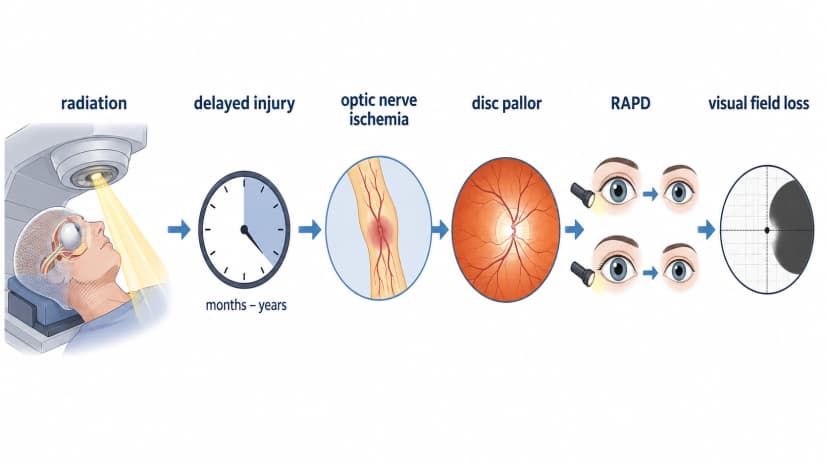
Radiation-induced optic neuropathy (RION) is damage to the optic nerve caused by radiation therapy. It typically occurs months to years after treatment for brain or head and neck tumors. The damage is caused by injury to blood vessels and supporting cells of the optic nerve.
Key Takeaways
- Delayed complication of radiation therapy-months to years later
- Often causes severe vision loss
- Risk increases with higher radiation doses
- Prevention is key-careful treatment planning
- Treatment is limited once it develops
Understanding Radiation Optic Neuropathy
Radiation damages the small blood vessels and glial cells that support the optic nerve. This damage is progressive and cumulative. Initially, the nerve may appear normal, but over time, vascular changes lead to insufficient blood supply, causing nerve fiber death and vision loss.
Risk Factors
Radiation Dose
- Risk increases significantly above 50 Gy total dose
- Per-fraction dose matters (larger fractions = higher risk)
- Location of radiation field critical
Other Factors
- Diabetes (pre-existing vascular damage)
- Hypertension
- Previous radiation
- Chemotherapy (especially concurrent)
- Older age
Underlying Conditions Treated
- Pituitary tumors
- Brain tumors near optic pathways
- Skull base tumors
- Head and neck cancers
- Orbital tumors
Symptoms
Visual Symptoms
- Sudden or progressive vision loss
- Visual field defects
- Color vision changes
- Usually affects one eye first, may involve both
- Typically occurs 6 months to 5 years after radiation
Associated Symptoms
- May have radiation changes elsewhere (brain, pituitary)
- Symptoms of original tumor may need to be distinguished
Timeline
- Median onset: 12-18 months after radiation
- Can occur as early as 3 months
- Can occur more than 10 years later
Diagnosis
Clinical Examination
- Visual acuity-often severely reduced
- Color vision testing-affected
- Visual field testing-various defects
- Pupil exam-relative afferent pupillary defect
- Fundus exam-disc swelling early, pallor later
Imaging
MRI brain and orbits with contrast
- Optic nerve enhancement
- Rule out tumor recurrence
- Look for radiation changes in brain
Distinguishing from Tumor Recurrence
- Critical distinction
- May require serial imaging
- Sometimes biopsy needed
Treatment
Limited Options
Unfortunately, treatment options are limited and often disappointing:
Corticosteroids
- May provide temporary improvement
- High-dose IV steroids sometimes tried
- Effect often modest and temporary
Hyperbaric Oxygen
- Mixed evidence
- May help some patients
- Not widely available or proven
Anti-VEGF Agents
- Bevacizumab (Avastin) studied
- Some case reports of benefit
- Not established treatment
Anticoagulation
- Sometimes tried
- Limited evidence
Supportive Care
- Low vision rehabilitation
- Treatment of radiation effects elsewhere
- Psychological support
Prevention
Modern Radiation Techniques
- Intensity-modulated radiation therapy (IMRT)
- Stereotactic radiosurgery
- Proton beam therapy
- Careful dose planning to optic structures
Dose Constraints
- Keep optic nerve/chiasm dose below 54 Gy
- Limit per-fraction dose
- Individual risk assessment
Monitoring
- Regular eye exams after radiation
- Visual field testing
- Early detection may allow for any available intervention
What to Tell the Eye Doctor
Bring the radiation treatment summary if you can: diagnosis treated, total dose, fraction size, dates of treatment, and whether the optic nerve, chiasm, orbit, cavernous sinus, or skull base was in the field. That information helps separate RION from tumor recurrence, compressive optic neuropathy, medication effects, or unrelated vascular optic neuropathy.
Prognosis
Generally Poor
- Vision loss often severe and permanent
- Progression may continue
- Second eye may become involved
Variable Outcomes
- Some patients stabilize
- Partial recovery rare but reported
- Early recognition may help
Frequently Asked Questions
Why didn't anyone warn me about this?
You should have been counseled about radiation risks before treatment. However, the risk must be weighed against the danger of leaving a tumor untreated. The radiation was likely necessary to treat a life-threatening or vision-threatening condition.
How long after radiation does this occur?
Most cases develop between 6 months and 5 years after radiation, with a median of about 18 months. However, it can occur earlier or many years later.
If one eye is affected, will the other be too?
Not necessarily, but it's possible-especially if both optic nerves were in the radiation field. Continued monitoring of the unaffected eye is important.
Is there anything I can do to prevent this from getting worse?
Control other vascular risk factors (diabetes, blood pressure, cholesterol). Don't smoke. Some doctors try various treatments, though none are proven. Report any vision changes promptly.
Could my tumor be coming back?
This is always a concern, which is why imaging is important. Radiation optic neuropathy and tumor recurrence can look similar. Your doctors will monitor for both.
References
Medical Disclaimer: This information is for educational purposes only and does not replace professional medical advice, diagnosis, or treatment. If you have concerns about vision changes after radiation or any symptoms, please consult a qualified healthcare provider.
Sources:
- Danesh-Meyer HV. Radiation-induced optic neuropathy. J Clin Neurosci. 2008;15(2):95-100.
- Mayo C, et al. Radiation dose-volume effects on optic nerves and chiasm. Int J Radiat Oncol Biol Phys. 2010;76(3 Suppl):S28-35.
- Levy RL, et al. Radiation-induced optic neuropathy. Int Ophthalmol Clin. 2004;44(1):105-112.
- American Academy of Ophthalmology EyeWiki. Radiation Optic Neuropathy.
- National Cancer Institute. Side Effects of Cancer Treatment.