
Is Pink Eye Contagious?
Find out which types of pink eye are contagious, how long each type spreads, how transmission happens, and when it's safe to return to work or school.
"Is pink eye contagious?" is one of the most common questions patients ask—and the answer depends on which type you have. Viral conjunctivitis is highly contagious, bacterial conjunctivitis is moderately contagious, and allergic conjunctivitis is not contagious at all. Understanding the differences helps you protect the people around you and know when it's safe to resume normal activities.
Key Takeaways
- Viral pink eye is highly contagious for up to 2 weeks from symptom onset
- Bacterial pink eye is contagious until 24–48 hours after starting antibiotics
- Allergic pink eye is NOT contagious—it's an immune reaction, not an infection
- Transmission occurs through direct contact, contaminated hands and objects, and respiratory droplets
- Hand hygiene is the single most effective way to prevent spreading pink eye
- Return-to-work/school guidelines vary by type—check with your doctor or school policy
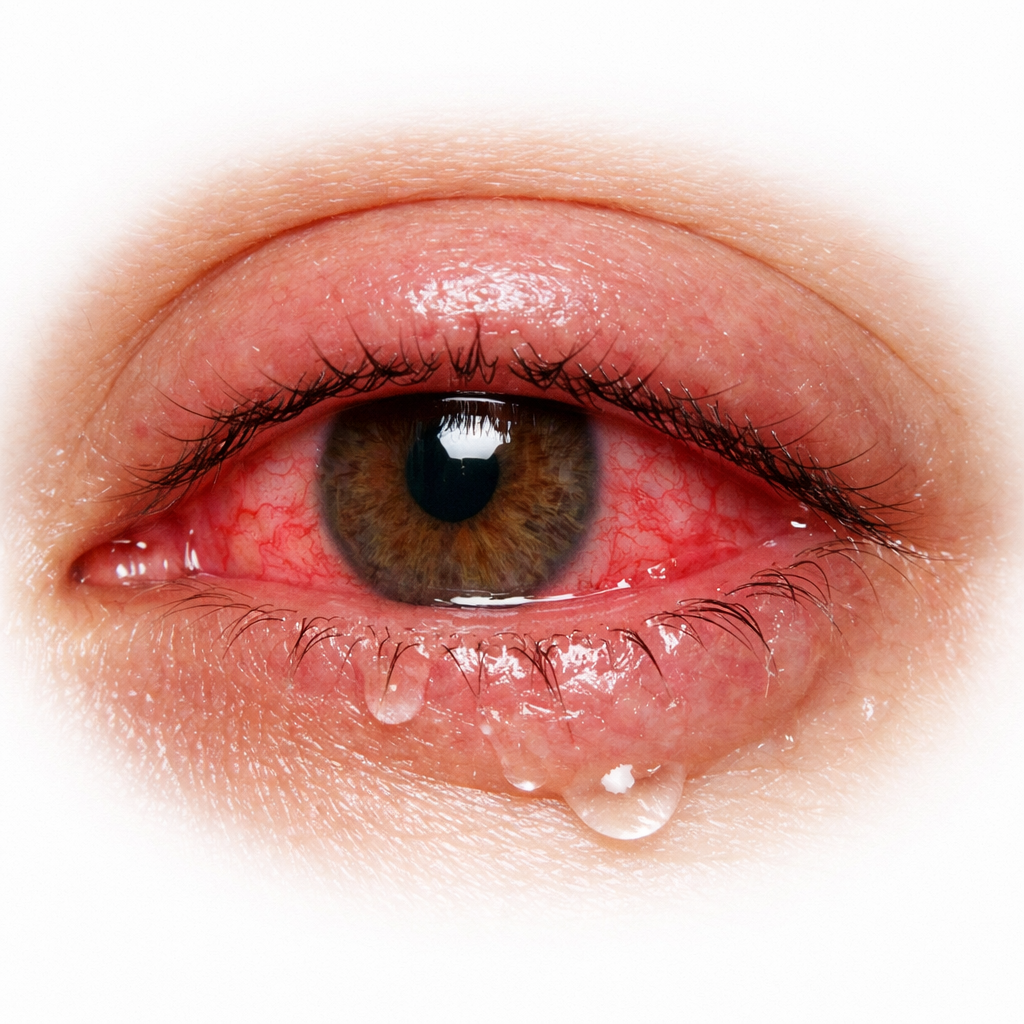
The Short Answer
| Type | Contagious? | How Long? |
|---|---|---|
| Viral | Yes — highly | Up to 2 weeks from symptom onset |
| Bacterial | Yes | Until 24–48 hours on antibiotics, or 5–7 days untreated |
| Allergic | No | Not contagious at any point |
| Gonococcal | Yes | Until properly treated (emergency) |
Contagious vs Non-Contagious Types
Contagious Types
Viral conjunctivitis is the most contagious form. The adenoviruses that cause it can survive on surfaces for weeks and spread easily through casual contact. You're contagious as soon as symptoms start and can remain contagious for up to two weeks—even after symptoms begin improving.
Bacterial conjunctivitis is contagious through direct contact with eye secretions or contaminated objects. The good news: antibiotic treatment significantly reduces contagiousness within 24–48 hours.
Gonococcal conjunctivitis is a serious, sexually transmitted form that is contagious through contact with infected genital secretions. It requires emergency treatment.
Non-Contagious Types
Allergic conjunctivitis is your immune system reacting to allergens—not an infection. You cannot pass it to anyone else. If both your eyes are itchy and watery during allergy season, there's no need to isolate yourself.
Giant papillary conjunctivitis is a reaction to contact lenses or other foreign bodies—also not contagious.
How Pink Eye Spreads
Infectious pink eye (viral and bacterial) transmits through:
- Direct contact with infected eye secretions
- Contaminated hands — touching your infected eye, then touching someone or something else
- Shared personal items — towels, pillowcases, eye drops, eye makeup
- Respiratory droplets — coughing and sneezing (especially viral)
- Contaminated surfaces — doorknobs, phones, keyboards
- Swimming pools — improperly chlorinated water can spread viral pink eye
The virus is tougher than you think. Adenoviruses can survive on dry surfaces for up to 30 days and are resistant to many common disinfectants — including most alcohol-based hand sanitizers. Soap and water is significantly more effective than hand sanitizer for killing adenovirus. Clean surfaces with diluted bleach or EPA-registered disinfectant wipes.
How Long Are You Contagious?
Viral Pink Eye
- Contagious from the moment symptoms appear
- Remains contagious for 10–14 days after onset
- You can still shed virus even after symptoms begin improving
- The most contagious period is the first 3–5 days when discharge is heaviest
Bacterial Pink Eye
- With antibiotic treatment: Contagiousness drops significantly within 24–48 hours
- Without treatment: Contagious for 5–7 days or until discharge resolves
- Once discharge has cleared, you're generally no longer contagious
Gonococcal/Chlamydial
- Contagious until properly treated with systemic antibiotics
- Partners must also be treated to prevent reinfection
When Can You Go Back to Work or School?
Policies vary, but general guidelines include:
Viral pink eye:
- Most doctors recommend staying home for the first 5–7 days while symptoms are worst
- Some schools require doctor clearance
- You're technically contagious for up to 2 weeks, but strict hygiene can reduce risk
Bacterial pink eye:
- Generally safe to return 24 hours after starting antibiotic drops and when discharge has improved
- Most schools accept this timeline
- Check your specific workplace or school policy
Allergic pink eye:
- No restrictions—you're not contagious
- Attend work or school as normal
For parents: Schools and daycares have their own policies. Many require 24 hours of antibiotic treatment before return for bacterial cases, or a doctor's note for viral cases. Ask your school for their specific requirements. See our guide on pink eye in children for more details.
Preventing Spread at Home
If someone in your household has contagious pink eye:
The Infected Person Should
- Wash hands frequently with soap and water (at least 20 seconds)
- Avoid touching or rubbing eyes
- Use separate towels, washcloths, and pillowcases
- Not share eye drops or eye makeup
- Change pillowcase daily
- Discard any eye makeup used during the infection
- Stop wearing contact lenses until fully recovered
- Cover coughs and sneezes
Other Household Members Should
- Wash hands after any contact with the infected person
- Avoid sharing pillows, towels, or washcloths
- Clean commonly touched surfaces (doorknobs, light switches, remotes) with disinfectant
- Wash bedding and towels in hot water
- Avoid touching their own eyes
Lid hygiene can help the infected person manage symptoms while reducing the amount of infectious discharge. Warm compresses are helpful for loosening crusts in bacterial cases, while cool compresses are more soothing for viral pink eye.
Can You Get Pink Eye More Than Once?
Yes—getting pink eye once does not make you immune. There are many strains of adenovirus and multiple bacteria that cause conjunctivitis, so you can be reinfected by a different strain. Allergic conjunctivitis, by nature, recurs whenever you're exposed to your triggers.
If you're dealing with frequent episodes, see our guide on recurring pink eye to identify underlying causes and break the cycle.
Frequently Asked Questions
Can I spread pink eye before I know I have it?
With viral pink eye, you become contagious as soon as symptoms start. There's no significant pre-symptomatic contagious period, but you can spread it before you realize what you have if symptoms are mild and you're not washing hands carefully.
Is pink eye airborne?
Viral pink eye can spread through respiratory droplets (coughing, sneezing), but the primary route is hand-to-eye contact. It's not truly "airborne" in the way measles or chickenpox are, but close contact increases risk.
Can my pet give me pink eye?
Pets can get conjunctivitis, but the bacteria and viruses that typically cause pink eye in humans are different from those in animals. Cross-species transmission is very rare. However, always wash hands after handling a pet with eye discharge.
How do I disinfect my home after pink eye?
Clean frequently touched surfaces with diluted bleach or disinfectant wipes. Wash towels and bedding in hot water. Replace your toothbrush if stored near shared items. Discard eye makeup and contact lenses used during the infection. Artificial tears bottles opened during an infection should also be discarded.
My child was sent home from school with pink eye. Is it always contagious?
Not necessarily. If it's allergic conjunctivitis (both eyes itchy, allergy history), it's not contagious at all. Schools often can't distinguish the types. A visit to the doctor can clarify and provide documentation for school return.
References
Medical Disclaimer: This information is for educational purposes only and does not replace professional medical advice, diagnosis, or treatment. If you have concerns about pink eye, please consult a qualified healthcare provider.
Sources:
- Centers for Disease Control and Prevention. Pink Eye (Conjunctivitis) — Transmission.
- American Academy of Ophthalmology. Conjunctivitis Preferred Practice Pattern.
- Azari AA, Barney NP. Conjunctivitis: a systematic review of diagnosis and treatment. JAMA. 2013;310(16):1721-1730.