Recurring Pink Eye
Learn why your pink eye keeps coming back. Common causes include allergies, blepharitis, dry eye, and contact lens issues — plus how to break the cycle.
If your pink eye keeps coming back, you're not alone—and it's not just bad luck. Recurring conjunctivitis almost always has an identifiable underlying cause, from untreated allergies and chronic blepharitis to contact lens problems and reinfection. Identifying and addressing the root cause is the key to breaking the cycle.
Key Takeaways
- Recurrent pink eye usually has an underlying cause that can be identified and treated
- Allergies are the most common culprit — seasonal or perennial allergen exposure causes repeated flares
- Blepharitis and dry eye create a chronically irritated eye surface prone to infection
- Contact lens problems — poor hygiene, overwearing, or GPC — cause repeated episodes
- Reinfection from contaminated items (makeup, lens cases, pillowcases) is a common and preventable cause
- If pink eye recurs more than 2–3 times per year, see an eye specialist
When Pink Eye Isn't a One-Time Thing
A single episode of pink eye is common and usually nothing to worry about. But if you're dealing with repeat episodes—whether weeks apart or seasonally—it's worth investigating why. Recurrence patterns can help identify the cause:
- Seasonal recurrence (spring, fall) → likely allergic conjunctivitis
- Recurrence after contact lens wear → lens-related issues or GPC
- Recurrence with lid margin irritation → blepharitis or meibomian gland dysfunction
- Recurrence after intimate contact → possible chlamydial conjunctivitis (reinfection from untreated partner)
- Random recurrence with no clear pattern → may involve dry eye, environmental factors, or reinfection
Common Causes of Recurring Pink Eye
Allergies
Allergic conjunctivitis is the most common cause of recurrent pink eye. Because it's triggered by allergen exposure rather than infection, it naturally returns whenever you encounter your triggers.
- Seasonal allergens: Tree pollen (spring), grass (summer), ragweed (fall)
- Perennial allergens: Dust mites, pet dander, mold
- Clue: Both eyes equally affected, intense itching, seasonal pattern
How to break the cycle: Start antihistamine/mast cell stabilizer drops before allergy season begins. Reduce allergen exposure with HEPA filters, frequent bedding changes, and limiting outdoor time on high-pollen days.
Blepharitis
Blepharitis is chronic inflammation of the eyelid margins. It disrupts the normal tear film and creates an environment where bacteria can overgrow, leading to repeated episodes of conjunctivitis.
- Clue: Flaky, crusty lid margins; burning; chronic low-grade irritation between pink eye episodes
How to break the cycle: Daily lid hygiene, warm compresses, and treatment of underlying meibomian gland dysfunction. This is a chronic condition requiring ongoing maintenance.
Dry Eye
Dry eye syndrome compromises the eye's protective tear film, making the surface more vulnerable to infection and irritation. Chronic dry eye can mimic or trigger recurrent conjunctivitis.
- Clue: Symptoms worse in dry environments, with screen use, or toward the end of the day; often bilateral
How to break the cycle: Regular artificial tears, environmental modifications (humidifier, breaks from screens), and in some cases prescription drops like cyclosporine. See our guide on why your eyes are dry or irritated.
Contact Lens Issues
Contact lens wearers face multiple pathways to recurrent conjunctivitis:
- Poor lens hygiene — inadequate cleaning, reusing solution, not replacing cases
- Overwearing — sleeping in lenses or exceeding recommended wear time
- Giant papillary conjunctivitis — immune reaction to lens deposits
- Contaminated lens cases — harbor bacteria that repeatedly inoculate the eye
How to break the cycle: Switch to daily disposable lenses, replace lens cases monthly, use hydrogen peroxide-based cleaning systems, never sleep in lenses, and follow your prescribed replacement schedule.
Incomplete Treatment
Not completing a full course of antibiotic drops can leave residual bacteria that cause relapse:
- Stopping antibiotics early because symptoms improved
- Using expired or contaminated drops
- Incorrect drop application (not reaching the eye surface)
How to break the cycle: Always complete the full prescribed course. Ask your doctor to demonstrate proper drop technique if you're unsure.
Reinfection
Reinfection from contaminated personal items is a common and preventable cause:
- Eye makeup used during infection harbors bacteria and viruses
- Old contact lenses and cases can be reservoirs
- Pillowcases and towels that weren't washed in hot water
- Shared items within a household
How to break the cycle: Discard all eye makeup, contact lenses, and cases used during an infection. Wash all bedding and towels in hot water. Replace eye drops opened during the illness.
Could It Be Something Else?
Recurrent red eyes aren't always conjunctivitis. Several other conditions can mimic pink eye:
- Herpes simplex keratitis — recurrent viral infection that can affect the cornea; requires antiviral treatment
- Ocular rosacea — chronic inflammation associated with facial rosacea
- Dry eye syndrome — can look like chronic conjunctivitis
- Blepharitis — lid margin disease that causes chronic redness
- Chronic allergies misidentified as infection
- Chlamydial conjunctivitis — can persist for months if not properly diagnosed and treated
For a comprehensive look at conditions that look like pink eye, see our guide on conditions mistaken for pink eye.
Recurrent one-sided eye redness with pain should raise concern for herpes simplex keratitis. This requires specific antiviral treatment—steroid drops alone can make it much worse. See an ophthalmologist if you have recurrent, painful, one-sided episodes.
Breaking the Cycle
General strategies to prevent pink eye from coming back:
Hygiene and Prevention
- Wash hands frequently—especially before touching your face
- Never share towels, washcloths, pillowcases, or eye makeup
- Replace mascara and eyeliner every 3 months
- Wash pillowcases weekly in hot water
- Clean phones and keyboards regularly
Eye Surface Health
- Daily lid hygiene and warm compresses if you have blepharitis
- Regular artificial tears if you have dry eye
- Humidify indoor environments in dry seasons
- Take breaks from screens (20-20-20 rule: every 20 minutes, look 20 feet away for 20 seconds)
Contact Lens Discipline
- Daily disposable lenses when possible
- Never sleep in contacts
- Replace cases monthly
- Use fresh solution daily — never top off
- Don't swim or shower in contacts
Allergy Management
- Start preventive antihistamine drops before your allergy season
- Keep windows closed during high-pollen days
- Shower and change clothes after outdoor exposure
- Use air purifiers with HEPA filters
When to See a Specialist
Consider an eye specialist evaluation if:
- Pink eye recurs more than 2–3 times per year
- Episodes are getting more severe or lasting longer
- Standard treatments aren't working
- You have chronic redness or discomfort between episodes
- You experience eye pain, light sensitivity, or vision changes with episodes
What Your Doctor Will Look For
During a specialist evaluation for recurrent conjunctivitis:
- Slit-lamp exam — detailed examination of the conjunctiva, cornea, and lid margins
- Visual acuity test — ensure vision is not affected
- Tear film assessment — evaluate for dry eye
- Lid margin examination — check for blepharitis, meibomian gland dysfunction
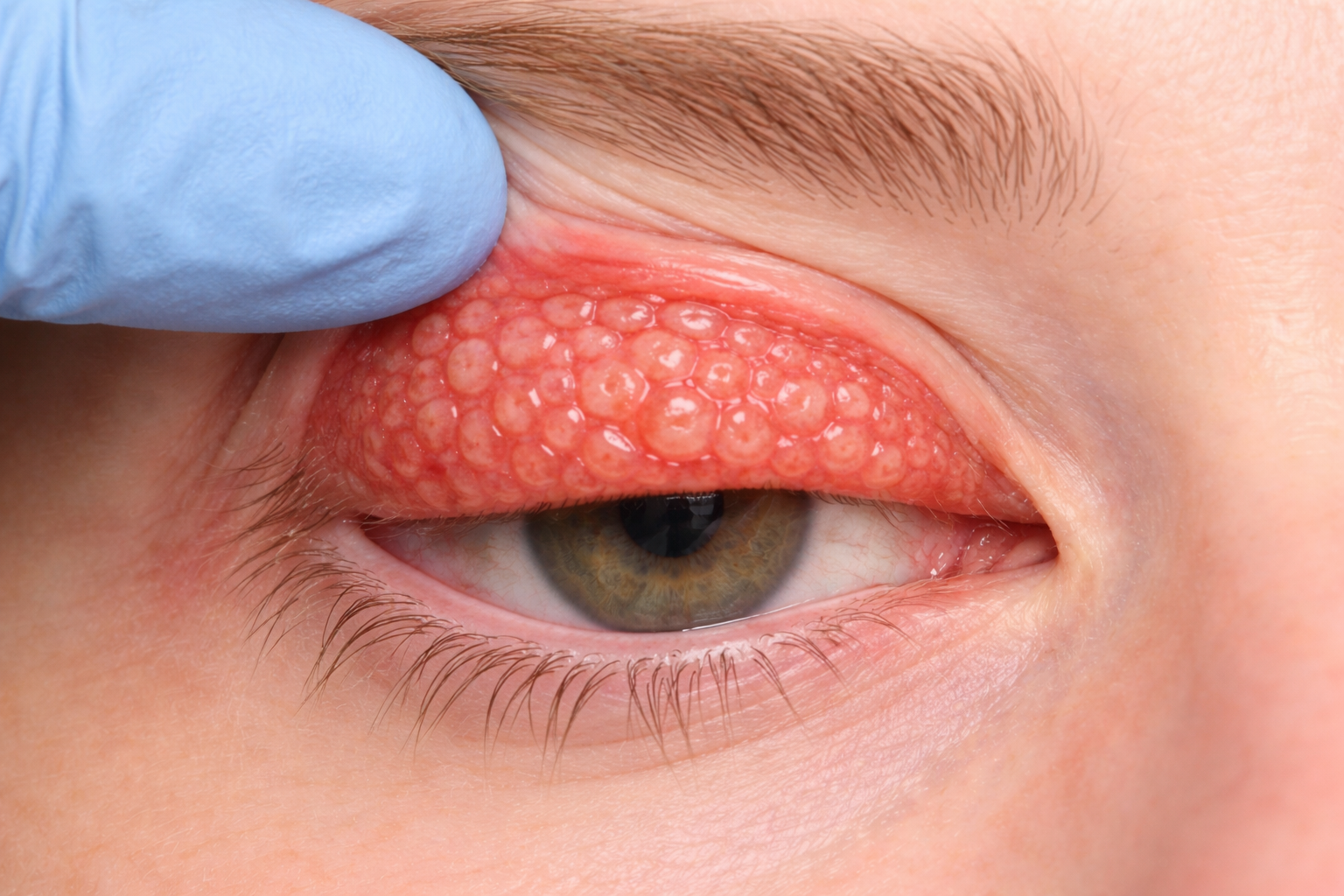
- Eyelid eversion — look for GPC papillae
- Corneal evaluation — check for herpes dendritic patterns or other corneal disease
- Culture or swab — if atypical or non-responsive (to check for chlamydia, herpes, resistant bacteria)
Frequently Asked Questions
Why does my pink eye keep coming back every few months?
The most common reasons are untreated allergies, chronic blepharitis, contaminated personal items, or contact lens issues. A pattern of recurrence (seasonal vs random vs after lens wear) helps identify the cause. See your eye doctor for a thorough evaluation.
Can stress cause pink eye to come back?
Stress doesn't directly cause conjunctivitis, but it can weaken your immune system, trigger herpes virus reactivation (for those who carry HSV), worsen dry eye, and reduce your attention to hygiene—all of which can contribute to recurrence.
I replaced all my makeup and it still came back. What else could it be?
If reinfection from contaminated items isn't the cause, consider allergies (especially if symptoms are seasonal or bilateral with itching), blepharitis (check for lid margin crusting), dry eye, or contact lens issues. A thorough eye exam can help differentiate.
Can recurrent pink eye damage my vision?
Simple recurrent conjunctivitis rarely causes permanent vision damage. However, recurrent corneal involvement (as in herpes keratitis) can cause scarring over time. Any recurrent episode with vision changes warrants specialist evaluation.
Should I see an allergist or an eye doctor for recurring pink eye?
Start with an eye doctor to confirm the diagnosis and rule out non-allergic causes. If allergies are confirmed as the driver, your eye doctor may manage them or refer you to an allergist for comprehensive allergy testing and possible immunotherapy.
References
Medical Disclaimer: This information is for educational purposes only and does not replace professional medical advice, diagnosis, or treatment. If you have recurring eye problems, please consult a qualified healthcare provider.
Sources:
- American Academy of Ophthalmology. Conjunctivitis Preferred Practice Pattern.
- Azari AA, Barney NP. Conjunctivitis: a systematic review of diagnosis and treatment. JAMA. 2013;310(16):1721-1730.
- Bielory L, et al. Allergic conjunctivitis: Update on pathophysiology and prospects for future treatment. J Allergy Clin Immunol. 2020;145(5):1275-1291.