

Cancer-Associated Visual Syndromes
Visual symptoms related to cancer, including paraneoplastic syndromes where the immune response to cancer damages the visual system, and direct effects of tumor spread.
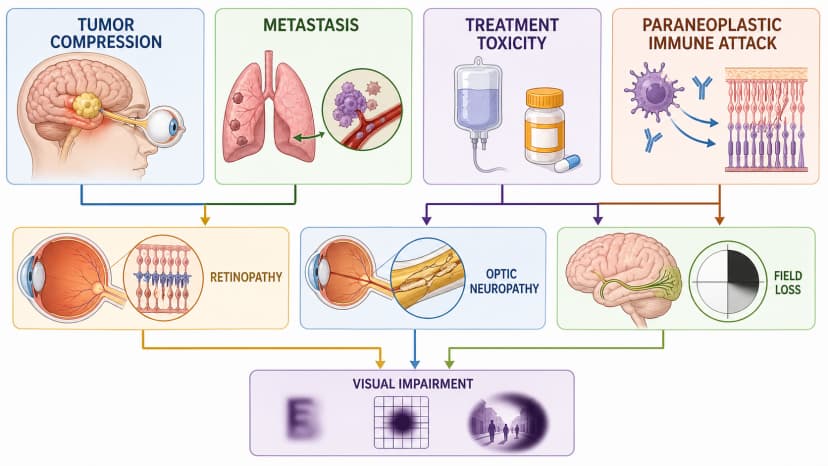
Cancer can affect vision in several ways: through direct tumor involvement, metastasis to the eye or visual pathways, or through paraneoplastic syndromes where antibodies produced against cancer cross-react with eye or brain tissue. Recognizing these syndromes is important because vision symptoms may precede cancer diagnosis.
Key Takeaways
- Cancer affects vision through direct tumor effects or immune-mediated mechanisms
- Paraneoplastic syndromes occur when immune response to cancer damages visual system
- Visual symptoms may precede cancer diagnosis
- Rapid vision loss with unexplained cause should prompt cancer screening
- Early detection of underlying cancer is critical
How Cancer Affects Vision
Direct Effects
- Brain metastases affecting visual pathways
- Orbital metastases involving the eye or surrounding structures
- Optic nerve compression from tumors
- Cranial nerve involvement
Paraneoplastic Syndromes
The immune system attacks cancer cells but also mistakenly attacks parts of the visual system:
- Cancer-associated retinopathy (CAR)
- Melanoma-associated retinopathy (MAR)
- Paraneoplastic optic neuropathy
Types of Visual Syndromes
Cancer-Associated Retinopathy (CAR)
Immune attack on retinal cells
- Progressive vision loss
- Reduced color vision
- Visual field loss
- Photopsias (flashing lights)
- Night vision problems
Associated cancers:
- Small cell lung cancer (most common)
- Breast cancer
- Gynecological cancers
- Other solid tumors
Melanoma-Associated Retinopathy (MAR)
Specifically associated with melanoma
- Shimmering or pulsating vision
- Night blindness
- Photopsias
- Usually occurs after melanoma diagnosis
Paraneoplastic Optic Neuropathy
Immune attack on optic nerve
- Rapid vision loss
- May mimic optic neuritis
- Color vision changes
- Visual field defects
- Anti-CRMP-5 (CV2) antibodies common
Paraneoplastic Cerebellar Degeneration with Visual Symptoms
Affects cerebellum and brainstem
- Nystagmus
- Oscillopsia
- Double vision
- Associated with breast, ovarian, lung cancers
Brain Metastases
Direct tumor effects
- Visual field defects (homonymous hemianopia)
- Headache
- Seizures
- Other neurological symptoms
Orbital Metastases
Tumor spreading to eye socket
- Proptosis (bulging eye)
- Double vision
- Pain
- Vision loss
- Eyelid swelling
Symptoms
Warning Signs
Unexplained rapid vision loss, especially with:
- Photopsias (flashing lights)
- Night vision problems
- Bilateral involvement
- Cancer history or risk factors
These symptoms warrant urgent evaluation including cancer screening.
Common Presentations
- Progressive vision loss
- Visual field defects
- Photopsias
- Night blindness
- Color vision problems
- Double vision
Diagnosis
Clinical Examination
- Visual acuity testing
- Visual field testing
- Fundus examination
- OCT
- Electroretinography (ERG)
Antibody Testing
Common paraneoplastic antibodies:
- Anti-recoverin (CAR)
- Anti-bipolar cell (MAR)
- Anti-enolase
- Anti-CRMP-5 (CV2)
- Anti-Hu
- Anti-Yo
Cancer Screening
If paraneoplastic syndrome suspected:
- CT chest/abdomen/pelvis
- PET scan
- Mammogram (women)
- Testicular ultrasound (men)
- May need repeated surveillance if initial workup negative
Imaging
- MRI brain and orbits
- CT imaging as needed
- PET scan for occult malignancy
Treatment
Treat Underlying Cancer
- Most important intervention
- Cancer treatment may stabilize vision
- Tumor removal or treatment essential
Immunotherapy for Paraneoplastic
- IV steroids
- IVIG
- Plasma exchange
- Rituximab
- Other immunosuppressants
- Often limited effectiveness
Supportive Care
- Low vision rehabilitation
- Visual aids
- Orientation and mobility training
- Psychological support
Prognosis
Variable
- Depends on underlying cancer and stage
- Paraneoplastic syndromes may stabilize but often don't fully recover
- Early detection and treatment of cancer improves outcomes
Paraneoplastic Visual Syndromes
- May precede cancer diagnosis by months
- Vision loss often permanent even with treatment
- Goal is to prevent further progression
When to Suspect a Paraneoplastic Syndrome
Consider paraneoplastic syndrome when:
- Rapid, unexplained bilateral vision loss
- Abnormal ERG without clear cause
- History of smoking or known cancer
- Visual symptoms with systemic symptoms
- Vision loss resistant to standard treatments
Frequently Asked Questions
Can vision loss be the first sign of cancer?
Yes. In paraneoplastic syndromes, visual symptoms can precede cancer diagnosis by months or even years. This is why unexplained, rapidly progressive vision loss should prompt cancer screening.
Will treating the cancer restore my vision?
Treating the cancer is essential and may halt progression, but vision already lost from paraneoplastic damage often doesn't fully recover. Early detection and treatment give the best chance for preserving remaining vision.
What is a paraneoplastic syndrome?
A paraneoplastic syndrome occurs when the immune system, in fighting cancer, produces antibodies that also attack normal tissue. In visual paraneoplastic syndromes, these antibodies attack the retina or optic nerve.
How common are these syndromes?
Paraneoplastic visual syndromes are rare, but they're important to recognize because they may lead to cancer detection. Direct tumor effects on vision are more common in patients with advanced cancer.
References
Medical Disclaimer: This information is for educational purposes only and does not replace professional medical advice, diagnosis, or treatment. If you have concerns about vision changes, especially with cancer history or risk factors, please consult a qualified healthcare provider urgently.
Sources:
- Chan JW. Paraneoplastic retinopathies and optic neuropathies. Surv Ophthalmol. 2003;48(1):12-38.
- Thirkill CE, et al. Cancer-associated retinopathy. Arch Ophthalmol. 1992;110(9):1273-1278.
- Rahimy E, Bhatti MT. Paraneoplastic optic neuropathy. Curr Opin Ophthalmol. 2015;26(6):475-480.
- American Academy of Ophthalmology EyeWiki. Cancer Associated Retinopathy.
- National Cancer Institute. Eye Cancer.