

Toxic and Nutritional Optic Neuropathy
Vision loss from exposure to toxins (like methanol or certain medications) or nutritional deficiencies (like B12). Often reversible if caught early.
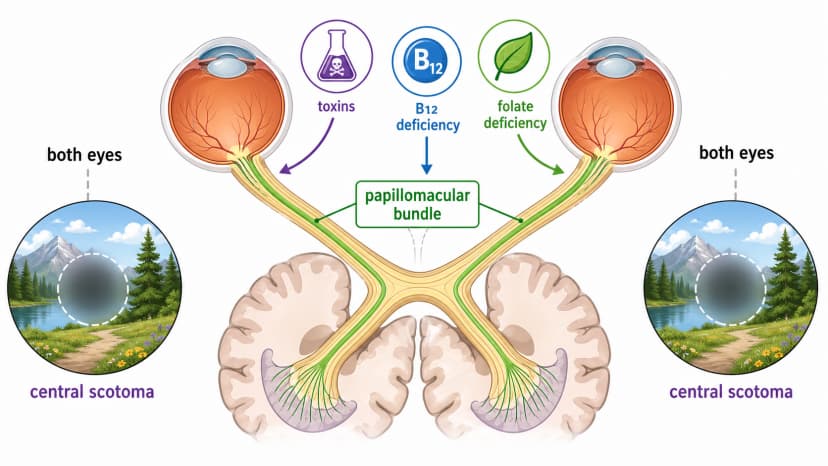
Toxic and nutritional optic neuropathies are conditions where the optic nerve is damaged by exposure to harmful substances or by deficiencies in essential nutrients. Unlike some other optic nerve diseases, these are often reversible if identified and treated early.
Key Takeaways
- Caused by toxins or nutritional deficiencies
- Usually affects both eyes symmetrically
- Color vision often affected early
- Often reversible with early treatment
- Common causes: alcohol, tobacco, B12 deficiency, certain medications
Understanding the Condition
The optic nerve requires significant energy to function. Toxins that interfere with cellular energy production (mitochondrial function) or essential nutrients needed for nerve health can damage the optic nerve. Because both optic nerves are similarly exposed, both eyes are typically affected equally.
Types and Causes
Tobacco-Alcohol Amblyopia
Classic nutritional optic neuropathy
- Heavy alcohol use combined with tobacco
- Actually caused by B vitamin deficiency
- Poor diet common in affected patients
- Gradual vision loss
Vitamin B12 Deficiency
- Pernicious anemia
- Vegan diet without supplementation
- Malabsorption (celiac disease, gastric surgery)
- Neurological symptoms may accompany
Methanol Poisoning
Medical emergency: Methanol (wood alcohol) poisoning can cause rapid, severe, permanent blindness and death. If suspected, seek immediate emergency care.
- Found in some industrial products
- Contaminated homemade alcohol
- Severe vision loss within hours to days
Medication-Related
- Ethambutol (tuberculosis treatment)
- Linezolid (antibiotic)
- Isoniazid (with B6 deficiency)
- Amiodarone (heart medication)
- Some chemotherapy agents
Other Nutritional Deficiencies
- Folate (vitamin B9)
- Thiamine (vitamin B1)
- Copper deficiency
- Combined deficiencies common
Symptoms
Visual Symptoms
- Gradual vision loss (both eyes)
- Color vision changes-especially red-green
- Central visual field deficits (central or cecocentral scotomas)
- Blurred vision
Associated Symptoms (Depend on Cause)
- Numbness/tingling in hands and feet (B12 deficiency)
- Balance problems
- Confusion or memory problems
- Fatigue
Timeline
- Nutritional: develops over weeks to months
- Toxic (medications): weeks to months after starting
- Methanol: hours to days (emergency)
Diagnosis
Clinical Examination
- Visual acuity-reduced, often symmetric
- Color vision testing-significant deficits
- Visual field testing-central or cecocentral scotomas
- Fundus exam-disc may be normal early, then pale
- OCT-may show nerve fiber layer changes
Laboratory Tests
- Vitamin B12 level
- Folate level
- Complete blood count (for macrocytic anemia)
- Methylmalonic acid and homocysteine (more sensitive for B12)
- Copper level
- Liver function tests
History
- Detailed dietary history
- Alcohol and tobacco use
- Complete medication list
- Occupational exposures
Imaging
- MRI brain and orbits to rule out other causes
Treatment
Stop the Offending Agent
- Discontinue toxic medication
- Stop or reduce alcohol and tobacco
- Remove from toxic exposure
Nutritional Replacement
B12 deficiency:
- Intramuscular B12 injections (initially)
- Oral supplementation (maintenance or if absorption adequate)
- Treat underlying malabsorption
Other deficiencies:
- Appropriate vitamin replacement
- Dietary counseling
- Address underlying causes
Methanol Poisoning
Medical emergency requiring:
- Fomepizole or ethanol (antidotes)
- Hemodialysis
- Supportive care
- Urgent ophthalmology consultation
Supportive Care
- Low vision rehabilitation if needed
- Address other health conditions
- Substance abuse treatment if applicable
Prognosis
Favorable Factors
- Early detection and treatment
- Removal of toxic agent
- Adequate nutritional replacement
- No permanent structural damage yet
Recovery Timeline
- Improvement may begin within weeks
- Full recovery can take months
- Some permanent loss if treatment delayed
When Recovery is Limited
- Late-stage disease with optic atrophy
- Severe methanol poisoning
- Ongoing exposure
Prevention
General Recommendations
- Balanced diet with adequate B vitamins
- Limit alcohol consumption
- Avoid tobacco
- Regular health checkups
For High-Risk Patients
- Vegetarians/vegans: B12 supplementation
- Gastric surgery patients: B12 monitoring
- Patients on ethambutol: regular vision monitoring
Frequently Asked Questions
Will my vision come back?
In many cases, yes-especially if the condition is caught early and the cause is identified and treated. However, if significant optic nerve damage (atrophy) has occurred, some vision loss may be permanent.
I only drink socially-could this be the cause?
Tobacco-alcohol optic neuropathy is typically associated with heavy, chronic use. However, even moderate drinking combined with nutritional deficiencies could contribute. The underlying cause is usually the nutritional deficiency, not the alcohol itself.
My doctor prescribed a medication that can cause this-should I stop taking it?
No-never stop prescribed medication without consulting your doctor. Many medications have rare side effects, and your doctor prescribed it because the benefits outweigh the risks. Regular monitoring can detect problems early.
How do I know if my vitamins are being absorbed?
Blood tests can measure vitamin levels and related markers (like methylmalonic acid for B12). If you have conditions affecting absorption, your doctor may check these regularly or recommend injections rather than oral supplements.
References
Medical Disclaimer: This information is for educational purposes only and does not replace professional medical advice, diagnosis, or treatment. If you have concerns about vision changes or any symptoms, please consult a qualified healthcare provider.
Sources:
- Sadun AA. Nutritional and toxic optic neuropathies. In: Miller NR, Newman NJ, eds. Walsh and Hoyt's Clinical Neuro-Ophthalmology. 6th ed.
- Pineles SL, et al. Ethambutol optic neuropathy. Surv Ophthalmol. 2010;55(5):430-435.
- American Academy of Ophthalmology. Nutritional Optic Neuropathy.
- American Academy of Ophthalmology EyeWiki. Toxic Optic Neuropathy.