

Compressive Optic Neuropathy
Vision loss from pressure on the optic nerve, usually from tumors, aneurysms, or other masses. Gradual vision loss is typical.
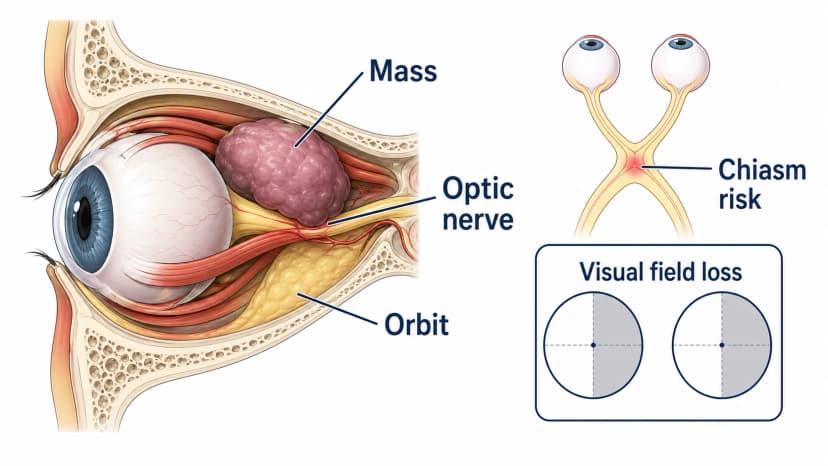
Compressive optic neuropathy occurs when something presses on the optic nerve, damaging it and causing vision loss. The compression can occur anywhere along the nerve's path from the eye to the brain. Common causes include tumors, aneurysms, and enlarged muscles (as in thyroid eye disease).
Key Takeaways
- Gradual, progressive vision loss is typical
- Many different causes-tumors most common
- Color vision often affected early
- MRI is key diagnostic test
- Treatment targets the underlying cause
Understanding Compressive Optic Neuropathy
The optic nerve carries visual information from the eye to the brain. When it's compressed by a growing mass, the nerve fibers are damaged, leading to progressive vision loss. The location and size of the compression determine the pattern and severity of vision loss.
Symptoms
Visual Changes
- Gradual vision loss-may not notice initially
- Color vision changes-colors appear washed out
- Visual field defects-patterns depend on location
- Reduced contrast sensitivity
- Usually one eye affected more than the other
Other Symptoms (Depend on Cause)
- Headache
- Double vision (if other nerves affected)
- Bulging eye (proptosis)
- Facial numbness or pain
- Hormonal changes (pituitary tumors)
Slow onset is deceptive: Because vision loss is gradual, many patients don't notice until significant damage has occurred. The other eye compensates, masking the problem.
Causes
Tumors
Pituitary tumors
- Compress optic chiasm
- Cause characteristic visual field loss
- Grows from nerve covering
- Slowly progressive
- More common in children
- Associated with neurofibromatosis
Other tumors
- Craniopharyngioma
- Metastatic cancer
- Lymphoma
- Salivary gland adenocarcinoma of the sphenoid sinus
Vascular
Aneurysms
- Enlarged blood vessels can compress nerve
- May present suddenly or gradually
Inflammatory/Infiltrative
- Sarcoidosis
- IgG4-related disease
- Lymphoma
Orbital Causes
Thyroid eye disease
- Enlarged muscles compress optic nerve at orbital apex
Orbital tumors
- Various benign and malignant tumors
Diagnosis
Clinical Examination
- Visual acuity testing
- Color vision testing
- Pupil examination-relative afferent pupillary defect (RAPD)
- Fundus examination-optic nerve appearance
Visual Field Testing
- Humphrey visual field
- Pattern helps localize compression site
Imaging
MRI brain and orbits with contrast
- Gold standard
- Shows location and nature of compression
- Characterizes the lesion
- Bony detail
- Sometimes needed for surgical planning
Additional Tests
- Endocrine studies (pituitary function)
- Blood tests depending on suspected cause
- Sometimes lumbar puncture
Treatment
Treatment depends on the underlying cause:
Surgical
Tumor removal
- Complete removal when possible
- Partial removal to relieve pressure
Decompression surgery
- For thyroid eye disease
- Orbital decompression
Endovascular intervention
- Transarterial embolization for highly vascular orbital tumors
Radiation
- For some tumors
- May be primary or adjunctive treatment
Medical
- Corticosteroids (for inflammation)
- Hormonal therapy (for some pituitary tumors)
- Treatment of underlying systemic disease
Observation
- Some small, stable lesions may be watched
- Regular monitoring with imaging and visual fields
Prognosis
Factors Affecting Outcome
- Duration of compression before treatment
- Severity of vision loss at diagnosis
- Nature of underlying lesion
- Success of treatment
Recovery
- Some vision may recover after decompression
- Long-standing compression may cause permanent damage
- Earlier treatment generally means better outcomes
Questions That Change the Plan
When a compressive optic neuropathy is suspected, the useful details are specific:
- How fast is vision changing? Rapid decline pushes the workup faster than a stable, years-long change.
- Is the optic chiasm involved? A bitemporal field pattern changes imaging, endocrine testing, and surgical planning.
- Is there orbital apex crowding? In thyroid eye disease, urgent orbital decompression may be needed when vision is threatened.
- Is the lesion inflammatory, vascular, or tumor-related? Treatment can range from steroids to surgery, radiation, or endovascular care.
Frequently Asked Questions
Will my vision come back after surgery?
It depends on how long the nerve was compressed and how much damage occurred. Some patients see improvement, while others stabilize without further loss. Vision that has been lost for a long time is less likely to recover.
How often should I be monitored?
This depends on the specific cause and treatment. Generally, regular eye exams (visual acuity, color vision, visual fields) and periodic imaging are needed. Your doctor will determine the appropriate schedule.
Can compressive optic neuropathy be prevented?
The compression itself cannot be prevented, but early detection can prevent severe vision loss. Regular eye exams are important, especially if you have risk factors or notice any visual changes.
References
Medical Disclaimer: This information is for educational purposes only and does not replace professional medical advice, diagnosis, or treatment. If you have concerns about vision changes or any symptoms, please consult a qualified healthcare provider.
Sources:
- Danesh-Meyer HV, et al. Compressive optic neuropathies. Prog Retin Eye Res. 2017;56:108-125.
- Newman SA. Compressive optic neuropathies. In: Miller NR, Newman NJ, eds. Walsh and Hoyt's Clinical Neuro-Ophthalmology. 6th ed.
- Merck Manual. Compressive Optic Neuropathy.
- MedlinePlus. Optic Nerve Disorders.