

Diabetic Retinopathy
High blood sugar injures retinal blood vessels over time, causing leakage, swelling, bleeding, and abnormal vessel growth that can threaten vision.
Diabetic retinopathy may have no symptoms in its early stages. High blood sugar damages the small retinal blood vessels, first causing leakage and small hemorrhages, later sometimes triggering abnormal new vessels that bleed or scar. It remains a leading cause of blindness in working-age adults, yet regular dilated exams and good diabetes control can prevent many severe outcomes.
Key Takeaways
- High blood sugar damages small retinal vessels over years, causing leakage, bleeding, and poor circulation
- Early disease may have no symptoms, which is why waiting for blurry vision is risky
- Macular edema can blur central vision at any stage of diabetic retinopathy
- Advanced disease grows fragile new vessels that can bleed into the eye or pull on the retina
- Regular dilated eye exams catch damage before a person feels anything is wrong
- Treatment can prevent severe vision loss, especially when problems are found early
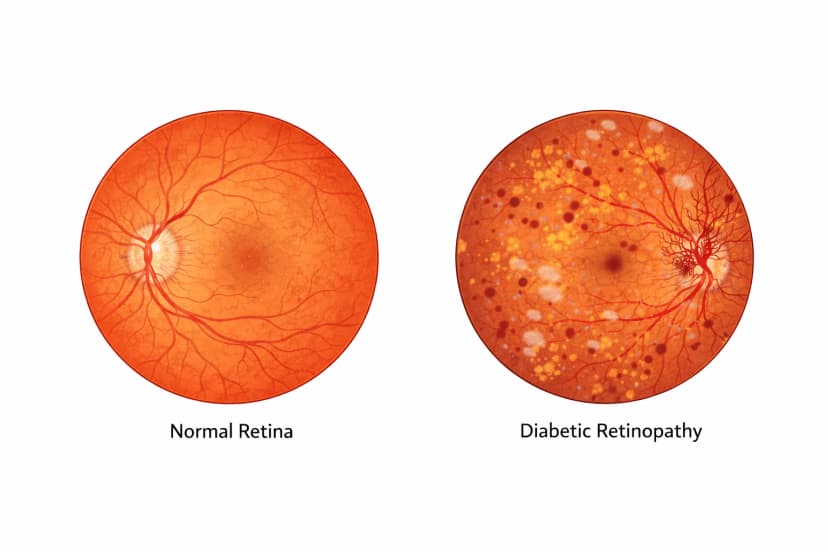
Stages of Diabetic Retinopathy
Non-Proliferative Diabetic Retinopathy (NPDR)
Mild NPDR:
- Small areas of balloon-like swelling (microaneurysms)
- Usually no vision symptoms
- No treatment typically needed
Moderate NPDR:
- Some blood vessels become blocked
- Small hemorrhages and exudates appear
- May develop macular edema
Severe NPDR:
- Many blood vessels are blocked
- Retina signals for new blood vessel growth
- High risk of progression to proliferative stage
Proliferative Diabetic Retinopathy (PDR)
- Most advanced stage
- New, abnormal blood vessels grow (neovascularization)
- These vessels are fragile and leak easily
- Can cause:
- Vitreous hemorrhage (bleeding inside the eye)
- Tractional retinal detachment
- Neovascular glaucoma
- Severe, potentially irreversible vision loss
Diabetic Macular Edema (DME)
- Can occur at any stage
- Fluid leaks into the macula (central vision area)
- Causes blurry or distorted central vision
- Most common cause of vision loss in diabetic retinopathy
Symptoms
Early Stages
- Often no symptoms
- Vision may be normal despite retinal changes
- This is why regular screening is crucial
Progressive Disease
- Blurry vision
- Floaters (spots or dark strings)
- Dark or empty areas in vision
- Fluctuating vision
- Difficulty with color perception
- Vision loss
Seek immediate care for:
- Sudden increase in floaters
- Flashes of light
- Sudden vision loss or dark curtain over vision
- These may indicate vitreous hemorrhage or retinal detachment
Risk Factors
- Duration of diabetes-longer duration increases risk
- Poor blood sugar control
- High blood pressure - if you're unsure whether your eye changes are from diabetes or blood pressure, both can damage retinal blood vessels in overlapping ways
- Diabetes also frequently causes dry eye through corneal nerve damage
- High cholesterol
- Pregnancy (can accelerate retinopathy)
- Smoking
- African American, Hispanic, or Native American ancestry
How Diabetic Retinopathy Is Diagnosed
Dilated Eye Exam
- Drops to widen pupil
- Examination of retina for:
- Microaneurysms
- Hemorrhages
- Exudates (fatty deposits)
- Abnormal blood vessel growth
- Macular swelling
Imaging Tests
Optical Coherence Tomography (OCT)
- Cross-sectional images of the retina
- Detects and measures macular edema
- Monitors treatment response
- Dye injected into arm vein
- Photos show blood vessel leakage
- Maps areas of poor blood flow
- Guides laser treatment
- Non-invasive blood vessel imaging
- No dye injection needed
- Shows blood flow abnormalities
Treatment
Blood Sugar Control
The foundation of management:
- Tight glucose control slows progression
- HbA1c target typically below 7%
- Reduces risk of developing retinopathy by 76%
- Slows progression of existing retinopathy
Blood Pressure Control
- Target usually below 130/80 mmHg
- Reduces risk of progression
- Important even without hypertension diagnosis
Anti-VEGF Injections
For diabetic macular edema and PDR:
- Medications: aflibercept (Eylea), ranibizumab (Lucentis), bevacizumab (Avastin)
- Injected directly into the eye
- Reduce swelling and abnormal vessel growth
- Given monthly initially, then less frequently
- Can significantly improve vision
Laser Treatment
Focal/Grid Laser (for DME):
- Treats leaking blood vessels
- Stabilizes vision
- Less commonly used now with anti-VEGF
Panretinal Photocoagulation (PRP) (for PDR):
- Treats peripheral retina
- Reduces abnormal vessel growth
- May reduce peripheral and night vision
- Often combined with anti-VEGF
Vitrectomy Surgery
For advanced cases:
- Removes blood from vitreous
- Repairs retinal detachment
- Removes scar tissue
- Can restore vision in severe cases
Prevention
Primary Prevention
- Maintain good blood sugar control
- Control blood pressure and cholesterol
- Don't smoke
- Annual dilated eye exams
Screening Recommendations
Type 1 diabetes:
- First exam within 5 years of diagnosis
- Then annually
Type 2 diabetes:
- First exam at diagnosis
- Then annually (or as recommended)
During pregnancy:
- Exam in first trimester
- Monitor throughout pregnancy
Living with Diabetic Retinopathy
Lifestyle Management
- Check blood sugar regularly
- Take medications as prescribed
- Eat a balanced, healthy diet
- Exercise regularly
- Attend all eye appointments
- Monitor vision changes
When to Call Your Doctor
- New floaters or flashes
- Sudden vision changes
- Blurry or distorted vision
- Difficulty reading or driving
Frequently Asked Questions
Can diabetic retinopathy be reversed?
Early stages may improve with better diabetes control. However, significant damage cannot be reversed. Treatment focuses on preventing further vision loss. This is why early detection and prevention are so important.
How often do I need eye exams?
At minimum, annually. More frequent exams if you have retinopathy-every 6 months for moderate NPDR, every 3-4 months for severe NPDR or PDR, depending on your doctor's recommendations.
Will I go blind from diabetes?
With modern treatment and good diabetes management, most people do not go blind. However, diabetic retinopathy remains a leading cause of blindness because many people don't get regular exams or control their diabetes well.
Do eye injections hurt?
The eye is numbed with drops before injection, so most patients feel only mild pressure. The procedure is quick and any discomfort is brief.
Can I prevent diabetic retinopathy?
You can significantly reduce your risk by:
- Keeping blood sugar well controlled
- Managing blood pressure
- Not smoking
- Getting regular eye exams
Does diabetic retinopathy affect both eyes?
Usually yes, though severity may differ between eyes. Both eyes should be examined and treated as needed.
References
Medical Disclaimer: This information is for educational purposes only and does not replace professional medical advice, diagnosis, or treatment. If you have diabetes or concerns about diabetic retinopathy, please consult a qualified healthcare provider.
Sources:
- American Diabetes Association. Standards of Medical Care in Diabetes. Diabetes Care. 2024.
- American Academy of Ophthalmology. Diabetic Retinopathy.
- National Eye Institute. Diabetic Retinopathy.
- Wong TY, et al. Diabetic retinopathy. Nat Rev Dis Primers. 2016;2:16012.