
Bacterial vs Viral vs Allergic Pink Eye
Learn how to tell bacterial, viral, and allergic pink eye apart by discharge type, contagiousness, and symptoms — plus when each type needs treatment.
You have a red, irritated eye—but is it bacterial, viral, or allergic? The answer matters because each type of conjunctivitis has different causes, different contagiousness, and different treatments. Using antibiotics for a viral infection won't help, and ignoring a bacterial infection can prolong your symptoms. This guide breaks down how to tell the three types apart so you can take the right next step.
Key Takeaways
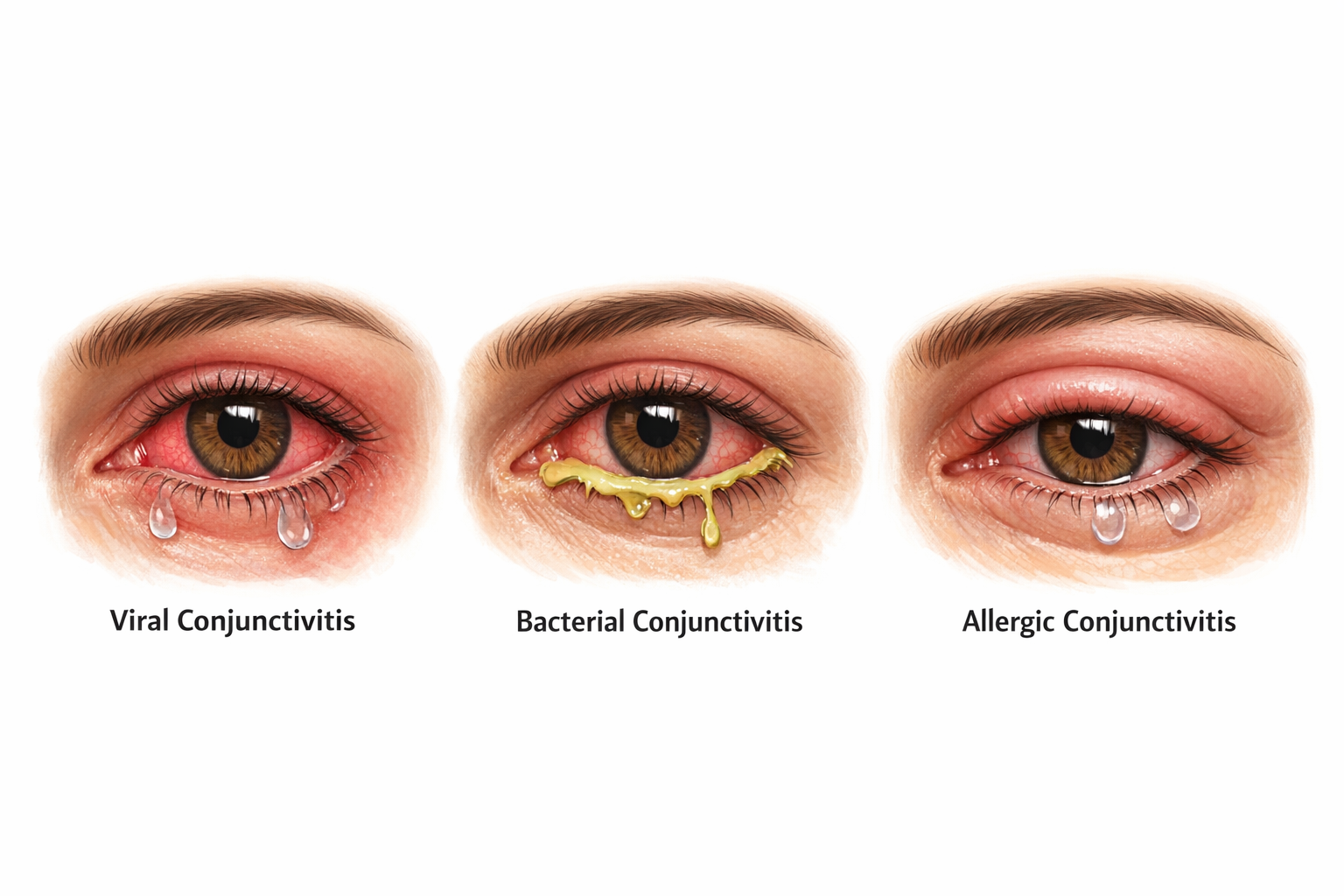
- Discharge is the biggest clue: thick yellow-green = bacterial, watery = viral, clear and stringy = allergic
- Only bacterial pink eye typically benefits from antibiotic drops
- Viral pink eye is the most common type and must run its course (1–3 weeks)
- Allergic pink eye is not contagious and responds to antihistamine drops
- Overlap exists—when in doubt, see an eye doctor for a definitive diagnosis
- Certain red flags like eye pain, vision loss, or a white spot on the cornea need urgent evaluation regardless of type
Why the Type Matters
Not all pink eye is created equal. A viral infection won't respond to antibiotics, and treating allergic conjunctivitis with warm compresses meant for bacterial cases may not address the underlying problem. Knowing your type helps you:
- Choose the right treatment (or avoid the wrong one)
- Understand whether you're contagious
- Predict how long symptoms will last
- Decide whether you need to see a doctor
For a detailed look at how long each type takes to resolve, see our guide on how long pink eye lasts.
Quick Comparison Table
| Feature | Bacterial | Viral | Allergic |
|---|---|---|---|
| Discharge | Thick, yellow-green pus | Watery, clear | Clear, stringy mucus |
| Itching | Mild | Mild to moderate | Intense |
| Contagious? | Yes | Highly | No |
| Eyes affected | Often one, then the other | One, then both | Both equally |
| Associated symptoms | Lids stuck shut in morning | Cold symptoms, swollen lymph node near ear | Sneezing, nasal congestion |
| Duration | 5–7 days with antibiotics | 1–3 weeks | While exposed to allergen |
| Treatment | Antibiotic drops | Supportive care only | Antihistamine drops, allergen avoidance |
Viral Pink Eye at a Glance
Viral conjunctivitis is the most common type, usually caused by the same adenoviruses that cause the common cold.
How to recognize it:
- Watery, clear discharge
- Often starts in one eye, spreads to the other within days
- Frequently accompanied by a sore throat, runny nose, or cold symptoms
- A swollen, tender lymph node in front of the ear is a telltale sign
- Light sensitivity is common
What to do:
- Artificial tears for comfort
- Cool compresses to reduce swelling
- Strict hand hygiene to prevent spreading it
- No antibiotics needed—they won't help
Viral pink eye is highly contagious for up to two weeks from symptom onset.
Bacterial Pink Eye at a Glance
Bacterial conjunctivitis is caused by bacteria such as Staphylococcus, Streptococcus, or Haemophilus.
How to recognize it:
- Thick, yellow-green discharge that accumulates overnight
- Eyelids "glued" shut in the morning
- Redness, usually starting in one eye
- A gritty, irritated feeling
- Less light sensitivity than viral forms
What to do:
- Antibiotic eye drops or ointment (e.g., erythromycin ointment) speed recovery
- Warm compresses to remove crusts
- Gentle lid hygiene
- Mild cases may resolve on their own in 7–10 days, but antibiotics shorten the course to about 5 days
Allergic Pink Eye at a Glance
Allergic conjunctivitis is not an infection—it's your immune system overreacting to allergens like pollen, dust mites, or pet dander. For a deeper comparison, see our guide on pink eye vs allergies.
How to recognize it:
- Intense itching is the hallmark—much more than viral or bacterial
- Both eyes affected equally
- Clear, stringy discharge
- Puffy, swollen eyelids
- Seasonal pattern (spring, summer, fall) or year-round with indoor allergens
- Often accompanied by sneezing or nasal congestion
What to do:
- Over-the-counter antihistamine eye drops (ketotifen/Zaditor)
- Cool compresses
- Avoid rubbing your eyes—it worsens the reaction
- Reduce allergen exposure (keep windows closed, shower after going outside)
- Artificial tears help wash away allergens
When It's Hard to Tell
In practice, it's not always easy to distinguish the three types:
- Viral can look bacterial in the early stages when discharge is present
- Allergic can mimic viral when both eyes are red and watery
- Mixed infections can occur—for example, a viral infection complicated by secondary bacterial infection
- Some people have allergies and an infection at the same time
A slit-lamp exam by your eye doctor can reveal subtle findings that help distinguish the types. If you're unsure, it's always reasonable to get evaluated.
Rule of thumb: If intense itching is the dominant symptom, think allergic. If thick pus is the dominant sign, think bacterial. If watery discharge with cold symptoms is the picture, think viral. But when symptoms don't fit neatly into one category, see your eye doctor.
When to See a Doctor
Regardless of which type you think you have, certain warning signs require prompt evaluation:
Seek urgent eye care if you experience:
- Significant eye pain (not just mild irritation)
- Vision changes or blurring
- Severe sensitivity to light
- A white or gray spot on the cornea — possible corneal ulcer
- You wear contact lenses and have a red, painful eye
- Symptoms worsening after several days despite treatment
- Copious pus-like discharge (could indicate gonococcal conjunctivitis)
You should also schedule an appointment if:
- Symptoms haven't improved after a week
- You need clearance to return to work or school
- You have recurrent episodes (see our guide on recurring pink eye)
- You're not sure what type you have
For more on whether your red eye might be something other than pink eye, see our guide on conditions mistaken for pink eye.
Frequently Asked Questions
Can I have more than one type of pink eye at the same time?
Yes. It's possible to have a viral infection that develops a secondary bacterial component, or to have underlying allergies that make you more susceptible to infection. If your symptoms don't fit neatly into one category, see your eye doctor.
Is my pink eye contagious?
Viral and bacterial pink eye are both contagious—viral more so. Allergic conjunctivitis is not contagious at all. For a detailed breakdown, see our guide on whether pink eye is contagious.
Can I treat pink eye at home?
Many cases of viral and allergic pink eye can be managed at home with compresses and artificial tears. Bacterial pink eye may resolve on its own but often benefits from antibiotic drops. See our guide on pink eye home remedies for safe options.
Should I get antibiotics just in case?
No. Using antibiotics for viral or allergic pink eye doesn't help and contributes to antibiotic resistance. Antibiotics should be reserved for confirmed or strongly suspected bacterial cases.
How long will my pink eye last?
Viral: 1–3 weeks. Bacterial: 5–7 days with antibiotics. Allergic: as long as you're exposed to the allergen. See our full guide on how long pink eye lasts.
References
Medical Disclaimer: This information is for educational purposes only and does not replace professional medical advice, diagnosis, or treatment. If you have concerns about pink eye, please consult a qualified healthcare provider.
Sources:
- American Academy of Ophthalmology. Conjunctivitis Preferred Practice Pattern.
- Azari AA, Barney NP. Conjunctivitis: a systematic review of diagnosis and treatment. JAMA. 2013;310(16):1721-1730.
- Centers for Disease Control and Prevention. Pink Eye (Conjunctivitis).