

Pituitary Apoplexy
Sudden bleeding or loss of blood flow inside a pituitary tumor causing severe headache, vision loss, and double vision. A medical emergency.
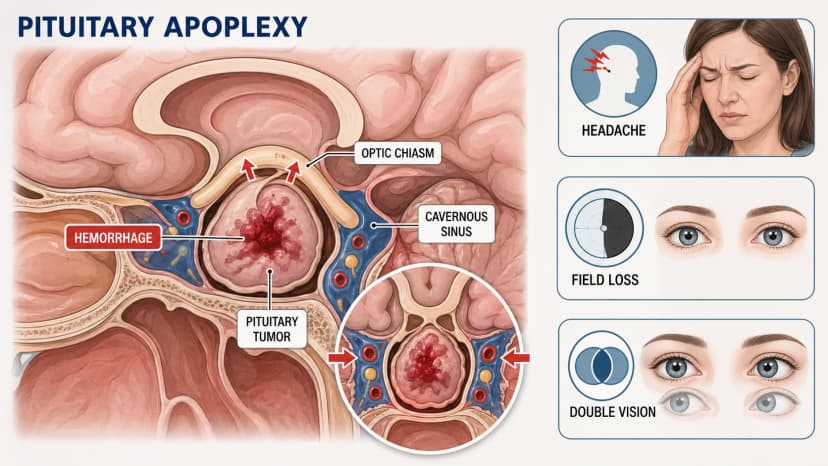
Pituitary apoplexy is sudden bleeding into or loss of blood flow to the pituitary gland - usually inside a previously unrecognized pituitary tumor (adenoma). The gland swells, presses on nearby structures, and drops critical hormone levels, often all at once. The classic presentation is a thunderclap headache plus rapid vision loss, double vision, and sometimes shock.
Call 911 immediately - this is a life- and vision-threatening emergency.
Call 911 if you have:
- Sudden, severe "worst headache of your life"
- Sudden vision loss, visual field loss (especially loss of outer halves of vision in both eyes), or blurred vision
- Sudden double vision or a droopy eyelid
- Severe nausea, vomiting, or neck stiffness
- Fainting, confusion, or low blood pressure
- A known pituitary tumor with any of the above
Early treatment can preserve vision and save your life. Do not wait.
Key Takeaways
- Pituitary apoplexy is a neurosurgical emergency - sudden bleeding or infarction in a pituitary tumor
- Classic triad: sudden severe headache, vision loss, and double vision
- Hormone collapse can cause life-threatening low blood pressure - steroids are given urgently
- Urgent MRI (or CT if MRI unavailable) usually shows findings that support the diagnosis
- Treatment combines urgent steroids, hormone replacement, and often neurosurgical decompression
What Pituitary Apoplexy Feels Like
Symptoms typically develop over minutes to hours:
- Sudden severe headache - often behind the eyes or at the front of the head
- Vision loss, especially loss of peripheral (outer) vision in both eyes - the chiasm sits directly above the pituitary and is often compressed
- Double vision from third, fourth, or sixth cranial nerve involvement as the cavernous sinuses are compressed
- Droopy eyelid, sometimes with a dilated pupil (third-nerve involvement)
- Nausea, vomiting, neck stiffness, light sensitivity - can mimic meningitis or subarachnoid hemorrhage
- Fainting, confusion, or shock - from acute adrenal insufficiency when cortisol production collapses
What Causes Pituitary Apoplexy
Apoplexy usually occurs in a pituitary adenoma, sometimes in a gland that was never known to be abnormal. Known precipitants include:
- Pregnancy or the postpartum period (Sheehan syndrome when it occurs after childbirth blood loss)
- Major surgery, trauma, or serious illness
- Anticoagulants or bleeding disorders
- Rapid changes in blood pressure
- Dynamic hormone testing or dopamine agonist therapy
- Often, no trigger is found
When to Seek Care
Any combination of sudden severe headache + new visual symptoms, or a known pituitary tumor with any new neurologic symptom, warrants 911-level emergency evaluation. Do not drive yourself.
How Pituitary Apoplexy Is Diagnosed
Clinical Examination
- Visual acuity and color vision
- Visual field testing - most often shows bitemporal hemianopia (loss of the outer halves of vision in both eyes) from chiasm compression
- Pupil exam - may show a relative afferent pupillary defect
- Eye movement exam - tests for cranial nerve III, IV, and VI palsies
- Blood pressure and mental status
Key Tests
- MRI of the pituitary with contrast - the test of choice; shows the tumor, blood, and the degree of chiasm compression
- CT scan - used if MRI is not immediately available or to rule out other hemorrhage
- Urgent hormone panel - cortisol, ACTH, TSH, free T4, prolactin, LH/FSH, IGF-1, and electrolytes (sodium can plummet)
- Lumbar puncture - sometimes done to rule out subarachnoid hemorrhage or meningitis when imaging is equivocal
Treatment Options
Immediate Stabilization
- High-dose IV corticosteroids - usually hydrocortisone - are given urgently even before hormone results come back, because acute cortisol deficiency can be fatal within hours
- IV fluids and close blood pressure monitoring
- Electrolyte correction, especially sodium
- Admission to a monitored bed - typically neurosurgical ICU
Surgery vs. Observation
- Neurosurgical decompression - usually through a transsphenoidal (through-the-nose) approach - is standard when there is progressive or severe vision loss, reduced consciousness, or significant hemorrhage
- Observation with medical management may be appropriate if symptoms are mild, vision is stable, and the patient is alert
- Decision is individualized and made jointly by neurosurgery, endocrinology, and neuro-ophthalmology
Long-Term Hormone Replacement
Most patients need ongoing replacement for one or more pituitary hormones:
- Cortisol (hydrocortisone)
- Thyroid hormone (levothyroxine)
- Sex hormones (testosterone or estrogen)
- Growth hormone (in selected patients)
- Desmopressin if diabetes insipidus develops
Prognosis and Recovery
Visual Recovery
- Vision often improves significantly after decompression, particularly when surgery is performed within the first week
- Peripheral field loss is more likely to recover than central acuity loss
- Cranial nerve palsies (third, fourth, sixth) usually improve over weeks to months
- Some patients have persistent field defects or diplopia
Endocrine Recovery
- Many patients have permanent hypopituitarism and need lifelong hormone replacement
- Adrenal insufficiency is the most clinically urgent deficit; patients need a steroid emergency plan and medical-alert ID
- Regular endocrinology follow-up is essential
Recurrence and Tumor Surveillance
- Residual tumor can remain after decompression and needs imaging follow-up
- Some adenomas need additional treatment (repeat surgery, medical therapy, radiation)
Living With Pituitary Apoplexy
- Carry a steroid emergency card and medical-alert identification; increase steroids during illness, infection, or procedures
- Arrange routine endocrinology follow-up and periodic MRI
- Annual visual field testing if any residual chiasm compression
- Tell any new doctor or dentist that you are steroid-dependent
Frequently Asked Questions
Is this a stroke?
Pituitary apoplexy is a small stroke-like event inside the pituitary gland - either bleeding (hemorrhagic) or loss of blood flow (ischemic). It is distinct from the more common kinds of brain stroke but is treated with similar urgency.
Will I go blind?
Outcomes depend on how quickly decompression and steroids are started. Many patients regain useful vision, but delayed treatment raises the risk of permanent field loss or reduced acuity.
Did I have a pituitary tumor all along?
Usually, yes. Apoplexy is often the first sign of a previously silent adenoma. Your team will plan follow-up imaging to monitor residual tissue.
Do I need surgery?
Not always. Mild cases with stable vision can be managed medically. Surgery is standard when there is vision loss, reduced consciousness, or major hemorrhage.
Can I become pregnant after this?
Pregnancy is possible but requires coordination with endocrinology. Hormone replacement typically needs adjustment, and extra monitoring is needed throughout pregnancy.
Will I need steroids forever?
Often, yes - many patients have permanent adrenal insufficiency after apoplexy. This is manageable with daily hydrocortisone and stress-dose adjustments during illness.
Why might steroids be started before all test results are back?
Pituitary apoplexy can abruptly stop ACTH and cortisol production. If cortisol is critically low, blood pressure, sodium, and alertness can worsen quickly. Emergency teams often give stress-dose hydrocortisone while imaging and hormone labs are still being completed because waiting for confirmation can be dangerous.
References
Medical Disclaimer: This information is for educational purposes only and does not replace professional medical advice, diagnosis, or treatment. Pituitary apoplexy is a medical emergency - if you have sudden severe headache with vision or neurologic symptoms, call 911 or go to the nearest emergency department immediately.
Sources:
- Rajasekaran S, et al. UK guidelines for the management of pituitary apoplexy. Clin Endocrinol. 2011;74(1):9-20.
- Society for Endocrinology. Emergency management of pituitary apoplexy in adult patients. Endocr Connect. 2016.
- Briet C, et al. Pituitary apoplexy. Endocr Rev. 2015;36(6):622-645.
- American Academy of Ophthalmology EyeWiki. Pituitary Apoplexy.